Battle of Norwich
Background
After the failed attempt to overthrow Henry II in Normandy, Robert de Beaumont, 3rd Earl of Leicester, landed in Suffolk in October of 1173 with Flemish mercenaries and joined Hugh Bigod, 1st Earl of Norfolk, at Framlingham Castle. On October 13th, they captured Haughley Castle together.
Robert de Beaumont then left Framlingham Castle and headed for his own lands in Leicester, due to friction with Bigod, to reinforce his own base, or both.
Robert and his army were intercepted while fording the River Lark at the Battle of Fornham on October 17, and he was taken prisoner by Henry II's supporting force.
In 1174, Philip of Flanders sent reinforcements of around 300 knights and men-at-arms to support Hugh Bigod. They landed near Orwell in Suffolk around mid-June.
Battle
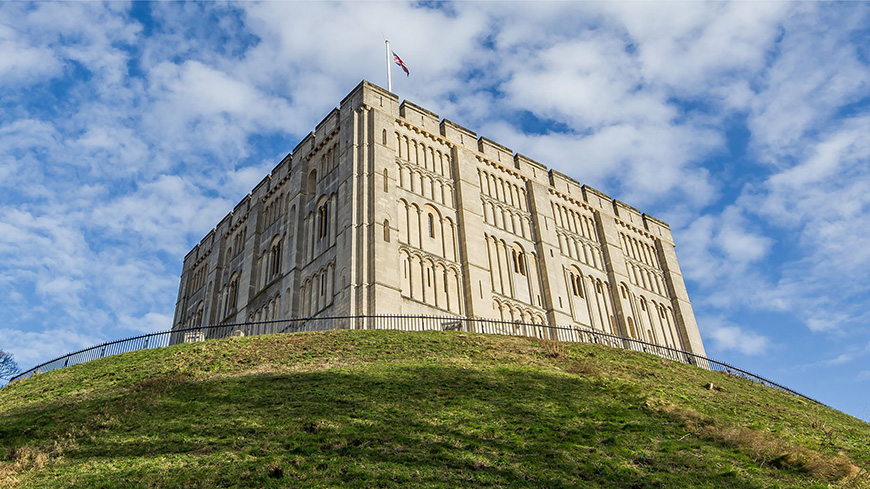
They joined Hugh Bigod and marched to Norwich, where citizens loyal to Henry II resisted. Bigod assaulted and captured the city around June 18th, 1174. He burned parts of the town, seized riches, and made prisoners of prominent citizens for ransom. They also occupied Norwich Castle and strengthened its defenses by deepening the ditches and garrisoning it with Flemish and French troops. At the same time, William the Lion, King of Scotland, began operations in Northern England against Henry II.
Henry II returned to England from Normandy on July 8th, 1174, and performed penance for the murder of Thomas Becket, Archbishop of Canterbury. A few days later, William the Lion was captured at the Battle of Alnwick on July 13th, 1174, weakening the rebellion further.
Resistance against Henry II began to crumble, and Henry moved against the remaining rebels, demolishing Walton Castle and threatening Bungay Castle and Framlingham Castle. As King Henry advanced towards Norwich, Hugh Bigod submitted to the King around July 25th, 1174, at Seleham.
Aftermath
Hugh Bigod paid a substantial fine, as much as 1,000 marks by one account, surrendered his castles, and arranged for the Flemish mercenaries to leave England and not return. Henry took possession of the city and Norwich Castle. Bigod's castle at Bungay was later demolished.
Henry II reconciled with his sons at the Treaty of Montlouis and reasserted control by September of 1174. William the Lion was forced to sign the Treaty of Falaise, acknowledging English overlordship and surrendered key castles in Scotland, ending the Great Revolt.
The citizens of Norwich were rewarded for their loyalty to the King by having their financial burdens reduced as the city recovered.
Hugh Bigod retained his title as Earl of Norfolk and some lands, but his power diminished. He later went on a pilgrimage to the Holy Land and died around 1177.
 Flemish Mercenaries