Carew Castle / Castell Caeriw
History
Gerald de Windsor, also called Gerald FitzWalter, built Carew Castle around the year 1100, when he constructed a castle next to the River Carew in Wales. Gerald was the custodian of nearby Pembroke Castle, appointed by Arnulf de Montgomery, Earl of Pembroke, who built Pembroke Castle during the first Norman invasion of Pembrokeshire. The site of the castle had been used previously as an Iron Age fort.
Gerald married Nest Ferch Rhys, Princess of Deheubarth, around 1095, who brought the manor of Carew as part of her dowry. Gerald cleared the existing manor and built his own Norman-style castle with outer walls of timber and a Keep of stone. The Keep still exists as the "Old Tower". It was surrounded by a great ditch with an earth rampart behind it.
Around 1109, Gerald and Nest were visited by Owain ap Cadwgan, a distant cousin of Nest. Owain was so captivated by Nest that he returned at night with a raiding party and stormed the castle. Legend has it that when Owain beat on the door of the room where Gerald and Nest were sleeping, Nest encouraged her husband to escape, and he did so down the garderobe (toilet) shaft, still dressed in his nightclothes. Nest stayed behind and was captured by Owain, a most willing prisoner, it is said.
Owain took her back to Ceredigion, where they lived together long enough for her to bear him two children. But fearing Norman reprisals, Nest and her children were eventually returned to Carew Castle. Gerald bided his time and would have his revenge by killing Owain in an ambush in 1116.
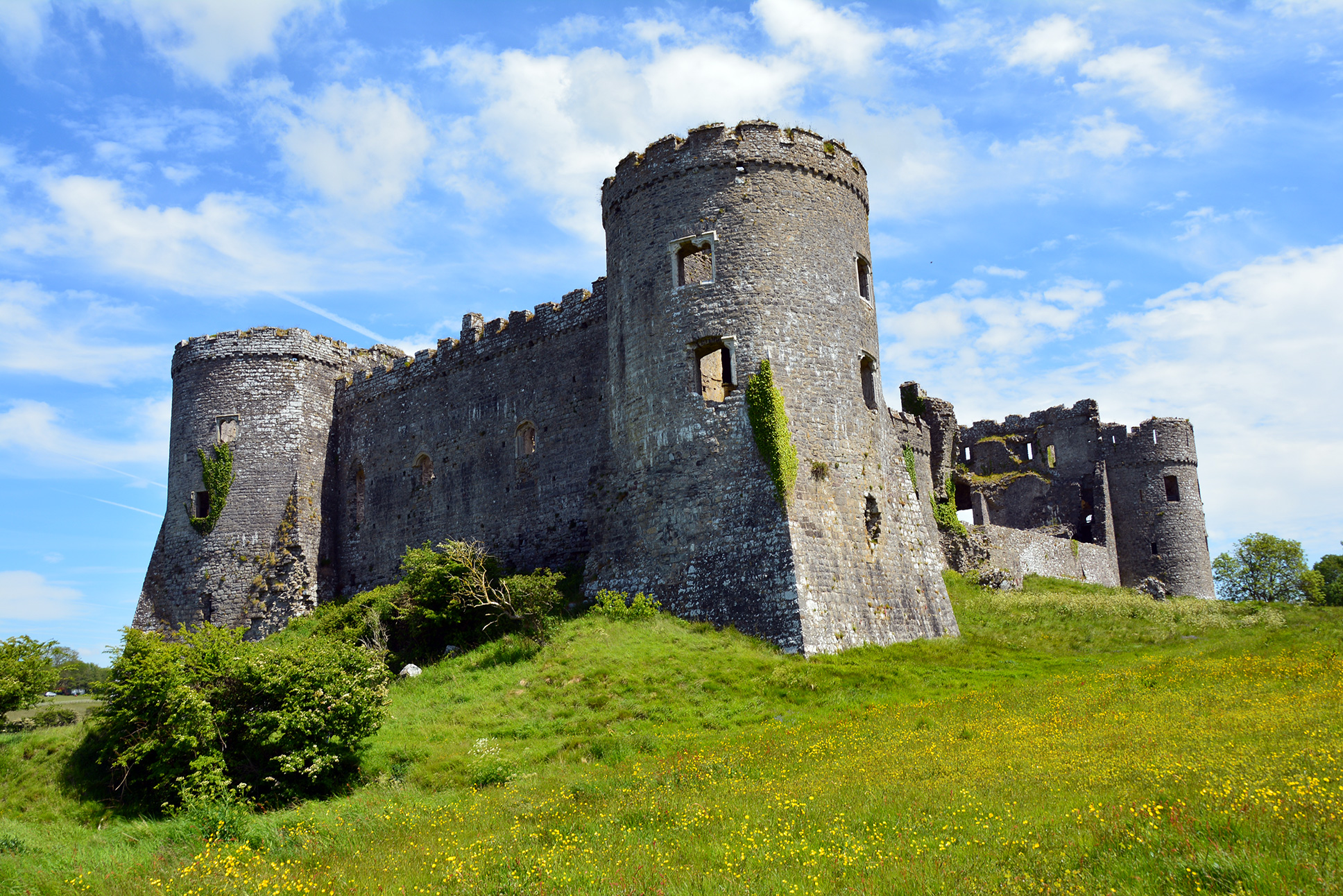
Gerald's son William took the name "de Carew" and constructed a stone enclosure encircling the Keep and a new Great Hall in the mid-12th century. Around 1270, Nicholas de Carew, a high-ranking officer in Edward I's army, created the high-walled structure and adjoining rooms, and the horseshoe-shaped Chapel Tower we see today. The rectangular South-East Tower was reshaped into a circular drum tower, and the outer ward was also walled in around this time.
In 1346, a company of archers known as the Carew Longbowmen was decorated for valor after England's victory at Crecy. Sir Thomas de Carew also fought alongside Henry V at Agincourt, where the bowmen again played a decisive role in victory for the English during the Hundred Years' War.
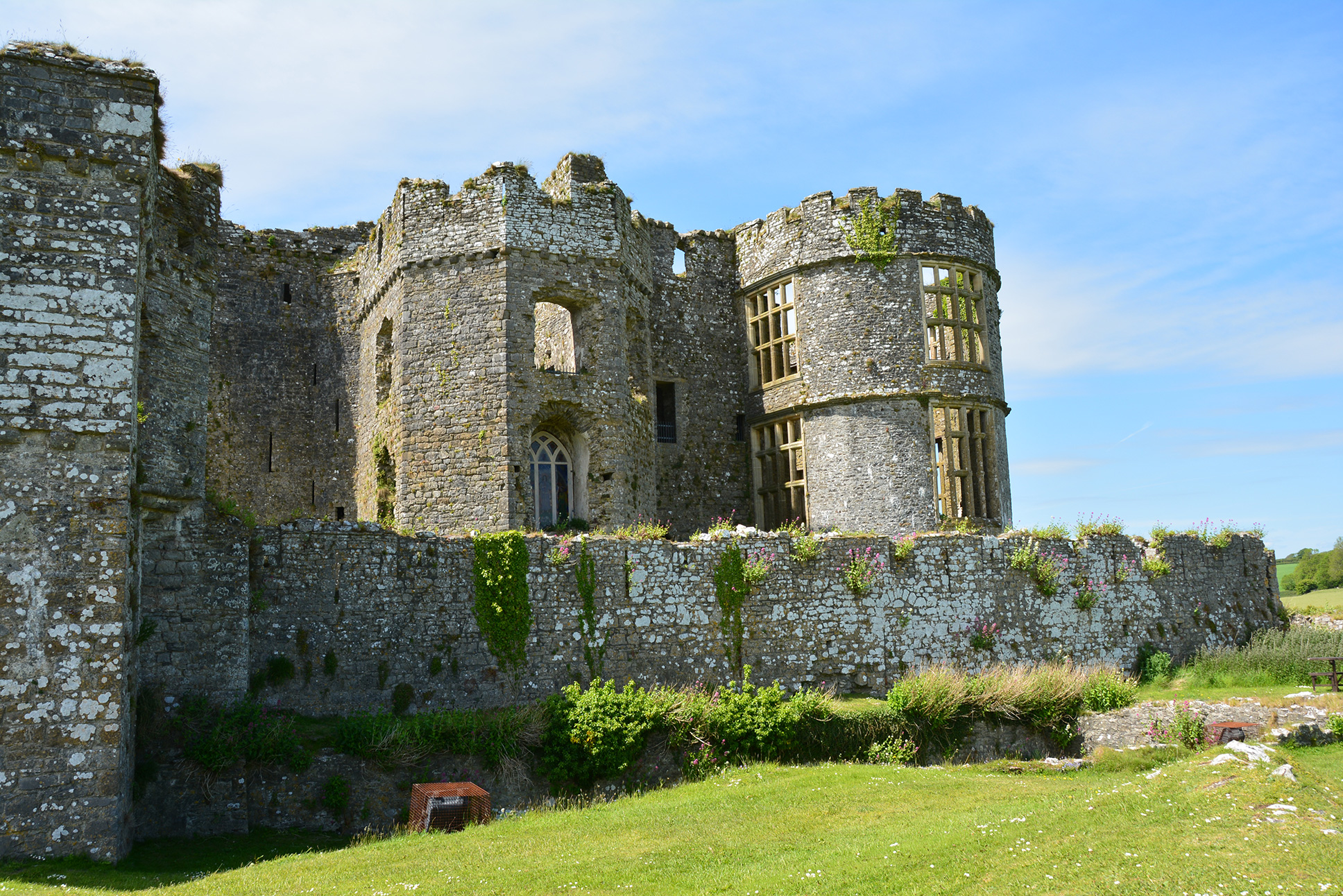
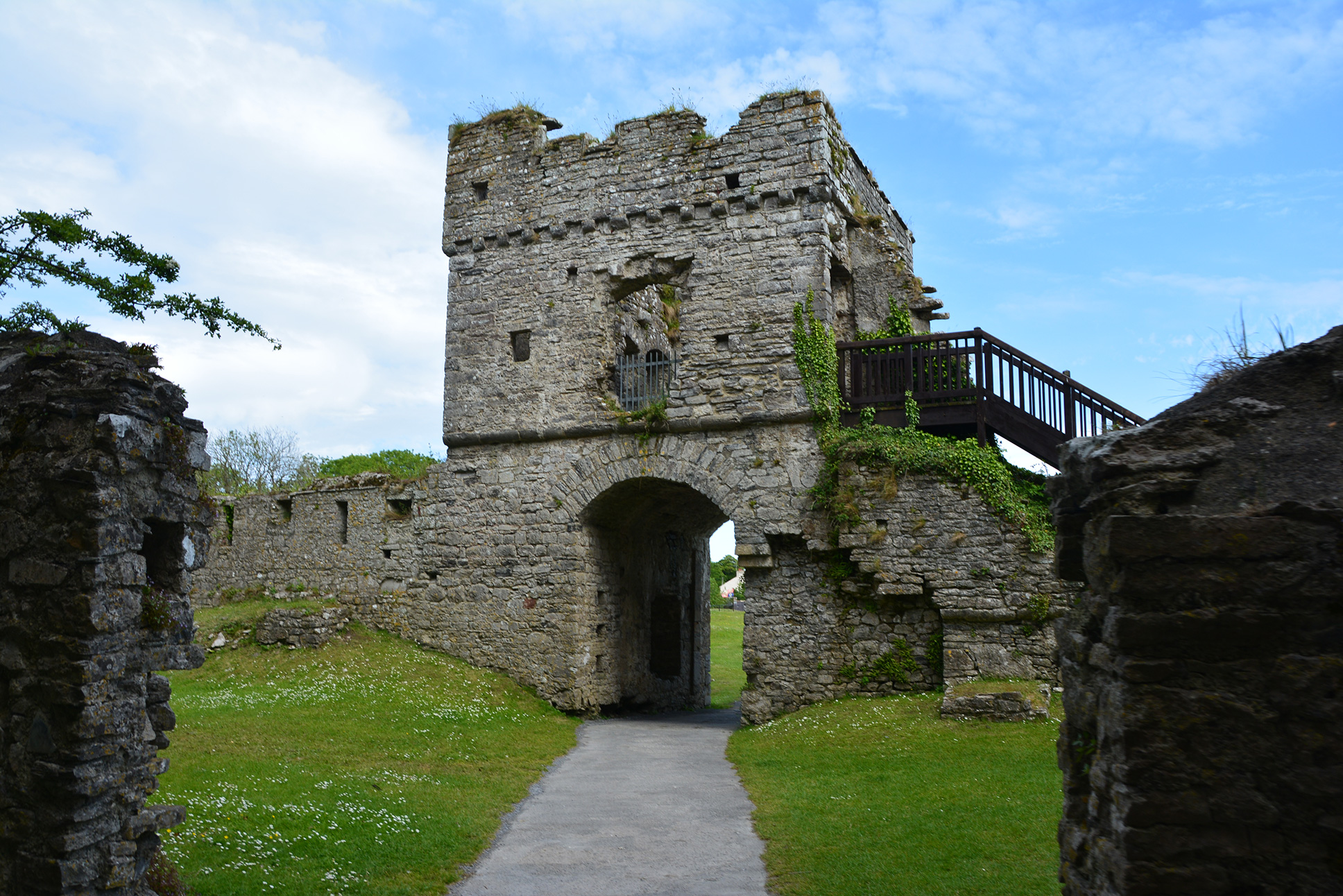
After the Black Death in the mid-14th century, the de Carew family fell on tough times and had to mortgage the castle. The castle was then owned by Rhys ap Thomas, who became wealthy by changing sides strategically and backing Henry Tudor before the Battle of Bosworth Field during the Wars of the Roses. After Bosworth, he was rewarded with lands and a knighthood. He added the luxurious Tudor apartments to the castle in the late 15th century. He also remodeled the Great Hall by adding a large window facing the inner gatehouse and adding the Lesser Hall. He also built the two-story gatehouse bridging the Middle and Outer Wards.
In April of 1507, Carew Castle hosted a Great Tournament on a scale never seen before in Wales, to celebrate Rhys ap Thomas's elevation to the Order of the Garter and to honor the Order's patron saint, St George. Over 600 Noblemen arrived at Carew Castle and participated in the five-day event. A marvelous banquet was held in the Great Hall, and the next day, Rhys ap Thomas presided over the jousting, sword displays, and other events. It was the last medieval-style tournament ever held in Wales.
His family fell out of royal favor when Rhys' grandson, Rhys ap Gruffudd, was executed by Henry VIII for treason in 1531, and the castle reverted to the crown. In 1588, the castle was acquired by Sir John Perrot, a Lord Deputy of Ireland, who made the final major modifications to Carew Castle by adding a long range of domestic Elizabethan rooms along the reconstructed North Range, overlooking the millpond. John Perrot was said to be an illegitimate son of Henry VIII.
John Perrot also fell out of favor and, after being convicted of high treason, was imprisoned in the Tower of London until he died there in 1592 of natural causes. The castle reverted to the crown once more until it was purchased again by the de Carew family in 1607.
During the English Civil War, the castle was refortified and garrisoned by Royalists despite Pembrokeshire being strongly on the side of the Parliamentarians. After changing hands three times, the castle's south wall was destroyed to make the castle indefensible. After the Stuart Restoration of the Monarchy in 1660, the castle was returned to the de Carew family, who lived in the East Range until 1686, when they moved to their smaller, more fashionable residence, Crowcombe Court, in Somerset.
Carew Castle was then abandoned and fell into further ruin, with its dressing stones taken and used for farm buildings in the area and for making stone lime kilns.
Since 1984, CADW has funded substantial restoration work by the Pembrokeshire National Park Authority, including the replacement of three huge Bath stone windows in the North Range.
Castle Highlights
Carew Castle is a must-see great castle, and probably my personal favorite castle in Wales. Nowhere else can you see medieval architecture on one side, Tudor and Elizabethan architecture on the other, and remnants of the English Civil War, all in one place.
The most stunning views are from outside, along the medieval West Range, and across the River Carew. One of the massive drum Towers is now home to a colony of bats.
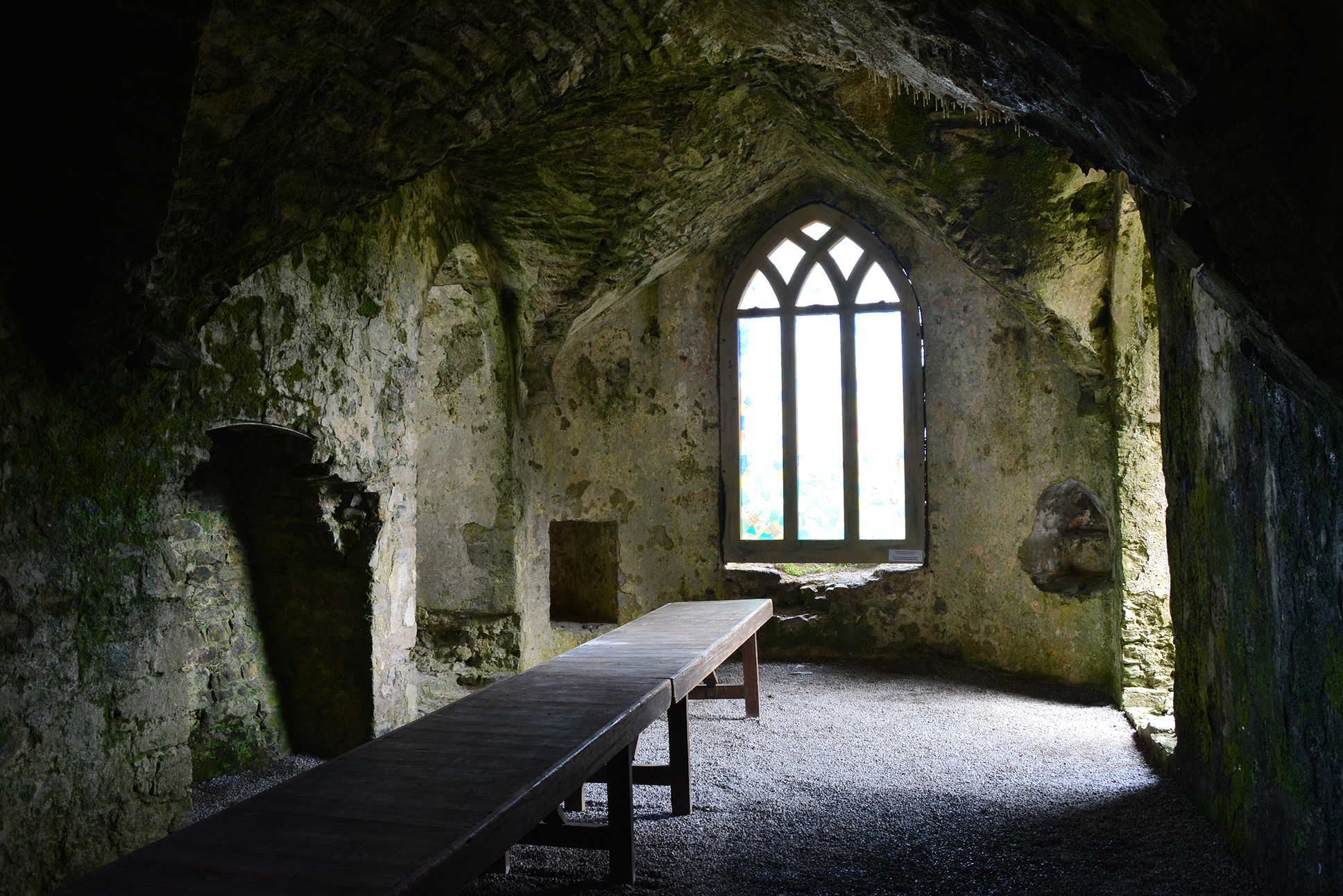
Carew Castle allows people to wander at their own pace, but also offers a guided tour. The inside of the castle is a ruin, but the Undercroft and the Lesser Hall are still intact, as are a few of the rooms in the East Range and the Chapel Tower. The massive drum tower housing the bat colony is closed to the public, but most of the castle is accessible to explore.
You can easily spend at least half a day exploring Carew Castle, especially if you do the guided tour and cross the river to see the castle from that vantage point. Pembroke Castle is only around ten miles away, but it can also take a while to explore, so visiting them both on the same day may feel rushed.
Carew Castle is also haunted.