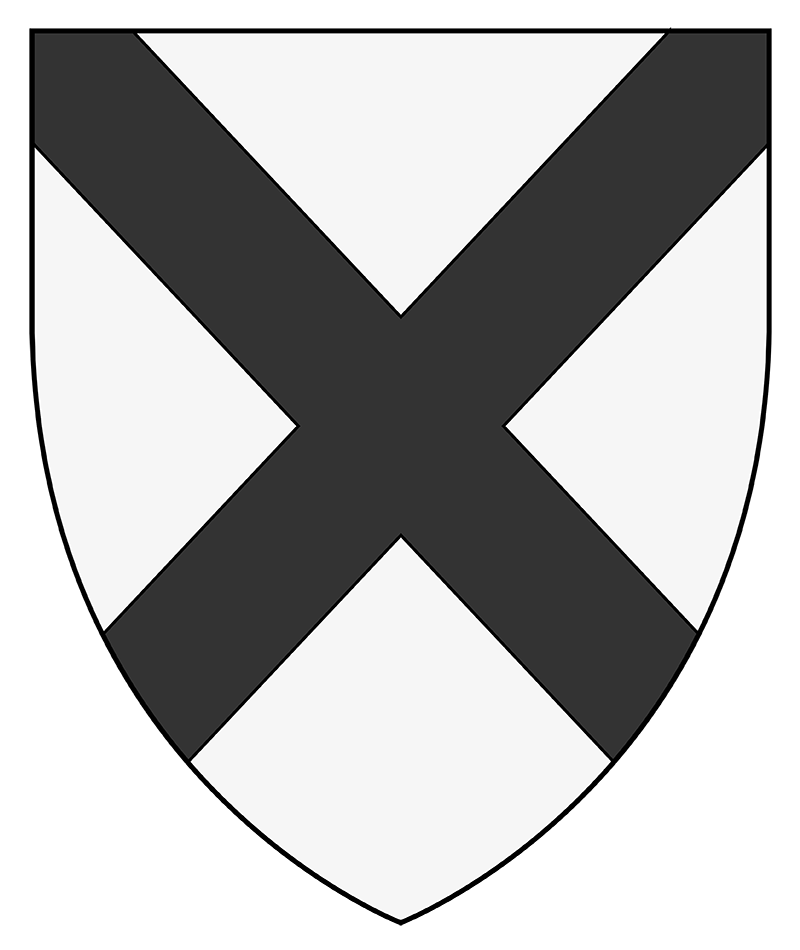
Eustace de Maxwell
Eustace de Maxwell was a 14th century Scottish Nobleman, noted for his shifting allegiances during the First War of Scottish Independence and for his role as Lord of Caerlaverock.
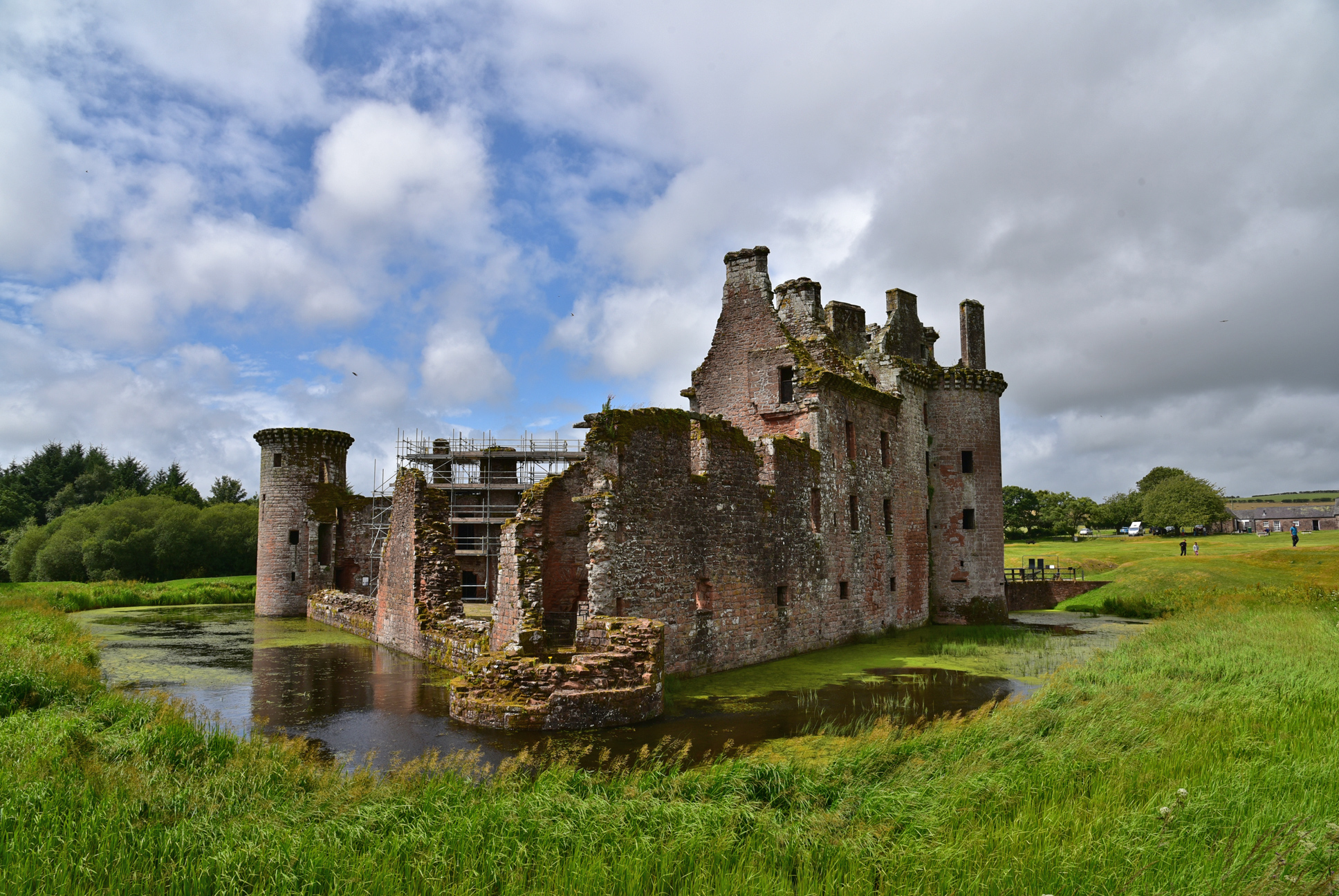
The Maxwells were a powerful Scottish clan with extensive holdings in the borderlands, including Caerlaverock Castle near the Solway Firth. Eustace was born sometime around 1285 and was the heir to John de Maxwell, Lord of Caerlaverock.
Eustace de Maxwell married Helen Pollack, daughter of Robert Maxwell of Pollok. Eustace and Helen had no surviving children.
In 1312, Eustace held Caerlaverock Castle for the English, receiving an allowance of 20 pounds for the "more secure keeping of the castle", by King Edward II of England, aligning himself with Edward II and John Balliol. He later switched his allegiance to King Robert I of Scotland, supporting the Scottish cause for independence.
Because of his change of allegiance to the Bruce, Caerlaverock Castle underwent a second siege by the English, which this time was unsuccessful. However, fearing that his castle could one day fall to the English and give them control of the area, Eustace dismantled Caerlaverock Castle, a sacrifice for which he was rewarded by Robert the Bruce.
Eustace de Maxwell was a signatory to the Declaration of Arbroath in 1320, a letter to the Pope asserting Scotland's status as an independent sovereign state.
Eustace was later put on trial for complicity in the Soules Conspiracy, a Balliol plot to dethrone the Bruce, but was acquitted.
After the death of Robert the Bruce, Eustace's allegiance again shifted back to Edward Balliol. He fought at the Battle of Dupplin Moor and was at Balliol's Coronation at Scone in 1332.
By 1337, Eustace once again inhabited Caerlaverock Castle.
In 1338, Eustace rebelled against the English; however, he was pardoned by King Edward III of England in 1339.
On March 3rd, 1342, Eustace de Maxwell died at Caerlaverock Castle. Having no heirs, he was succeeded by his brother John Maxwell of Pencaitland as Lord of Caerlaverock.