Henry Stafford - 2nd Duke of Buckingham
Henry Stafford was a powerful English Nobleman who rose to power with Richard III, then rebelled against him and was executed. His dramatic shift made him one of the most controversial figures during the Wars of the Roses.
Henry was born on September 4th, 1455, likely near Abergavenny, Wales. His father was the only son of Humphrey Stafford, 5th Earl of Stafford, and Margaret Beaufort, daughter of Edmund Beaufort, 2nd Duke of Somerset.
When Henry was just three or four years old, his father died, and Henry became the 6th Earl of Stafford. In 1460, his grandfather Humphrey Stafford, 1st Duke of Buckingham, was killed at the Battle of Northampton fighting for the Lancastrians, and Henry became the 2nd Duke of Buckingham. As a minor, Henry became a ward of the Yorkist King Edward IV.
In 1466, Henry married Katherine Woodville, the sister of Queen Elizabeth Woodville. He was only ten or eleven, and she was only around eight. This marriage aligned him with the Woodville faction, though, as a Lancastrian descendant, he was mostly kept out of major roles during Edward IV's reign. Henry and Katherine had five children: Edward, Elizabeth, Henry, Anne, and Humphrey.
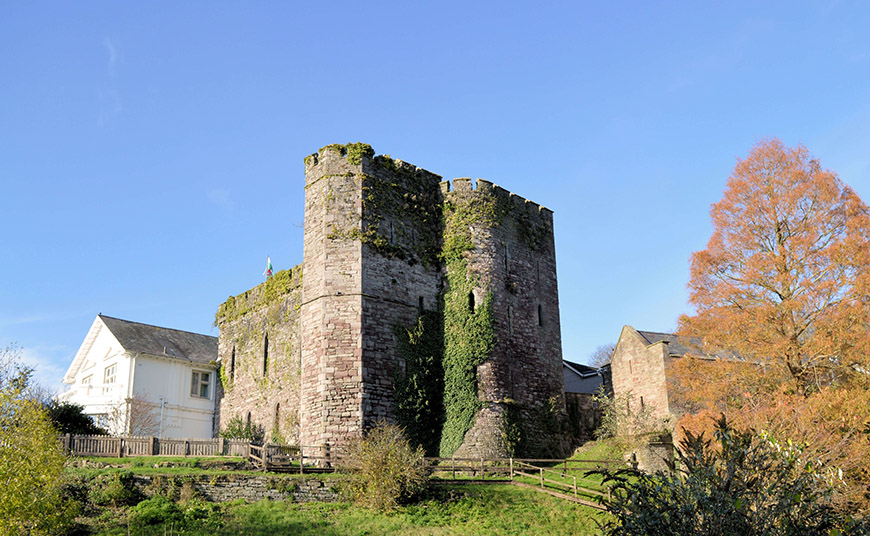
Henry's eldest son, Edward Stafford, was born at Brecon Castle in 1478. The castle was Henry's principal residence and a key power base in Wales.
Edward IV died in April of 1483. Henry Stafford became a key ally of Richard, Duke of Gloucester, Edward's brother, rather than Edward's two sons, Edward V and Richard of Shrewsbury, who were in line for the throne.
Henry helped Richard seize power by assisting in the arrest of members of Edward V's escort, questioning the legitimacy of Edward IV's children, and publicly proclaiming Richard as King. Richard rewarded him with titles, lands, and the Office of Lord High Constable.
Richard took Edward's two children to the Tower of London for their own protection. Over time, they were never seen again. The fate of the two Princes in the Tower is still debated today. Whether Richard killed his own nephews to eliminate them as threats to his claim to the throne, or if they died later under the Tudors, who just blamed Richard for their demise is still not known. Some also speculate that if they were killed by Richard, Henry Stafford was likely involved, unless they were still alive after Henry's own execution.
By the autumn of 1483, Henry Stafford turned against Richard III and allied with Henry Tudor and Margaret Beaufort, the cousin of his mother. They led a rebellion against Richard, which came to be known as "Buckingham's Rebellion". He raised an army from his estates in Wales and the Marches, which was to join other rebels in England. But the Wye and Severn Rivers were high with flood water, preventing them from crossing. After ten days of waiting for the waters to subside, his men dispersed.
Henry Stafford, Duke of Buckingham, fled into Shropshire, but was soon found hiding at Lacon Park after a retainer, Ralph Bannister, betrayed him.
On November 2nd, 1483, Henry Stafford was executed by beheading for treason against the King in a courtyard of the market square in Salisbury. He was not given a trial.
Henry Stafford's place of rest is uncertain. Some say he was buried at St. Peter's Church in Britford, a village just outside Salisbury. But no contemporary records indicate a burial place. His body was likely taken away after the execution and buried locally without the grand funeral normally held for a Duke.
Most of his estates and titles were forfeited to the Crown, though eventually they were partially restored, and his son Edward Stafford became the 3rd Duke of Buckingham. Edward would go on to expand Thornbury Castle into the impressive stronghold that still exists today.