Ripley Castle
History
Ripley Castle has been the seat of the Ingilby baronets for over 700 years, the longest continuous ownership by a single family of any castle in England.
Around 1308, Sir Thomas Ingilby married the heiress Edeline Thwenge and acquired the Ripley estate and manor house as her dowry. His son, also named Thomas, saved the King from being gored by a wild boar.
In 1355, King Edward III visited the Royal Hunting Forest of Knaresborough when he came across a wild boar and threw a spear at it. The spear struck the beast but only wounded it, causing the boar to charge at the King's horse and the King to be thrown from the saddle. The King was in danger as the beast had sharp tusks and was still running wild. Luckily, Thomas Ingilby was nearby and charged in and killed the boar, saving the King's life. King Edward knighted him and granted him the boar's head emblem as the family crest. Two years later, the King granted him a charter to hold a weekly market at Ripley and a fair every year. And in 1365, Ingilby was granted the right of Free Warren, permission to hunt anywhere in the Forest of Knaresborough.
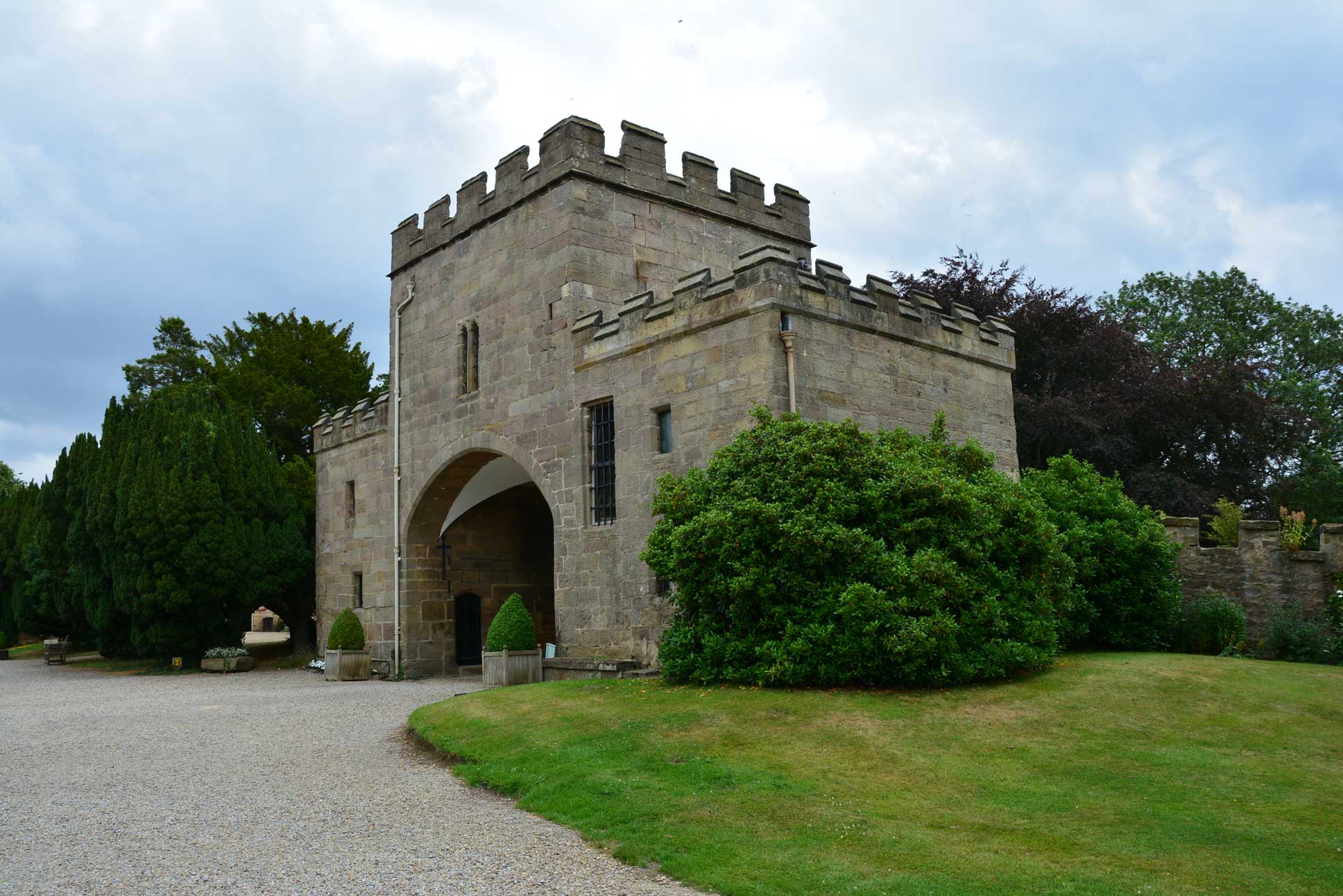
His descendant, John Ingilby, inherited the estate and built the castle gatehouse around 1450 before becoming a monk at Mount Grace Priory, near Northallerton. He would later become the Bishop of Llandaff. His grandson, William Ingilby, added the tower building in 1548, converting the manor into a castle.
Two of William's sons were fervent Catholics, on the run from authorities. His son Francis, a priest, was captured and sentenced to be hanged, drawn, and quartered in York in 1586. The other son escaped to the Continent. Another priest, Christopher Wharton, was captured in the park at Ripley and executed in York in 1598.
In 1603, a later William Ingilby was knighted by King James VI of Scotland, who stayed at Ripley Castle on his way to his coronation as James I of England in London. William would later allow plotters in the Gunpowder plot to stay at the castle while procuring horses. Nine of the eleven known conspirators had close ties to the Ingilbys, including Robert Winter, a nephew. William Ingilby was arrested after the plot was foiled, but later acquitted.
During the English Civil War, another William Ingilby supported King Charles I and was created a Baronet Ingilby in 1642. He fought with the Royalists at the Battle of Marston Moor in 1644, escaped to Ripley Castle, and hid in a priest hole in the Knight's Chamber just before Cromwell's cavalry arrived. Cromwell stayed at the castle overnight, under guard by gunpoint by Sir William's sister, "Trooper" Jane Ingilby. Unable to search for William, Cromwell left the next morning. His men shot several Royalist prisoners lined up against the castle gatehouse before departing.
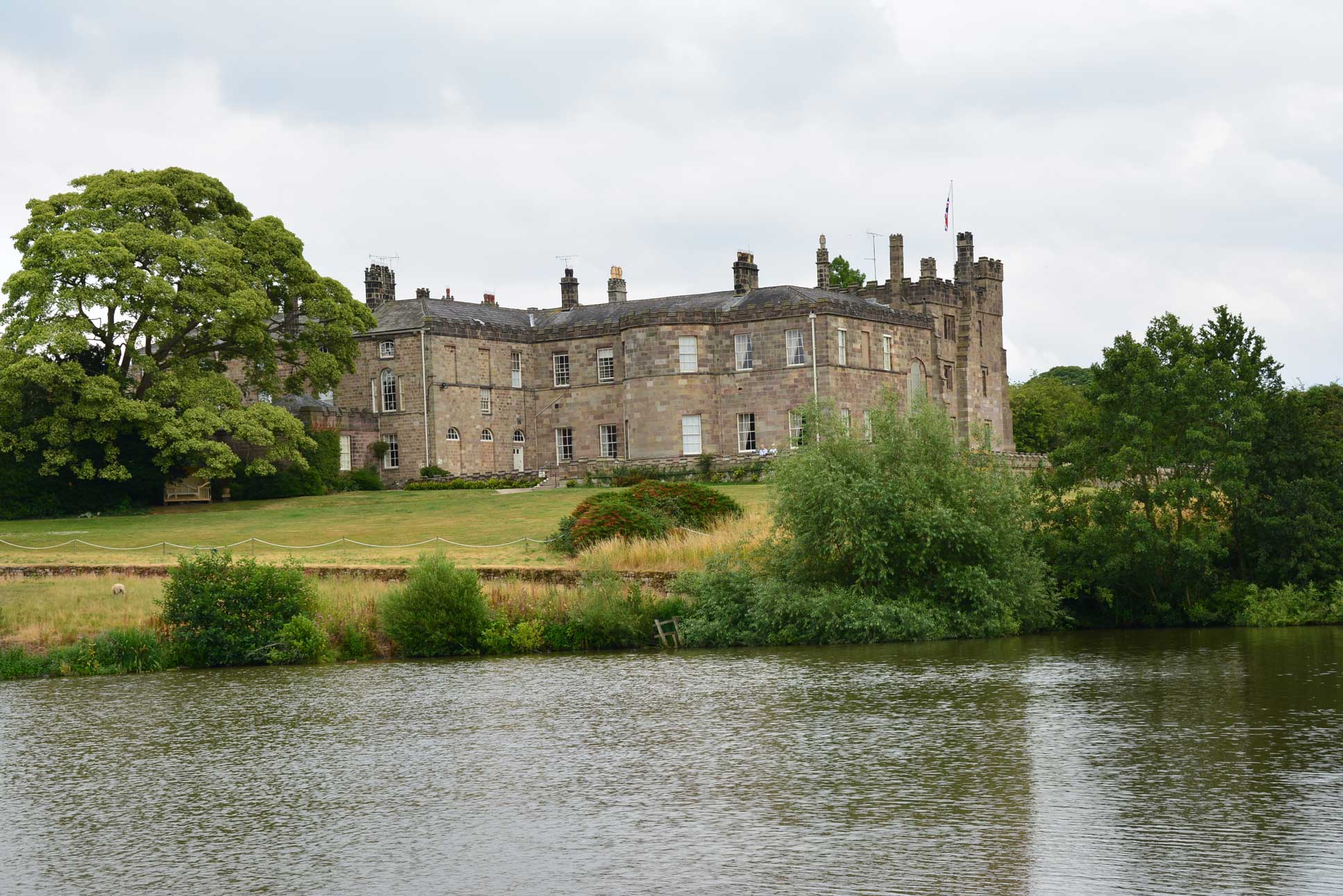
In 1772, the baronetcy became extinct on the death of the 4th baronet, but was revived in 1781 for his illegitimate son, John. John did major rebuild work on the castle from 1783 to 1786, adding the three-story wing to the tower, but got into debt and fled overseas.
The Ingilby family still privately owns the castle and opens the grounds to the public, though private castle tours have ended due to the estate's sale.
Castle Highlights
Guided tours of the castle interior have ended following the estate's sale, but the extensive grounds remain open to visitors. The castle hosts year-round events, such as hot-air balloon festivals, antique car shows, and agricultural fairs, and features a deer park.
The castle has a tearoom and a coffee room on site, in the buildings of the inner bailey.
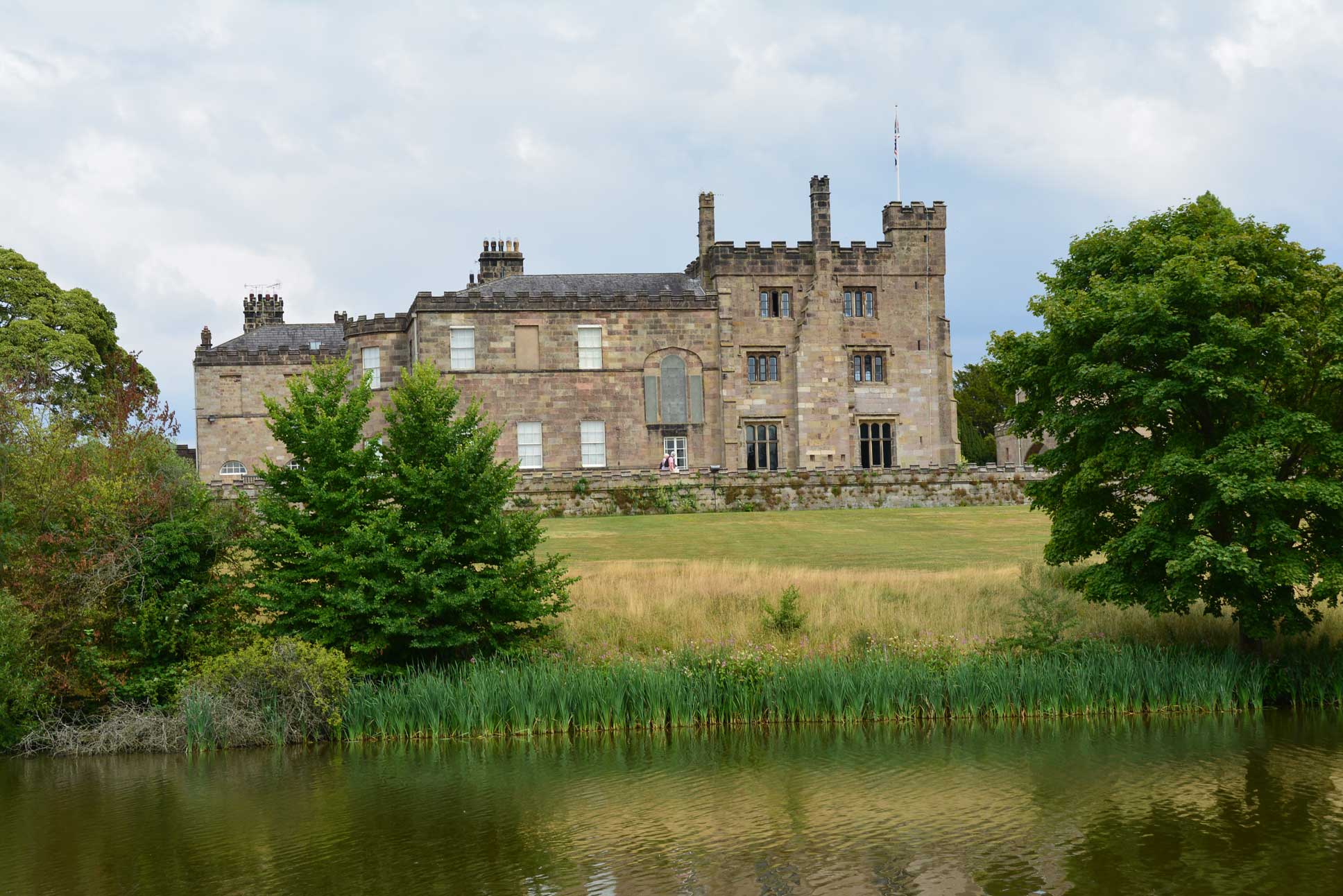
The old tower is the castle's tallest and most prominent feature, with stone buttresses and a high, crenelated roof. John Ingilby added the rest of the castle in the 18th century, including living quarters, the Entrance Hall, Inner Hall, Dining Room, Round Drawing Room, Large Drawing Room, and Library.
The Knight's Chamber, a remarkable Tudor-era room, hid Catholics defying Queen Elizabeth and served as William Ingilby's refuge from Cromwell. It contains a suit of Royal Greenwich Armor made for the Duke of Northumberland around 1600, plus Civil War-era pieces, including a typical Parliamentarian "Roundhead" helmet and a European-style Royalist helmet.
Outside the main castle structure, the gatehouse is the oldest part of the existing buildings. Damage from musket fire is still visible, from Cromwell's men shooting Royalist prisoners after the Battle of Marston Moor.
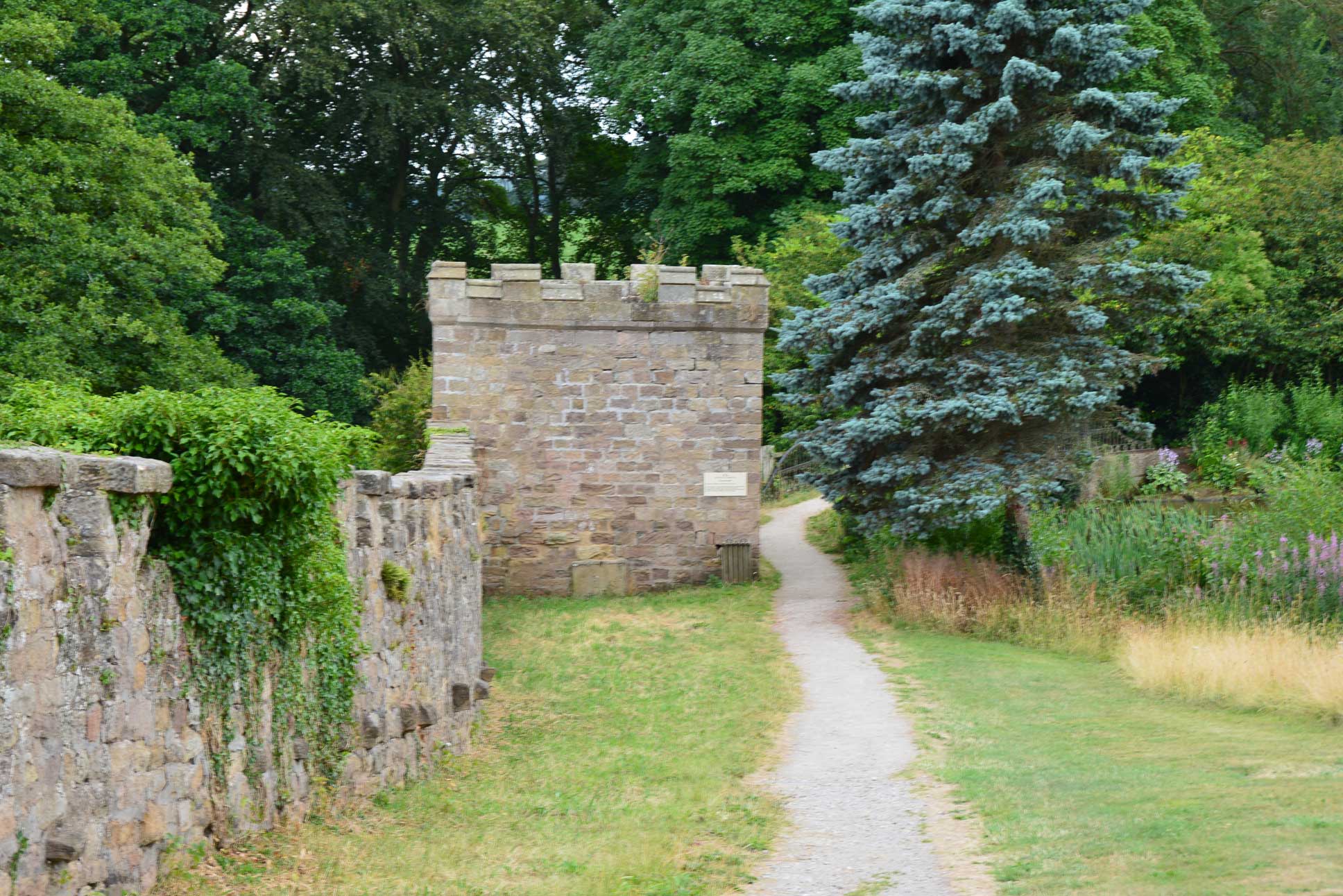
Down the path next to the park lake, the Eel Tower can be seen, which was once used to stock live freshwater eels as a food source. The deer park is located beyond the Eel Tower on the hill on the opposite side of the lake from the castle.
Ripley Castle can be explored in half a day. Other castles nearby including Knaresborough, Spofforth, and Skipton, are within easy reach. Skipton offers rooms to visit, unlike the ruined Spofforth and Knaresborough.
Ripley Castle is also haunted.