Siege of Scarborough Castle
The Great Siege of Scarborough Castle
Background
Scarborough Castle was a major stronghold on a prominent headland overlooking the North Sea. It held strategic importance because of its natural defenses and the town's harbor.
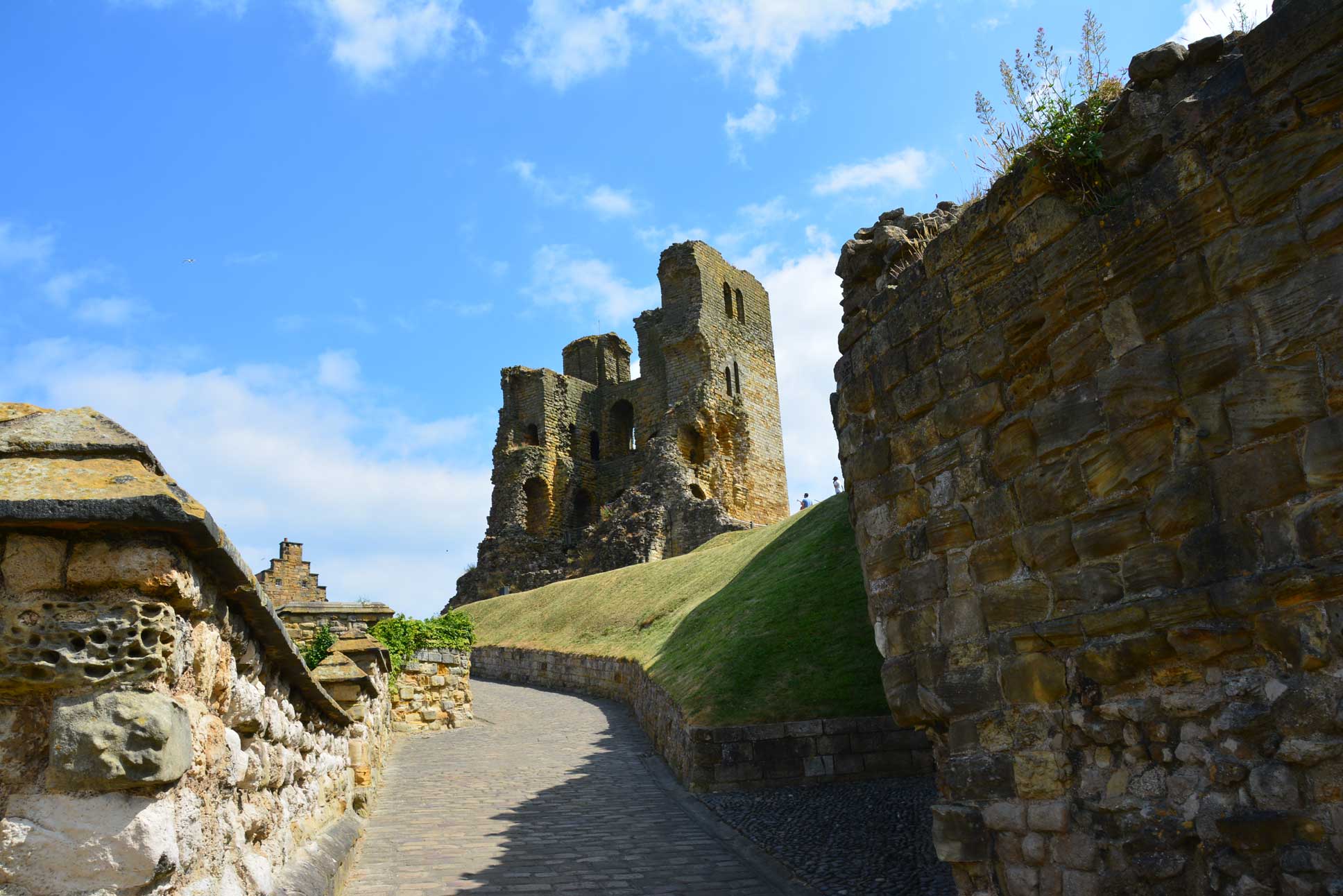
Early in the Civil War, Hugh Cholmley held the castle for Parliament. In 1643, after switching sides to support the Royalist cause, he fortified the castle. As a result, it became a key base for controlling shipping and launching raids on Parliamentary supply lines, especially coal supplies destined for London.
In August 1644, Cholmley began surrender talks after Lord Fairfax's Parliamentarian forces reached Scarborough, using the negotiations to buy time to strengthen the castle's defenses.
After the Battle of Marston Moor and the fall of York in 1644, Scarborough remained the last significant Royalist castle in Yorkshire. In early 1645, John Meldrum, a professional Scots soldier, led Parliamentarian forces towards Scarborough.
Battle
On February 18th, 1645, about 1,700 Parliamentarians under Meldrum captured the town of Scarborough, the South Steel Battery, and the port, cutting off all escape routes by land or sea. Hugh Cholmley, together with his 500 Royalist troops, retreated to Scarborough Castle, refusing to surrender. Jordan Crossland and his men were ordered to hold St Mary's Church, below the castle for the Royalists. The Church saw most of the fighting that day and Crossland was captured along with eighty of his men. With the capture of St Mary's, the path to the castle was clear. For five months, the siege raged, characterized by almost constant cannon bombardment, mining attempts, and close-quarter fighting.
The siege was delayed for six weeks when Meldrum recovered from a fall over the cliff's edge on March 24th. According to Cholmley, Meldrum had been trying to retrieve his hat from the wind, though it's more likely that a sudden gust of wind blew him off the cliff. Cholmley wrote of it:
"Beeing to plant these ordnance neere to the sea cliff for more advantage to matter, Meldrum there in person giving directions about them, his hatt blowes of his head, and hee catching to save that, the winde being very great blowes his cloake over his face, and hee falls over the cliff amongst the rockes and stones att least steeple height; itt was a miracle his brianes were not beaten out and all his bones broaken, but itt seemed the winde together with the cloake did in some sorte beare him up, and lessen the fall; yet hee is taken up for dead, lyes 3 dayes speechless, his head opened and the bruised blood taken out, though a man above threescore years old, recovered this soe perfectlie that with in six weekes hee is on foote againe, and begins to batter the Castle."
Meldrum returned in May. The besiegers set up the largest cannon in the country, the "Cannon Royal," in St Mary's Church below the castle. From there, they fired 56 to 65-pound cannonballs into the castle walls. The cannon partially destroyed the castle's Keep by collapsing its west wall, roof, and interior staircase.
In response, the castle garrison fired cannonballs at St Mary's Church, causing heavy damage still visible today.
The Keep was now useless. Its rubble not only provided the Royalists with more ammunition, but it also blocked the Royalists' own path to the Barbican — an opportunity Meldrum failed to recognize. By the time he understood that the rubble had left the Barbican undermanned, the garrison had already cleared it, which is why the Parliamentarians never attempted to take the Barbican when the Keep fell. Afterward, the Parliamentarians captured Bushell's battery and set up 34-pound cannons to target the castle yard. However, during a night attack on May 10th, the Royalists destroyed the battery.
The next day, both sides fought hand-to-hand around the Barbican in an attempt to gain control. Meldrum was mortally wounded in the fighting when a muskett ball passed through his lower abdomen and out his back. He lingered in pain for six days.
Following Meldrum's death in May 1645, Matthew Boynton assumed command. Instead of hand-to-hand assaults, Boynton shifted to bombarding the castle from land and sea, and soon the siege began to favor the Parliamentarians.
Relentless bombardment, scurvy in the garrison, lack of fresh water, likely a shortage of gunpowder, and the threat of starvation forced the castle into submission. The garrison surrendered at noon on July 25th, 1645.
Aftermath
One of the longest and bloodiest of the First English Civil War, the Great Siege of Scarborough Castle ended with the surrender of a garrison so depleted that only 25 members were fit to fight. Not even half of the original 500 defenders survived. Receiving generous terms, Cholmley left for exile in Holland. Jordan Crossland and his men that were taken prisoner in St Mary's Church were also released.
After the Parliamentarians repaired parts of the castle, they stationed a garrison of 160 men there to hold it and man the cannon. When this garrison went unpaid and left, the castle reverted to the Royalists. On July 27th, 1648, Boynton's son, also named Matthew Boynton, became governor, declaring support for the King. Consequently, a second siege began on December 19th, 1648, aimed at restoring the castle to Parliamentarian control.
The castle was scheduled to be slighted by an order in July 1649 to prevent Royalist use. However, local outcry saved it from destruction, and consequently, it was instead used as a prison for enemies of the Commonwealth of England.
The castle returned to the crown in 1660 after the restoration of the monarchy, but the Keep's west wall was never rebuilt.
 John Meldrum