Siege of Skipton Castle
Background
At the outbreak of the English Civil War in 1642, Skipton Castle became a key Royalist stronghold in the north. Its garrison was led by John Mallory, a Royalist Colonel and former MP.
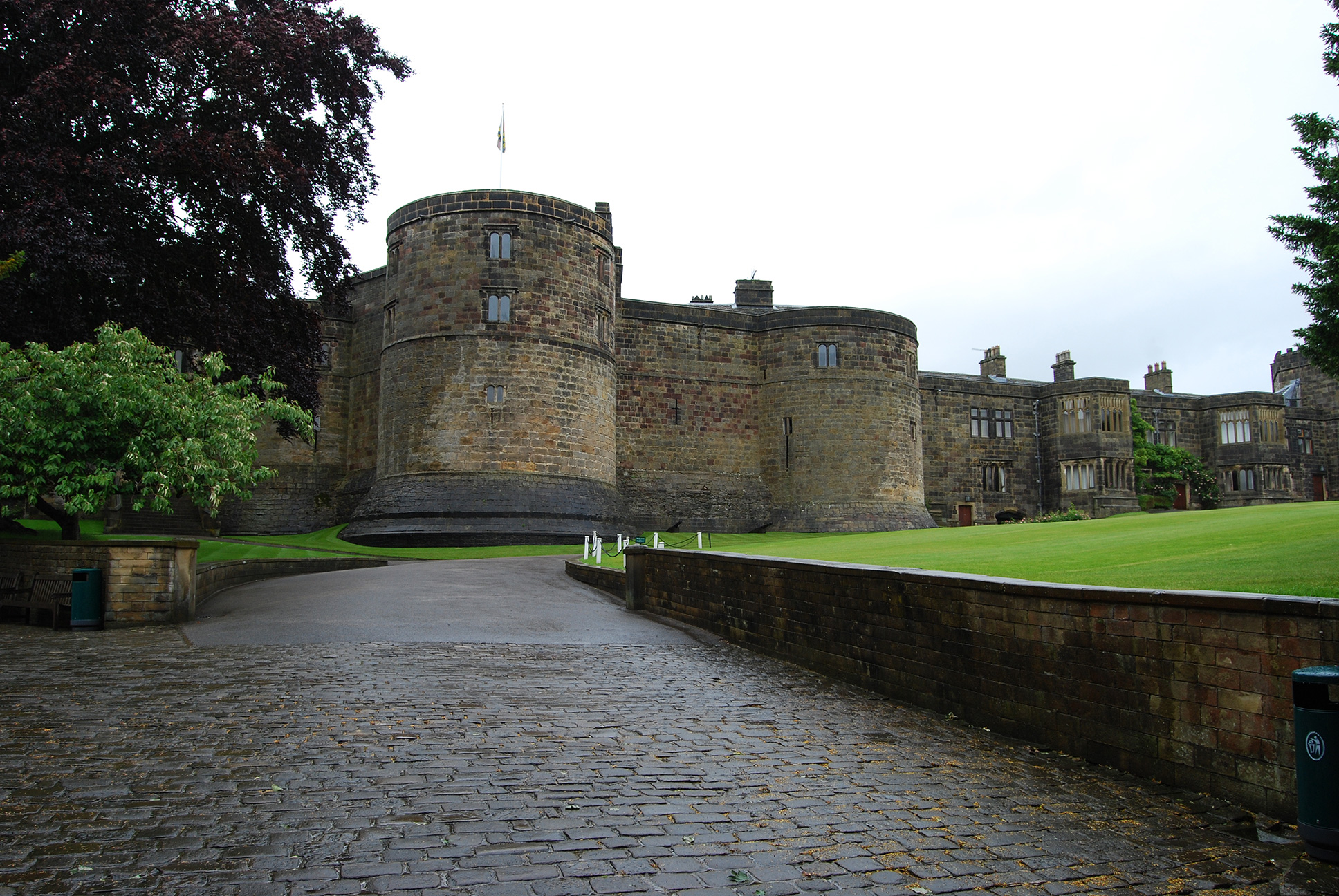
In early 1643, Parliamentarian forces began operations against Skipton Castle. They besieged it for a few weeks before being called away to support other efforts in Yorkshire. As a result, the immediate threat to Skipton eased temporarily.
During this lull, the Royalists reinforced the outer walls with earth. They also raised platforms for mounting cannons to strengthen the castle's defenses.
At the same time, Skipton Castle remained active in the conflict. Troops from the garrison participated in relief efforts during sieges at other Royalist castles in the north, including Helmsley Castle.
The situation changed on July 21, 1645, when Pontefract Castle in West Yorkshire fell. General Sydenham Poyntz then turned his attention to Skipton Castle. By this time, Poyntz's Parliamentarian forces were worn down. Some had gone months, even a year, without pay. He had hoped for reinforcements from Lancashire and County Durham. He also struggled to keep men from defecting.
During the march from Pontefract to Skipton, a regiment of horsemen under Colonel Alured protested to Poyntz about their lack of funds, and the Colonel promised to give them one month's wages to continue. By August 1st, 1645, the Parliamentarian forces had marched to within one mile of Skipton, where they paused for several days while waiting for reinforcements. Although the arrival of support from Lancashire or Durham is unclear, two companies of footmen did arrive from Appleby, along with a small munitions convoy.
In response, John Mallory dispatched a force of horsemen from the castle to intercept the Parliamentarians, and in the skirmish, a few Parliamentarians were injured.
Battle
On August 3rd, 1645, Poyntz ordered his troops to advance on Skipton in four columns. The Royalists did not try to defend the town. They stayed within Skipton Castle and nearby Holy Trinity Church.
Poyntz's men quickly occupied the town. By nightfall, they were in range of the castle. He offered Mallory terms of surrender, which were refused. On the 6th, Parliamentarians began to raise cannon batteries to the south and west of the castle. They cut off the castle's external water supply, though it had a well within the grounds.
Skirmishes continued between the castle garrison and the besiegers. As at Pontefract, the Parliamentarians found themselves besieging a well-prepared and active garrison, leading to a mutiny among some of their cavalry.
King Charles I reached the Royal forces at Newark. He seemed intent on marching on York to raise more troops and possibly relieve the siege at Skipton. In response, the Parliamentarian committee in York decided to gather troops to the south of Yorkshire. Most came from armies besieging Skipton, Bolton, and Sandal Castles, leading to the abandonment of those sieges. On August 17th, Poyntz withdrew his siege on Skipton Castle and marched south, ending the two-week siege.
With the Parliamentarians' withdrawal, the Royalists at Skipton were able to restock from the harvest and prepare to defend against another siege.
On October 1st, Sandal Castle surrendered to Parliamentarian forces. Only Bolton Castle and Skipton Castle remained as Royalist strongholds. On November 8th in Poppleton, a parliamentary committee led by William List and Francis Pierrepoint opened negotiations with John Mallory. Mallory, represented by Colonels Leigh and Cobbe, offered terms for the surrender of Skipton Castle, but these were deemed unacceptable.
With negotiations failing, a new siege at Skipton began. The Parliamentarians sent Colonel Richard Thornton with 2,000 horse and 2,000 foot soldiers, who arrived near Skipton by November 18th. By then, both sides had learned that Bolton Castle had fallen, making Skipton the last northern castle holding for the king.
Thornton moved to take the town. Unlike during the previous siege, the castle garrison did not stay in the castle and wait; instead, it fought to protect the town. After three days of hard fighting, the Roundheads finally took the town on November 23rd. Thornton then sent for the siege train at York, which arrived in early December.
Once the siege train arrived, Thornton began a steady bombardment of the castle. This caused heavy damage to both the castle and the morale of the garrison inside. As time passed, it became clear that no relief was coming. On December 21st, 1645, terms of surrender were agreed upon between John Mallory and Richard Thornton.
Aftermath
The Skipton Castle garrison was given lenient terms and allowed to march out of the castle with "honors of war." They were escorted toward Nottinghamshire. As part of their surrender terms, they were not allowed to join the garrison at Newark.
After their surrender, no Royalist garrison existed north of the River Trent.
Skipton Castle was ordered to be slighted. Roofs were removed, and walls reduced in height and strength to make the castle undefendable.
After the war, Lady Anne Clifford reclaimed and restored the castle, giving it much of its current appearance. She planted a yew tree in the courtyard in 1659, and it still stands today.
 Sydenham Poyntz