History
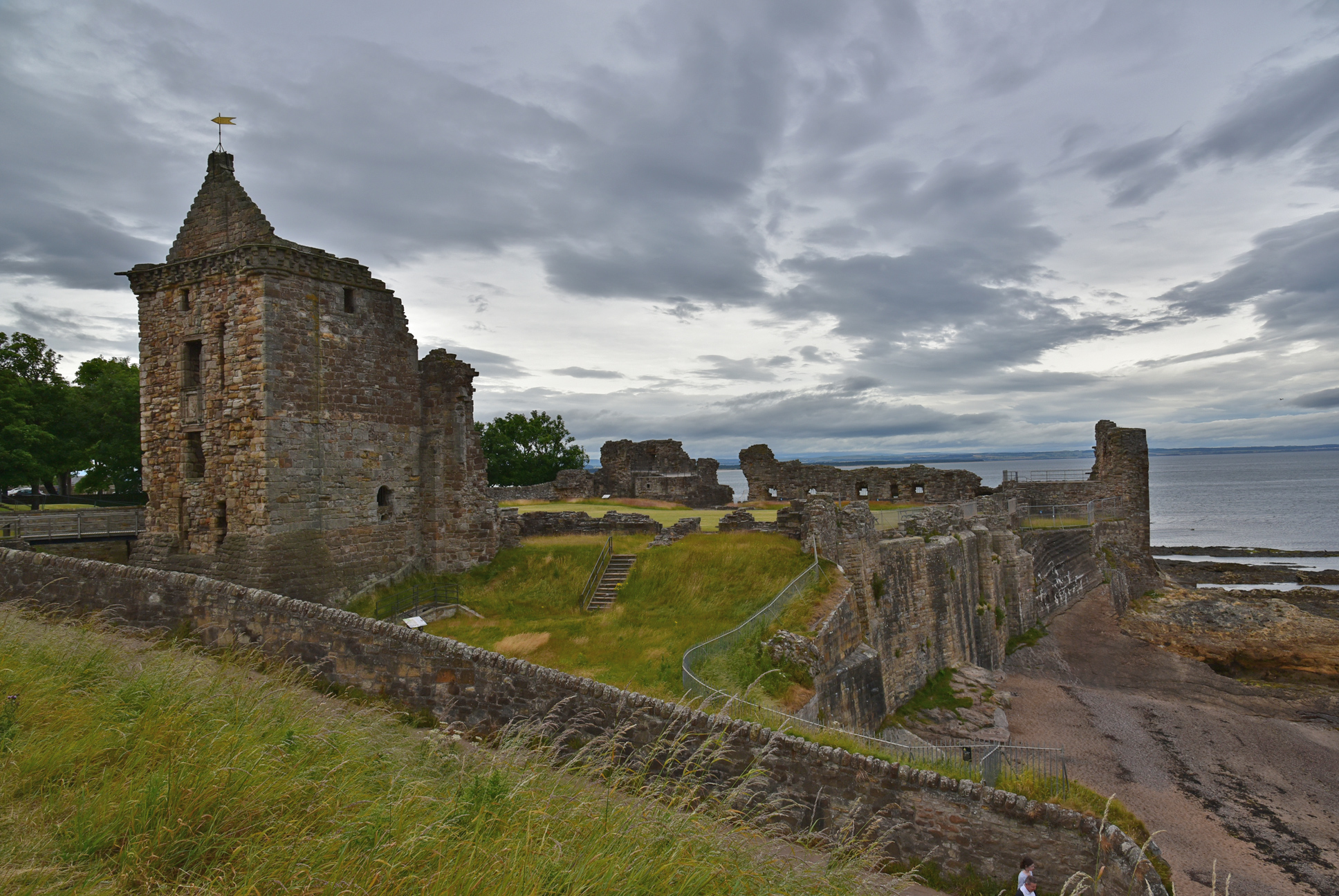
Perched on a rocky headland over St Andrews Bay and the North Sea, St Andrews Castle was once the residence of the bishops, and later the archbishops of Scotland, who shaped Scotland's religious history. For centuries, the castle served as a fortress, palace, and prison.
St Andrews Castle was constructed by Bishop Roger de Beaumont alongside St Andrews Cathedral, between 1189 and 1200. The castle served as an episcopal palace. In Latin charters, the Archbishops of St Andrews referred to the castle as their palace, signing, "apud Palatium nostrum."
The castle changed hands several times between the Scots and English during the Wars of Scottish Independence. After the Sack of Berwick in 1296, the castle was prepared for King Edward I of England in 1303. In 1304, Edward used the castle as his residence and held a parliament in the cathedral priory.
In 1314, after the Battle of Bannockburn, the Scots, led by Bishop William Lamberton, retook the castle and repaired it. By the 1330s, the English had recaptured the castle and strengthened its defenses in 1336.
Later in 1336, Andrew Moray, Regent of Scotland, recaptured the castle after a three-week siege. Shortly after the siege, the castle was destroyed by the Scots to prevent the English from using it as a stronghold against them.
St Andrews Castle remained in ruins until Bishop Walter Trail rebuilt it at the turn of the century, completing the work around 1400. He died within the castle the following year. Much of the castle's ruins date from his time.
In 1402, David Stuart, Duke of Rothesay, was held prisoner in the Bottle Dungeon of St Andrews Castle. In 1410, King James I of Scotland received part of his education from Bishop Henry Wardlaw, the founder of the University of St Andrews. In 1425, Murdoch Stewart, 2nd Duke of Albany, was held at the castle. Archbishop Patrick Graham, who was judged to be insane, may have been imprisoned in the castle for a time before dying in captivity at Lochleven Castle in 1478.
St Andrews Castle later became a center of religious persecution and controversy during the Scottish Reformation.
In 1521, James Beaton, Archbishop of Glasgow, moved in and built gun towers to strengthen the castle's defenses. Heavy artillery was a real threat due to the conflict between English Protestants and Scottish Catholics at the time. Beaton was succeeded by his nephew, Cardinal David Beaton, in 1538.
David Beaton was very active at the castle. Beer was brewed there, and Onions and lettuce were grown in the castle garden. Christopher Grymmerschere provided guns, Master Wolf made a new cannon, and John Fynnyk was the castle gunner.
On October 10th, 1542, three women from Edinburgh and Dunfermline, accused of witchcraft, were imprisoned at St Andrews Castle and executed by burning.
Cardinal Beaton opposed the proposed marriage of Mary, Queen of Scots, to Prince Edward, son of Henry VIII. This helped spark the Rough Wooing and the burning of Edinburgh in 1544. In 1546, Beaton imprisoned Protestant preacher George Wishart in the castle's Sea Tower, then had him burnt at the stake on March 1st, in front of the castle walls. In May, Wishart's friends disguised themselves as masons while building was underway at the castle, overtook the garrison, and murdered Beaton. They hung his body from a window by an arm and a leg to form the cross of Saint Andrew.
After the murder, the Protestants took refuge in the castle and formed Scotland's first Protestant congregation. James Hamilton, 2nd Earl of Arran, ordered a siege. The besiegers started a large mine, which the defenders countermined. Those mines were found in 1879 and are open to the public. Hamilton later heard the English might assist the besieged. He asked Fife lairds to come by November 4th and bring artillery for the fight against a sea invasion. However, the English never arrived.
In April 1547, Scottish reformer John Knox arrived at the castle and began serving as preacher to the garrison. He was free to come and go, and also preached in the nearby parish church. This ended when a French fleet, which included Leone Strozzi, an Italian engineer, arrived to bombard the castle with artillery. Cannons were placed on St Salvator's and the cathedral towers, including one called "thrawynmouthe."
Within six hours of bombardment, the castle was rendered indefensible, and the Protestants were taken from the castle. Some were sent to France to be imprisoned, and others, like John Knox, were condemned to the galleys.
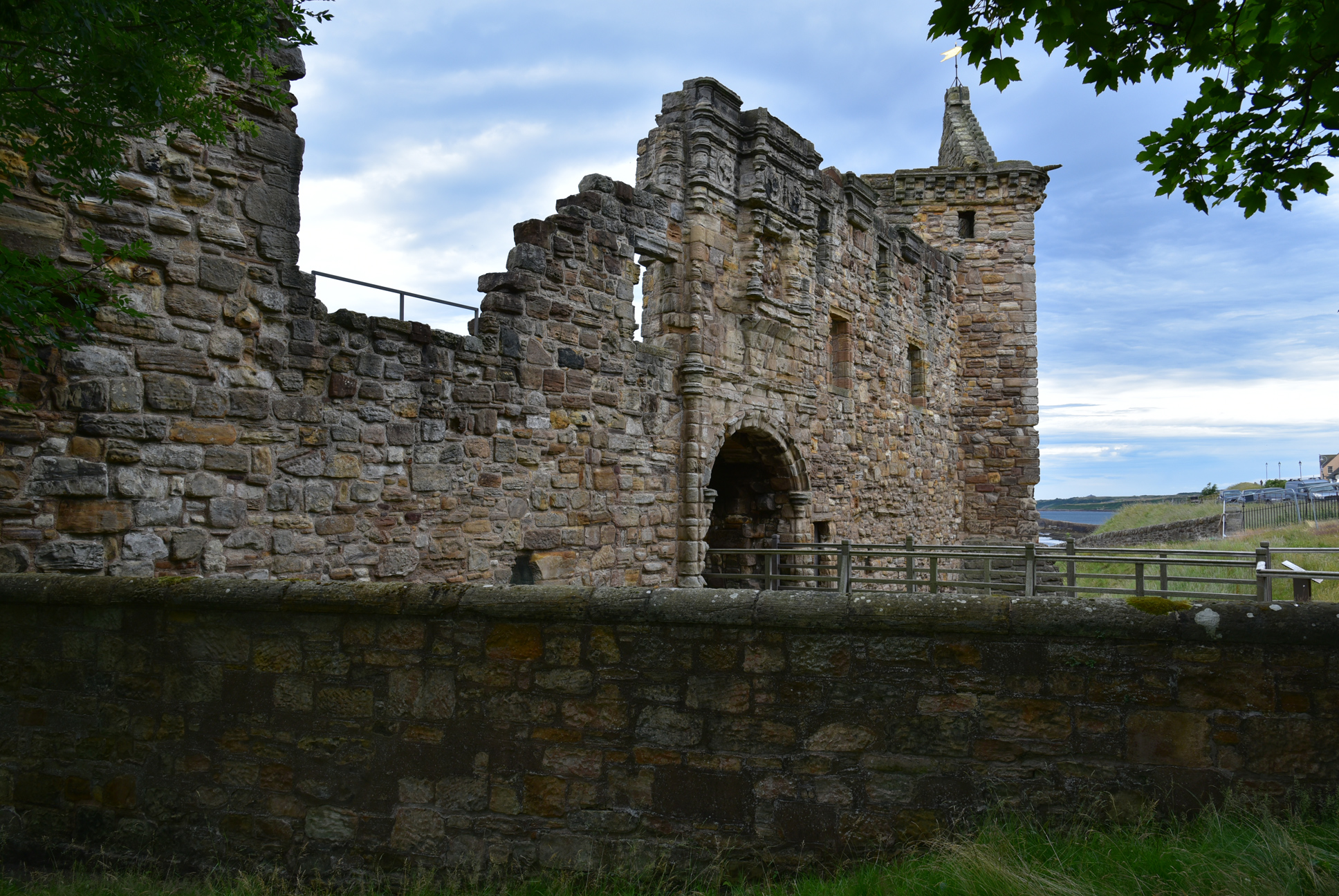
After the Protestant defeat, Archbishop John Hamilton rebuilt St Andrews Castle and added a new entrance front. The ornate Hamilton Façade was a drastic contrast to the earlier defenses. After Hamilton was hanged in 1571, the castle was mostly occupied by constables. It was separated from the church and granted to the Earl of Dunbar in 1606. In 1612, it returned to the church and Archbishop George Gledstanes. Attempts to re-establish former estates failed.
In 1689, William III, William of Orange, abolished the office of the bishop following the success of the Reformation in Scotland. Now with no purpose, the castle fell rapidly into ruin. Parts of the castle were used in repairing the pier.
In 1801, the Great Hall collapsed, with most of it plunging into the sea. Further parts of the castle suffered the same fate until a sea wall was built in 1886.
Today, St Andrews Castle is cared for by Historic Environment Scotland.
Castle Highlights
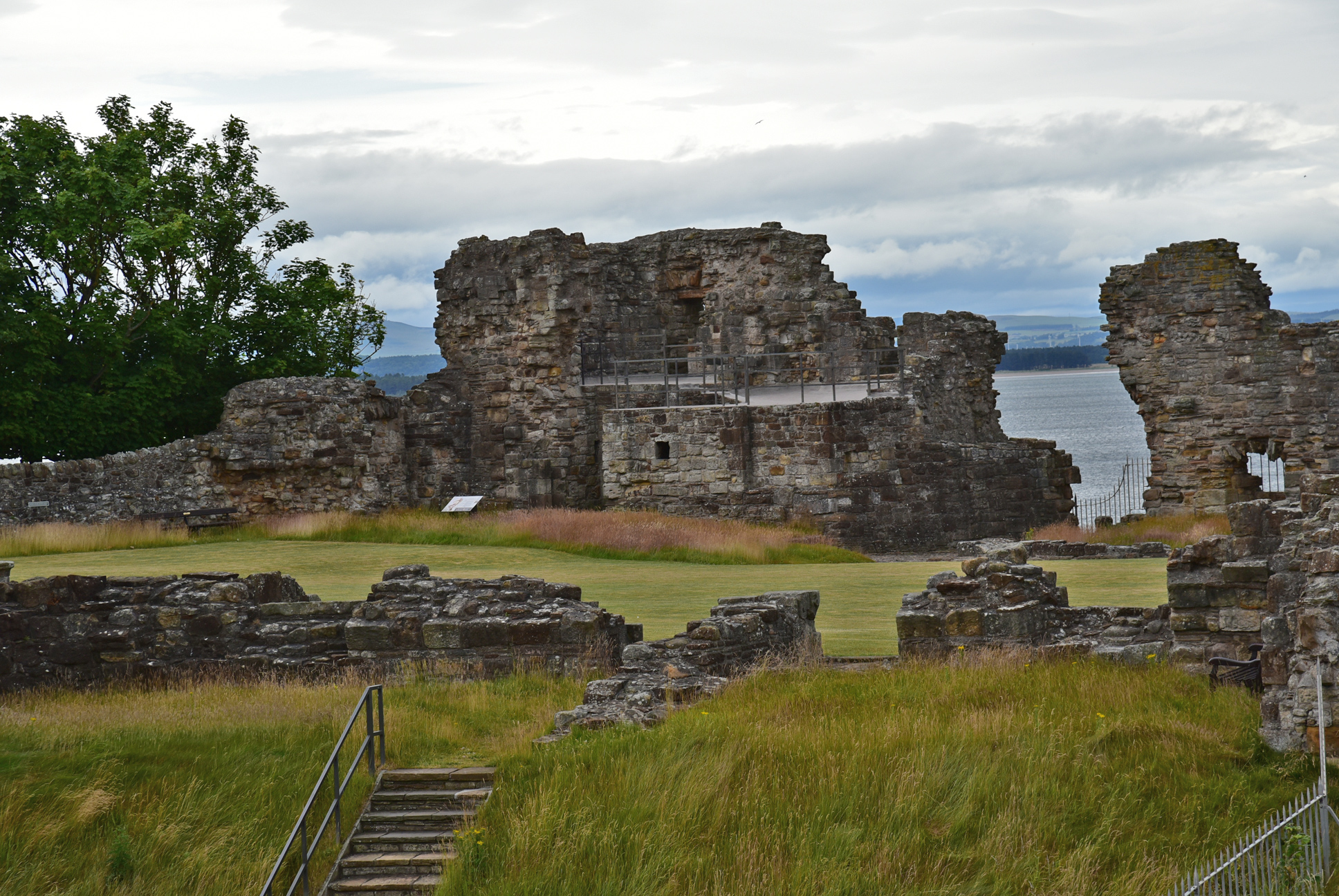
St Andrews is famous for golf, but the castle is always worth a visit. It sits along the coast of St Andrews on a one-way street, making access tricky and parking limited. It is best to park a street or two away and walk. The coastal location gives dramatic views of the castle and St Andrews Bay, which feeds into the North Sea.
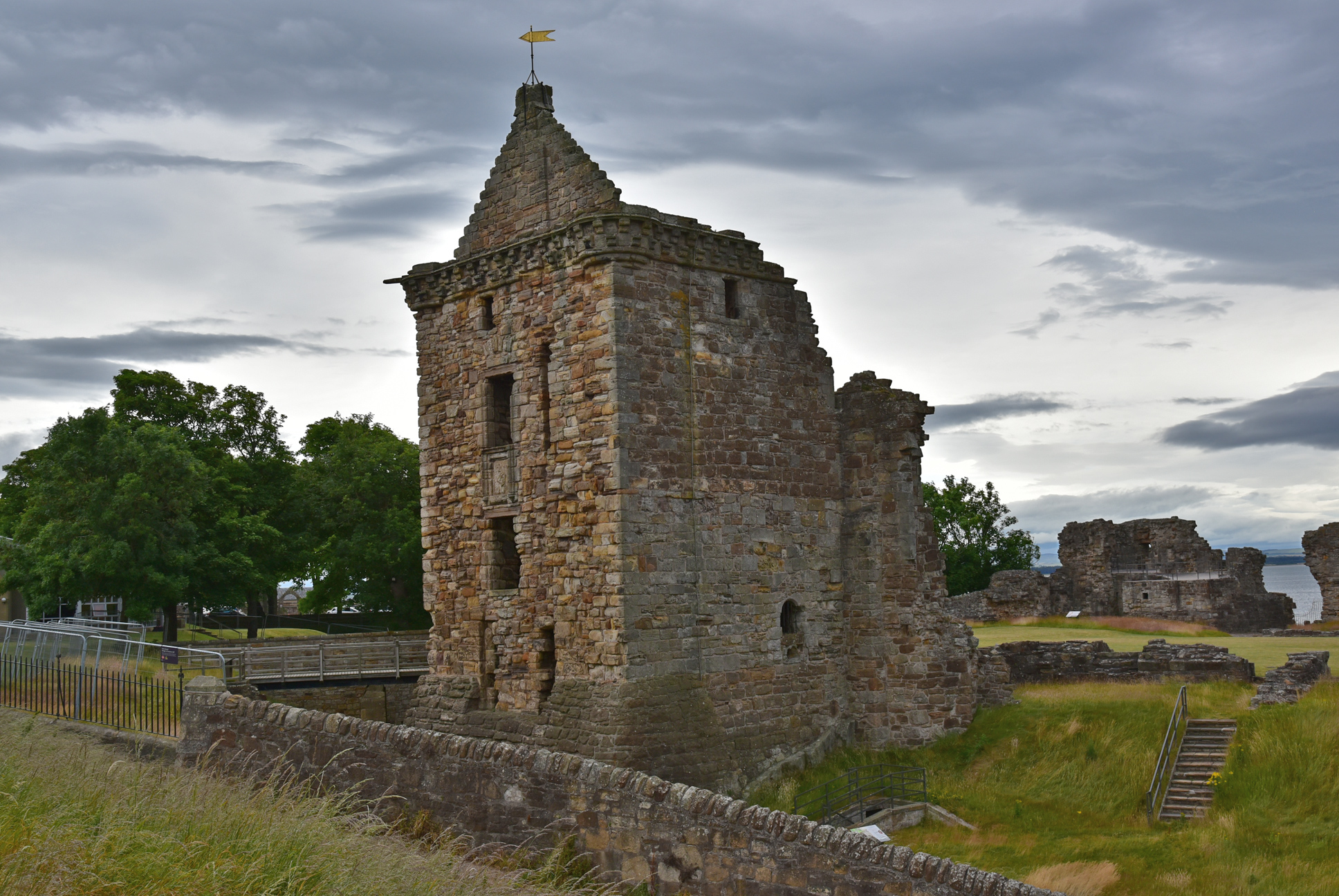
The castle is a ruin, but enough endures to convey how it appeared during Bishop Walter Trail's time in 1400. The Fore Tower flanking the entrance is the castle's most impressive feature.
The castle's most distinctive elements are the Bottle Dungeon, which detained many prisoners, and the preserved medieval mines and countermines from the great siege of the 1540s.
Entry to the castle grounds is through a modern visitor center in front of the ruins, which also features historical exhibits about the castle's history. The remains of St Andrews Cathedral are just around the corner and merit a visit.
To see more castles during the same day, Broughty Castle and Claypotts Castle are just a bit north across the River Tay in Dundee.
St Andrews Castle is also haunted.