Burg Thurant
History
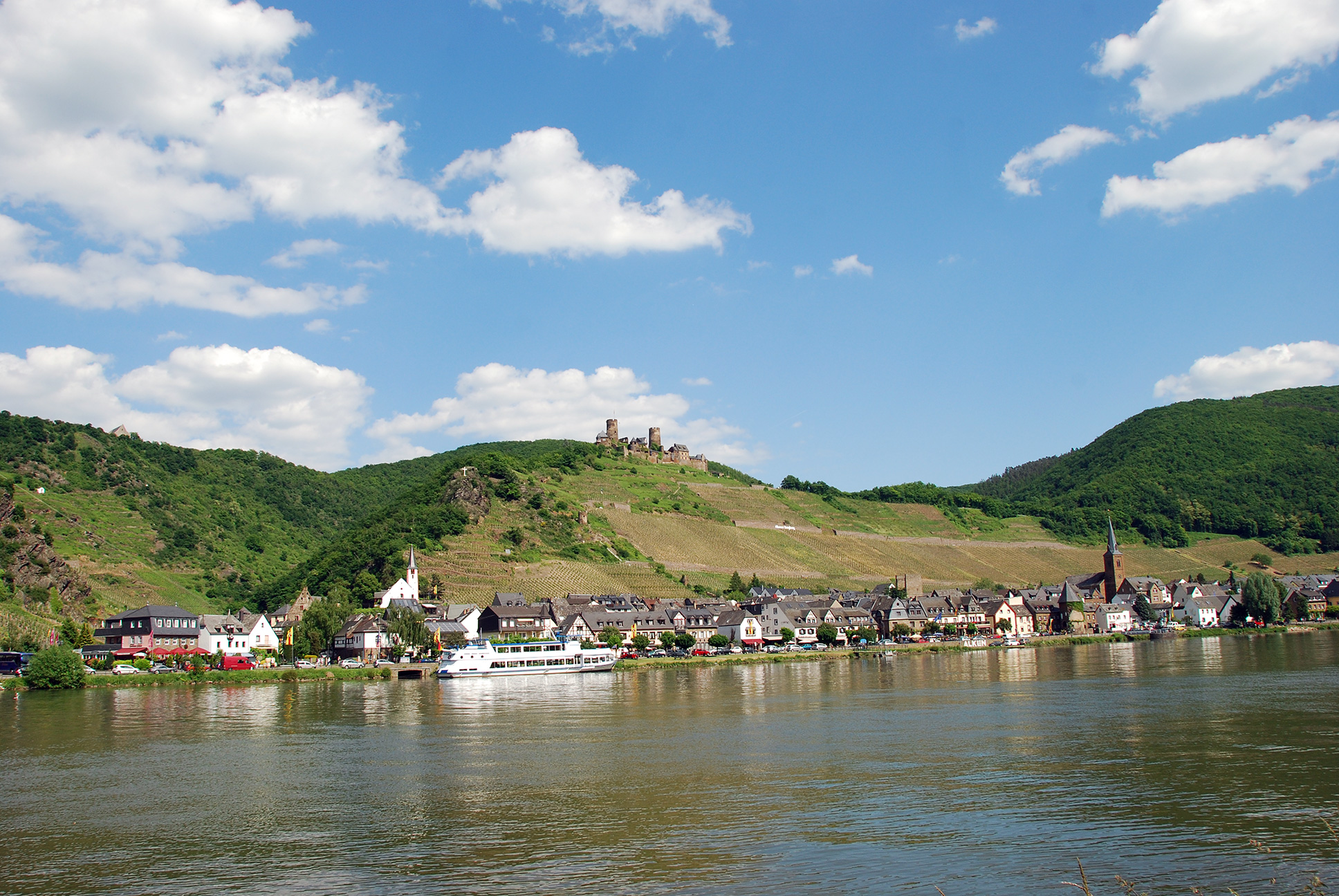
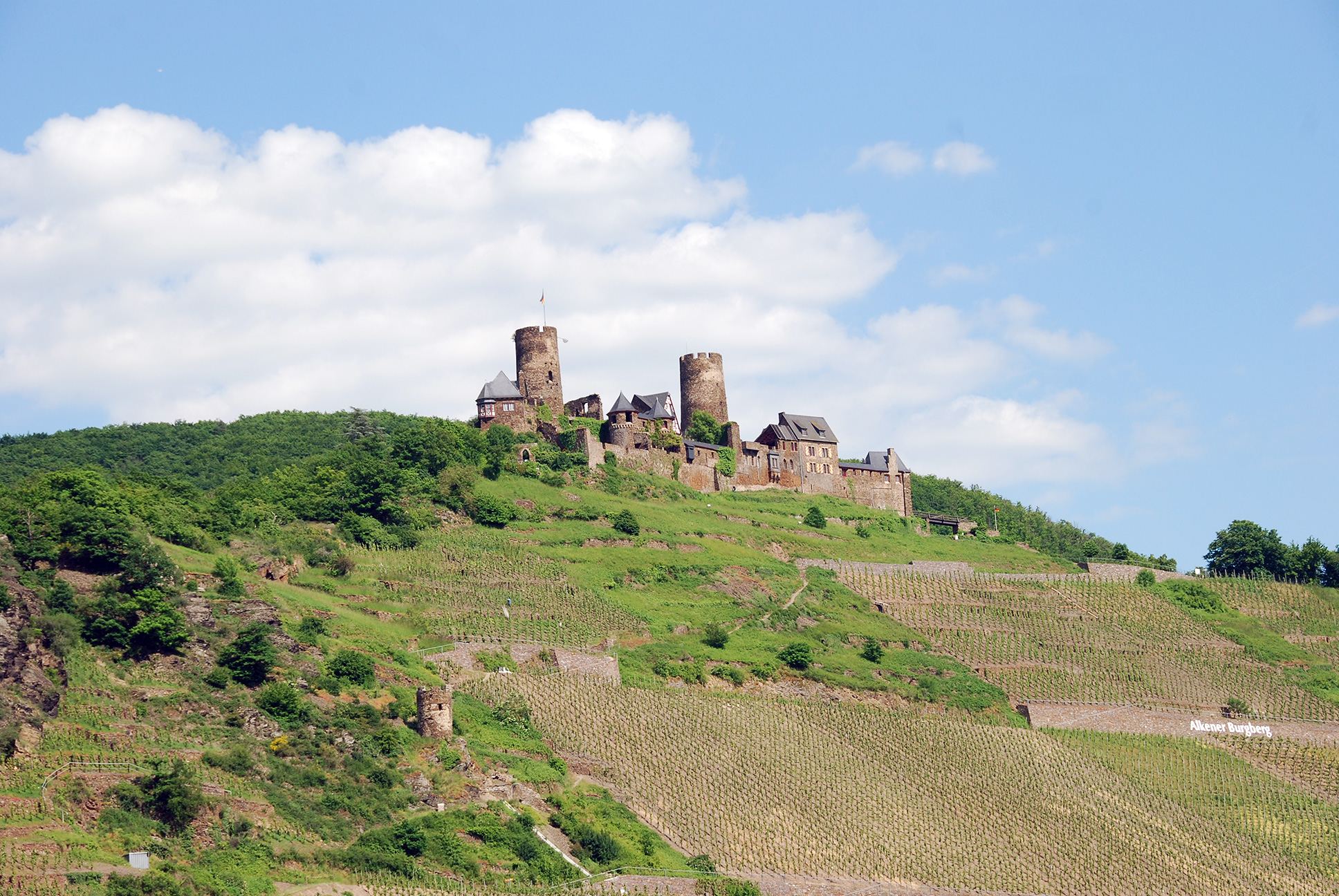
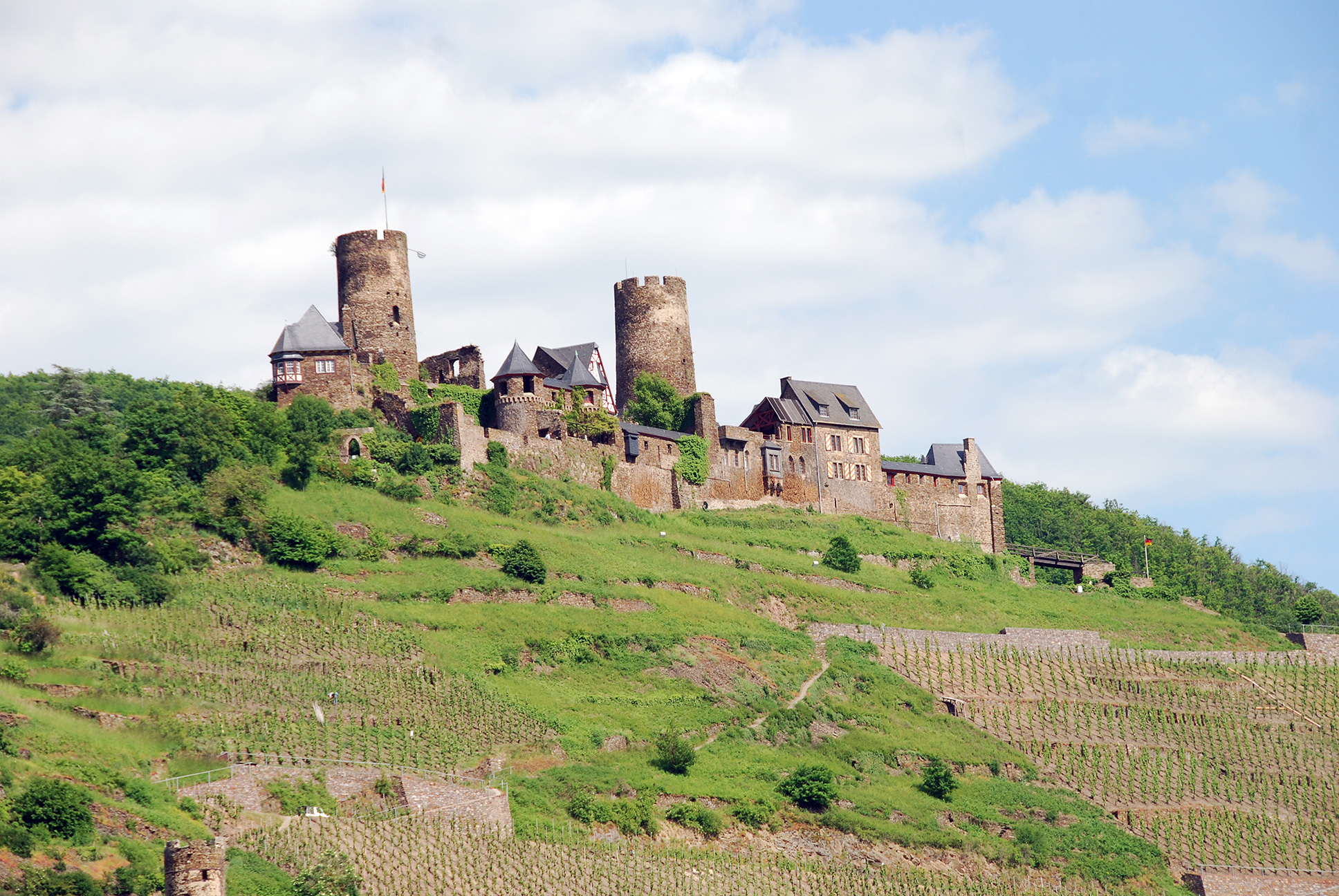
Burg Thurant was built in the late 12th century on a wide spur of slate above the village of Alken on the River Moselle by Count Palatine Henry I the Long.
Henry likely built the castle sometime between 1198 and 1206 to secure his brother's claims in the Moselle region. His brother was Emperor Otto IV of Brunswick. Tradition says that he named the castle after Toron Castle in Lebanon, which he besieged during the Battle of Barbarossa in the Third Crusade.
In 1214, Count Palatine Henry II the Younger died without a male heir, and Emperor Frederick II gave the castle and village of Alken to the Wittelsbachs from the Hohenstaufen dynasty as an imperial fief.
Due to its location near Trier, Burg Thurant was also claimed by the Archbishops of Cologne and Trier. In 1216, Engelbert I of Cologne besieged the castle, took it by force, and kept it until his death in 1225; after his death, the castle was returned to the Counts Palatine of the Rhine, and knight Berlewin was appointed burgrave by Otto II of Bavaria.
Knight Berlewin was a robber knight who attacked the Trier region from the castle. Thus, Arnold II of Isenburg and Konrad von Hochstaden joined forces and besieged the castle in 1246 as part of the "Great Feud". The castle was finally taken in 1248, and on November 17th, 1248, a treaty of atonement was signed in which the Electoral Palatinate renounced Thurant Castle and the village of Alken, in favor of the two archbishoprics of Cologne and Trier. The Peace Treaty remains one of Germany's oldest documents today.
The archbishops divided the castle into two halves, separated by a wall. Each half was operated as a separate burgrave, with its own entrance, Keep, and residential buildings. The twin Keeps were named the Cologne Tower and the Trier Tower, respectively.
In the 14th and 15th centuries, both parts of the castle served as after-fiefs and were ruled by powerful families, including the von Schöneck, von Winningen, von Eltz, and von de Reck families. By 1495, the Lords of Wiltberg were the castle's feudal lords. They used parts of the castle to build Wiltberg Castle, also known as Wiltburg Castle, and by 1542, Burg Thurant was described as dilapidated.
In 1689, during the Palatine War of Succession, French troops further destroyed the castle, and only the two Keeps and a 16th century residential building survived unscathed.
In 1911, Privy Councillor Dr. Robert Allmers bought the castle and had some parts rebuilt between 1915 and 1916.
The castle suffered more damage during the Second World War when the manor house was destroyed by American artillery fire and a subsequent fire. It was rebuilt between 1960 and 1962.
Since 1973, Burg Thurant has been privately owned by the Allmers and Wulf families and is a protected cultural asset under the Hague Convention.
Castle Highlights
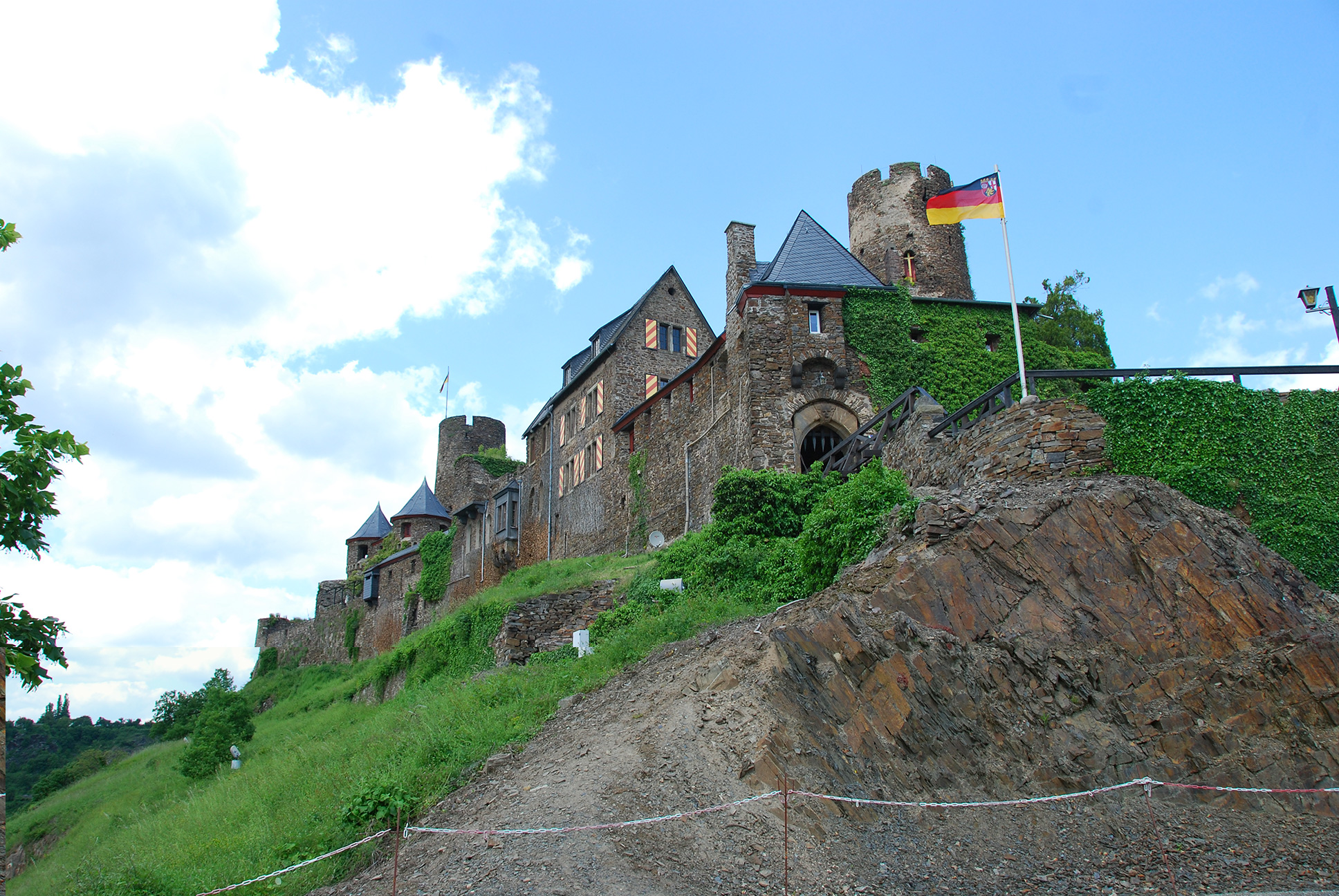
Burg Thurant consists of many buildings surrounding an inner courtyard, all enclosed by a ring wall. Rather unique, Thurant has two Keeps, the Cologne Tower and the Trier Tower, both standing over 20 meters tall and are among the highest Keeps on the River Moselle.
The Trier Tower is closed to visitors. Other parts of the castle can be visited, including the Cologne Tower, the hunting lodge, which features numerous exhibits, and the dungeon, which contains medieval torture instruments. The wine cellar presents the old craft of winemaking, and the castle chapel is also worth a visit.
In the Trier side of the castle is the only surviving cistern, which reaches a depth of 20 meters. There is also the three-story half-timbered building, which serves as a holiday apartment today.
The Cologne side of the castle contains two round towers on the south-eastern wall, which are connected by a covered wall walk. Inside the south tower are wall paintings depicting the coats of arms of all the feudal lords of the castle. The northern end of the castle houses the Hunting Lodge, which has been rebuilt on the old foundation walls and features armor, weapons, and finds from the excavation.
Burg Thurant can be explored in an hour or two. Burg Eltz and Burg Reichsburg (Cochem Castle) are both nearby and require a half to a full day each to visit.