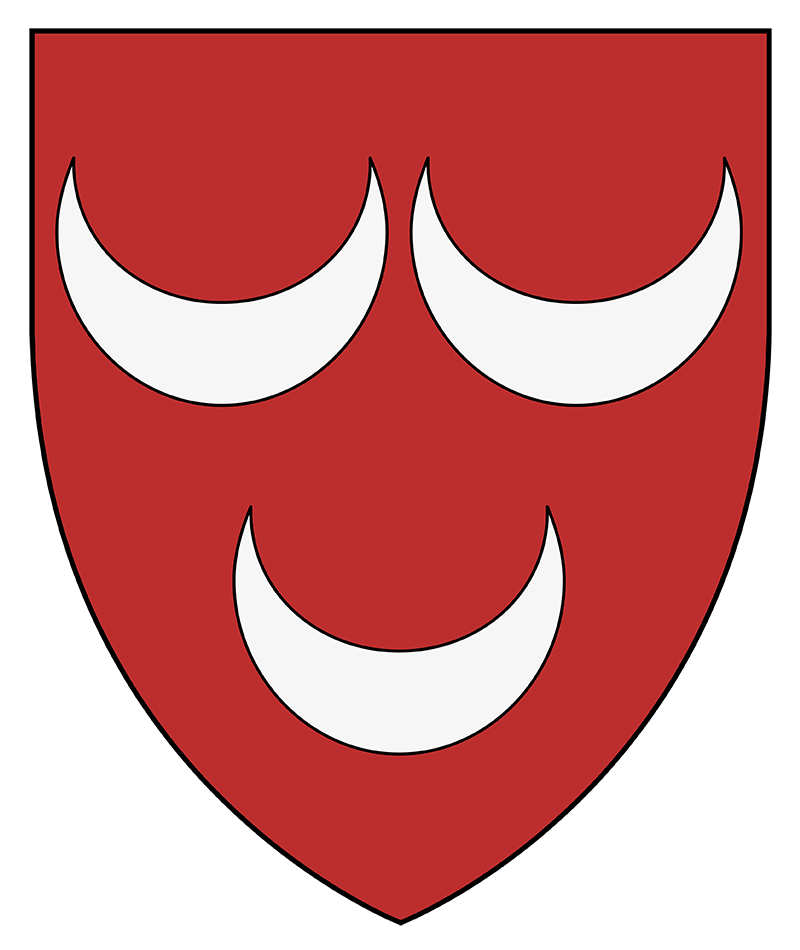
William Oliphant - Lord of Aberdalgie
William Olifard
William Oliphant was a Scottish Nobleman and signatory of the Declaration of Arbroath, remembered for his leadership during the First War of Scottish Independence and his governance of Stirling Castle.
William was likely born around 1253 into the prominent Anglo-Norman Oliphant family. He was the son of Walter Oliphant, Justiciar of Lothian. His mother's name is lost to time. He grew up amid the manors and knightly households of medieval Scotland, where he received training in arms, horsemanship, and estate management, preparing him for knighthood.
When his father died, William inherited the lordship of Aberdalgie in Perthshire, including Dupplin Castle, and entered noble circles during the reign of King John Balliol.
On April 27th, 1296, William fought for Scotland at the Battle of Dunbar. Scotland suffered a crushing defeat, and William was captured and held at Devizes Castle. He was released in 1297 after about a year on condition that he serve King Edward I of England, but he soon returned his allegiance to Scotland.
William married Isabel Douglas in the late 13th or early 14th century, and they had one child, Walter Oliphant.
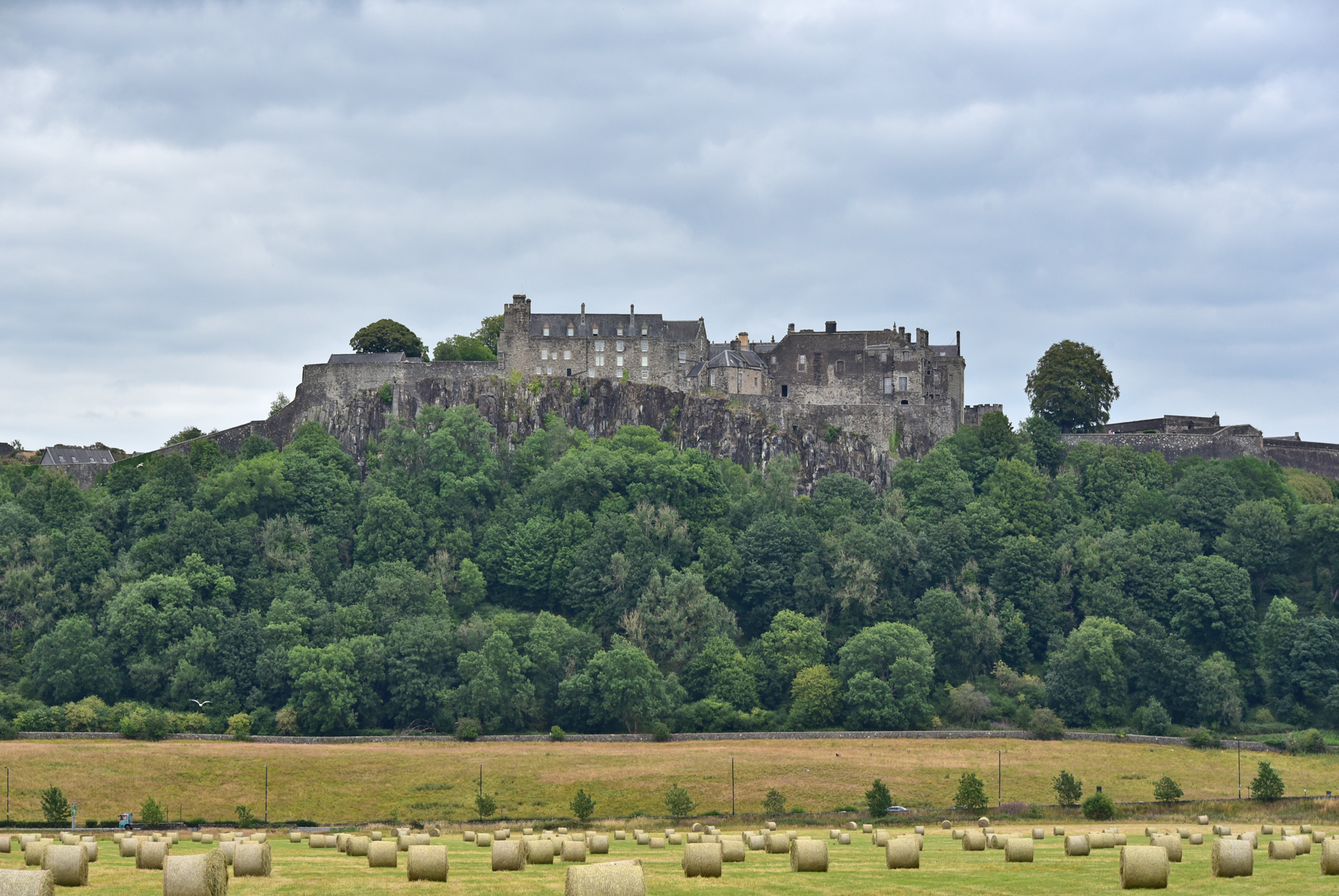
In early 1304, William Oliphant was appointed governor of Stirling Castle, tasked with defending it against the English as one of the last Scottish strongholds to hold out. During the siege, he was faced with overwhelming odds, he burned the surrounding countryside to deny the English nearby foraging, prolonging the siege as King Edward I arrived with 8,000 men and over a dozen siege engines, including the Warwolf, the largest trebuchet in Edward's arsenal.
Oliphant rejected the English offers to surrender the castle and held out through the summer. By mid-July, with supplies running low and the castle's outer defenses starting to give way, he offered to surrender upon witnessing the assembly of the Warwolf. Edward rejected the terms until the Warwolf was assembled and tested, firing a single shot that shattered the gatehouse of Stirling Castle on July 24th, after which Edward accepted the surrender. The surrender spared the garrison and Oliphant from execution. William was then taken to the Tower of London and held prisoner until May 28th, 1308, when Edward II released him upon the provision of surety for good behavior.
William is sometimes confused with a cousin of the same name, also a Sir William Oliphant, who fought alongside him at the Battle of Dunbar and served as second-in-command during the Siege of Stirling Castle. After the surrender, this cousin was imprisoned at Rochester Castle.
William entered English service and received royal pay between January 1310 and 1311. He was appointed governor of Perth, a key English-occupied castle in Scotland, where he defended the town against Robert the Bruce's forces for six weeks. The castle was captured on January 8th, 1311, during a nighttime assault by scaling the walls.
By late 1313, Robert the Bruce had consolidated his control over most of Scotland. William Oliphant secured a safe-conduct from England on October 21st to return north, marking his defection from England and support for the Bruce and Scotland.
On June 24th, 1314, William fought with Scotland against the English at the Battle of Bannockburn, along with others from Clan Oliphant. Soon after the battle, he received charters from Robert the Bruce, restoring his Perthshire holdings.
William affixed his seal to the Declaration of Arbroath on April 6th, 1320, among the 38 Scottish nobles who petitioned the Pope to recognize Robert the Bruce's kingship and Scotland's independence.
William Oliphant died on February 5th, 1329, at his principal seat, Aberdalgie, the main residence and heart of his estate. He was buried at Aberdalgie Church in Perthshire, Scotland. A fine effigy monument carved from Tournai marble still marks his grave. His son, Walter Oliphant, inherited his estate and later married Elizabeth Bruce, the youngest daughter of Robert the Bruce.