Battle of Boroughmuir
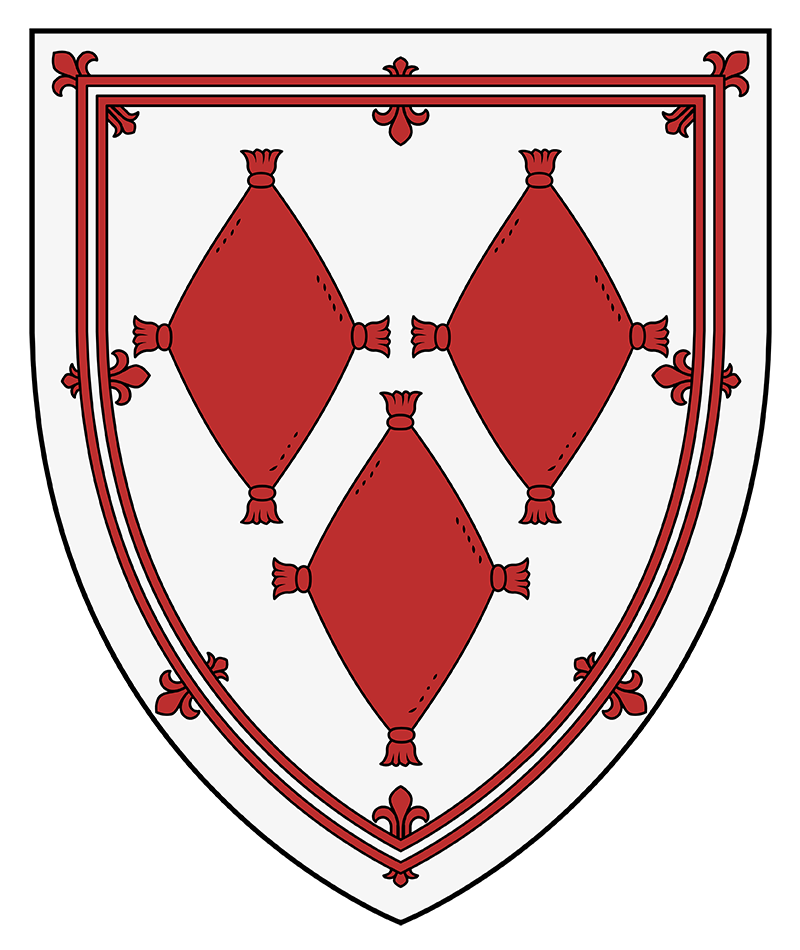
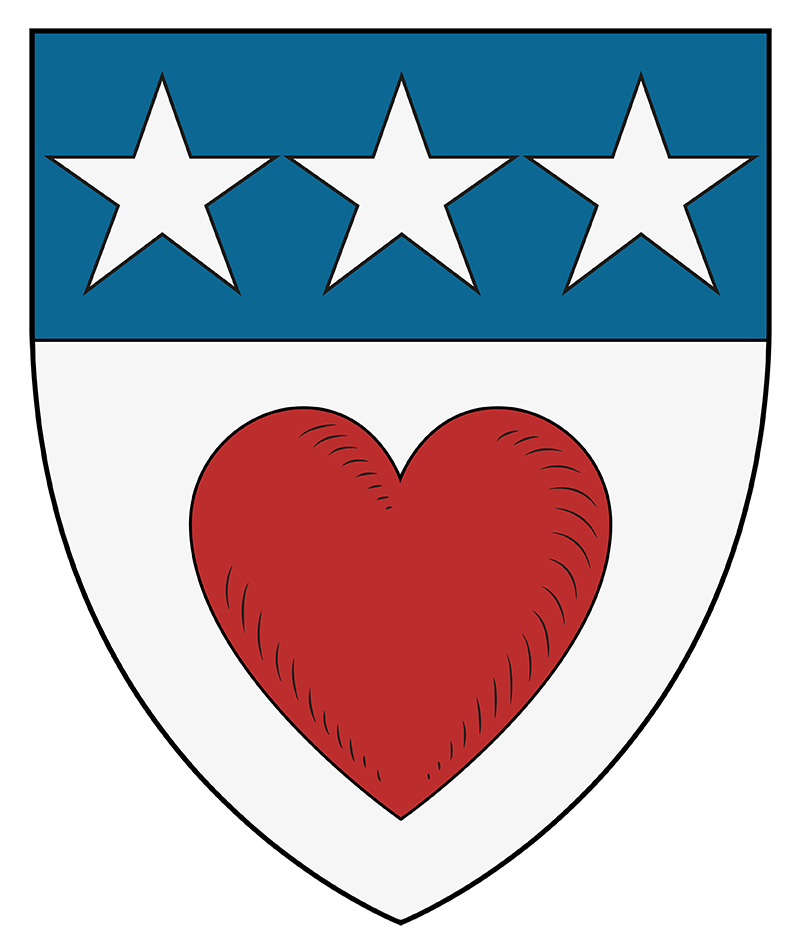
Guy of Namur and the Earl of Moray
Background
The Battle of Boroughmuir was fought on July 30th, 1335, on the Burgh Muir, the common grazing land south of Edinburgh. It was a small fight in the Second War of Scottish Independence, between a Scottish force under John Randolph, Earl of Moray, and a handful of foreign knights who were on their way to join King Edward III of England.
After the English victory at Halidon Hill in 1333, Edward Balliol was restored as king of Scots, but the supporters of the young David II kept fighting, and Balliol's hold on the country remained weak. In the summer of 1335, Edward III invaded Scotland again with a large army, said to have been more than 13,000 strong, in a pincer movement, with the king marching from Carlisle, Balliol moving north from Berwick, and ships supporting both thrusts. His aim was to destroy the Scottish army in the field rather than to take castles. Moray, who was Guardian of Scotland for David II, refused a pitched battle and harassed the English supply columns instead.
Guy, Count of Namur, a kinsman of Edward's queen, Philippa of Hainault, had offered himself for service in the war. He reached Berwick too late to join the king's army, and he set out for Scotland with only about 300 knights, men-at-arms, and archers, including about 100 men-at-arms, hoping to meet Edward in the middle of the country. The Scots were waiting for him.
Battle
Moray ambushed Namur as he approached Edinburgh, and the fighting spread across the Burgh Muir. His force included Patrick de Dunbar, Earl of March, Alexander Ramsay, and Sir William Douglas, who came down from the Pentland Hills to reinforce him. Namur's men fought well, but when Douglas arrived, they were in danger of being overwhelmed.

Part of Gordon of Rothiemay's plan of Edinburgh, 1647, showing St Mary's Wynd (51), one of the routes Namur's men are said to have taken into the town. Wellcome Collection, CC BY 4.0.
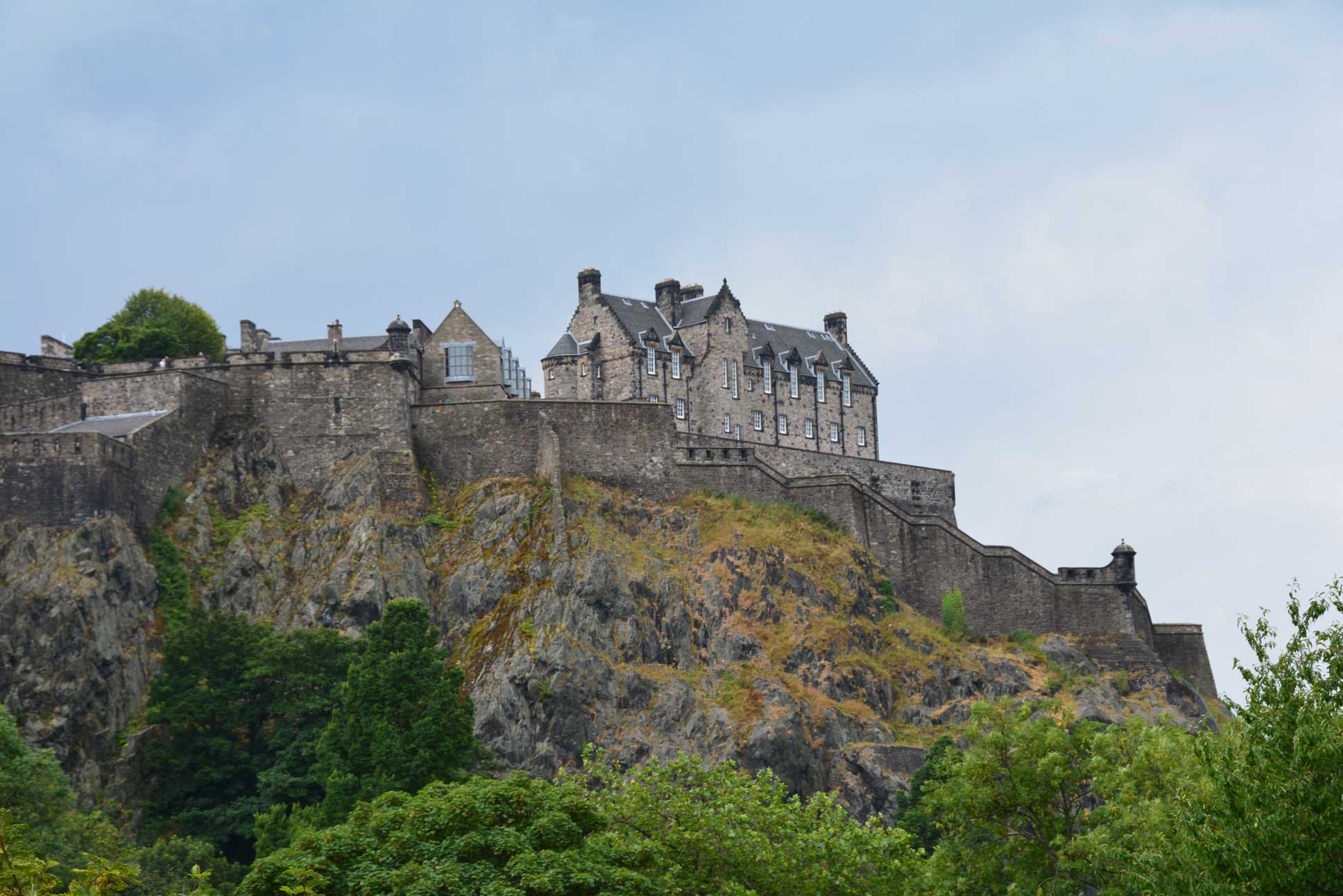
Namur's men fell back into Edinburgh, fighting all the way, through Friars' Wynd and St Mary's Wynd and up toward the Castle Rock. A well-known story, which appears in later Scottish accounts, tells of Sir David Annand, a Scottish knight of exceptional strength, who was wounded in St Mary's Wynd and then struck an opponent with an axe so hard that it cleaved both man and horse and marked the street stones. The castle had been dismantled by Robert the Bruce in 1314, and it was still a ruin, but it was the only defensible place they could reach. In desperation, they killed their horses and used the bodies to build a rampart, and the chronicler Walter Bower says that they "made a defensive wall with their bodies." The Scots surrounded them, and the knights held out through the night.

The Castle Rock, where Namur's men made their stand.
Next morning, Namur capitulated on terms. Both Scottish and English chroniclers agree that Moray treated the count and his followers generously once he learned who they were, out of regard for the king of France, whose subject Namur was. The count's goods were returned and his ransom was cancelled, and he and his men were allowed to leave on condition that they never again bear arms against the supporters of David II.
Aftermath
Moray escorted the count toward the border himself, and his courtesy cost him dearly. Near Jedburgh, an English force under William Pressen, the English warden of Jedburgh, ambushed the party. Moray was captured, and Douglas's brother James was killed in the fight, while Douglas himself escaped. Moray spent the next five years in English prisons, at Nottingham, in the Tower of London, and at Windsor, and he was freed in 1341 in exchange for William Montagu, Earl of Salisbury, who had been held by the French. He was killed at Neville's Cross in 1346. In Moray's absence, Sir Andrew Murray of Bothwell became Guardian of Scotland, and that November, he defeated the pro-English Earl of Atholl at Culblean.
Namur returned to Berwick and then sailed with Queen Philippa to join Edward at Perth, but he soon left Scotland, and English chroniclers criticized him for going into enemy country with such a small force. He died in March 1336 of wounds he received in a tournament in Flanders.

Bruntsfield Links, the last large open remnant of the Burgh Muir. Photo by Richard Webb, CC BY-SA 2.0.
The fight over the ruined castle was not the end of Edinburgh's troubles. In 1335, Edward III arranged for the castle to be rebuilt, under John Stirling, a Scot in his service. In 1337, Murray besieged it, and in 1341, Douglas took it back by a ruse. The castle has been rebuilt many times since.
The Burgh Muir was once part of the royal forest of Drumselch, and it was given to the town of Edinburgh as common land in the 12th century. Most of it has since been built over. Bruntsfield Links is the last large open space, and the name survives in the district of Boroughmuir.