Battle of Halidon Hill
Background
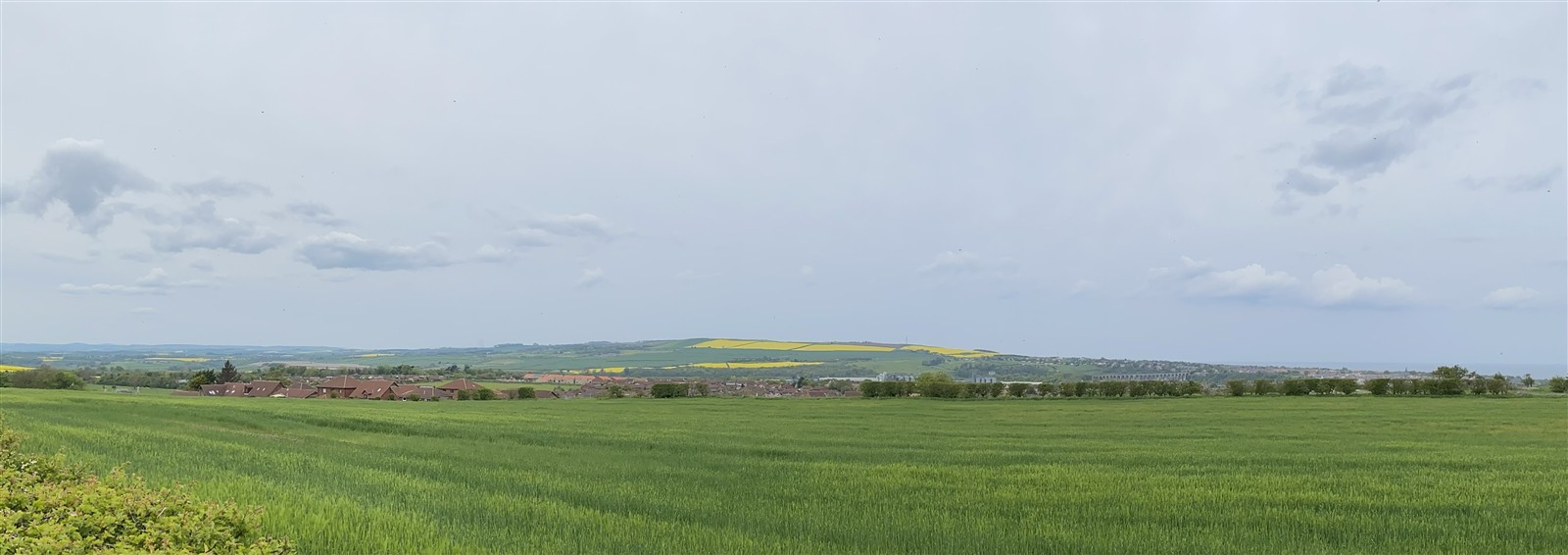
The Battle of Halidon Hill was fought on July 19th, 1333, on a hill about two miles north-west of Berwick-upon-Tweed. It was the climax of the Siege of Berwick in the Second War of Scottish Independence, and it ended in a crushing English victory.
In 1332, Edward Balliol won the Battle of Dupplin Moor and seized the Scottish crown with English backing, but the attack at Annan that December drove him out of Scotland. King Edward III of England used Balliol's expulsion as a pretext to intervene, and in the spring of 1333, he besieged Berwick, the richest town in Scotland and the Scottish Crown's largest source of customs income from wool.
Sir Archibald Douglas, Guardian of Scotland for the young David II, gathered a large army to relieve the town. Berwick's governor had agreed a truce under which the town would surrender if no relief arrived by sunset on July 19th. Douglas first tried to draw the English away by raiding into Northumberland, but Edward would not be drawn off, and the Scots then marched on Berwick itself.
Battle
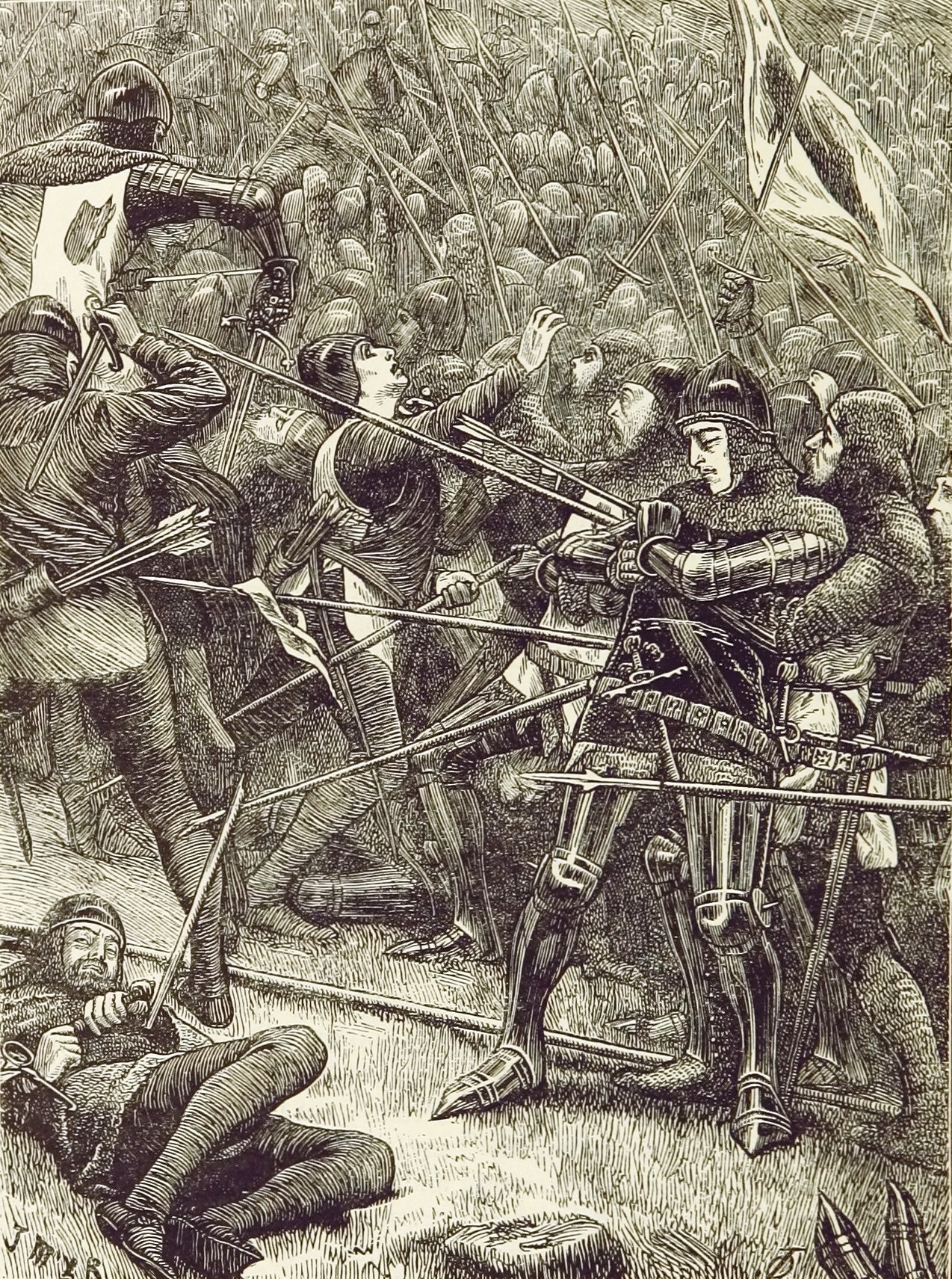
The Scots charging, in a 19th-century illustration.
Edward chose his ground well. He dug in on Halidon Hill, forcing the Scots to cross marshy ground at its foot and then climb the northern slope. He deployed his dismounted men-at-arms and spearmen in three divisions in an arc, one of them under Edward Balliol, with a wing of longbowmen on each flank. The Scots had marched about 60 miles in the previous 48 hours. They advanced in three divisions of closely packed spearmen known as schiltrons, with John Randolph, 3rd Earl of Moray, leading the first and Kenneth de Moravia, 4th Earl of Sutherland, and Hugh de Ross, Earl of Ross, the third. Chroniclers also report that before the battle, an English champion, Robert Benhale, defeated a Scottish champion and his dog in single combat.
For hours, the armies faced each other. A little after noon, Douglas ordered the attack. The Scots struggled through the marsh and up the slope under heavy fire from the English archers, and by the time they reached the English line, they were already shaken. The Lanercost Chronicle reported that "the Scots who marched in the front were so wounded in the face and blinded by the multitude of English arrows that they could not help themselves, and soon began to turn their faces away from the blows of the arrows and fall." The divisions led by Balliol and Edward broke the first two schiltrons after brief hand-to-hand fighting. The third schiltron fought longer, and more than 500 Scots died there, including both of its noble commanders. Then the English men-at-arms mounted their horses and pursued the fleeing Scots for about eight miles, taking few prisoners.
Douglas was mortally wounded leading the assault, captured by the English, and died of his wounds soon afterward. Five Scottish earls were also killed: Hugh de Ross, who led the Highland contingent and died in a rearguard stand; Kenneth de Moravia, Earl of Sutherland; Malcolm, Earl of Lennox; Alexander Bruce, Earl of Carrick and a nephew of Robert I; and John Campbell, Earl of Atholl. A large number of knights and common soldiers died with them. English losses were very light. Chroniclers give a figure of only 7 or 14 dead.
Aftermath
Berwick surrendered on the agreed terms the next day, July 20th. About a hundred prisoners were beheaded the following morning, against Edward's orders. Edward returned south believing the war was won, and Balliol was restored, but he took lands from a new generation of Scottish nobles, and that fueled more fighting.

The monument on Halidon Hill.
In 1334, Balliol did homage to Edward III and, under the Treaty of Newcastle, ceded eight counties of south-east Scotland to England. Balliol was deposed in 1334 and 1336 and restored in 1335, but his hold on Scotland remained weak. The Hundred Years' War began in 1337 and drew English attention to France, which allowed David II to consolidate his power. The Scots were beaten at Neville's Cross in 1346, and David was captured.
The 1333 marsh and scrub were enclosed around 1800, drained, and are now farmland. A rough stone monument near the highest point of the hill, put up in 1933, bears the inscription "Halidon Hill 19th July 1333."