Ghosts of Denbigh Castle
Denbigh Castle was once home to Dafydd ap Gruffudd, who attacked nearby Hawarden Castle, prompting King Edward I of England to mount a full-scale invasion of Wales. By 1282, Henry de Lacy, Edward's commander, held Denbigh Castle.

Henry wasted no time building a large stone stronghold and extensive town walls on top of Dafydd's castle. When Henry de Lacy died in 1311, the castle remained unfinished. Tradition says that Henry was devastated after his eldest son, Edmund, fell to his death down the castle well.
Though it was unfinished, Henry "Hotspur" Percy, held Owain Glyndŵr at bay from the castle for more than two years in 1400, before rising against the English Crown himself.
During the English Civil War, William Salesbury, "Old Blue Stockings", and his men defended the castle for the King against the Parliamentarians for six months before surrendering the castle as instructed by King Charles I.
A ruin today, the castle still holds some restless spirits.
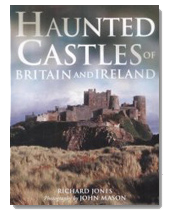
As Richard tells the story ...
The dramatic ruin of Denbigh Castle stands upon a lofty hilltop 467 feet high. It commands its surroundings today just as it did in 1282, when it was built by Henry de Lacy, Earl of Lincoln, and a legion of legends come marching out of its mist-shrouded past. Long ago, a ferocious dragon is said to have lived in the vicinity and was wont to terrorize the neighborhood with its fire-breathing antics. It fell to Sion Bodiau (Sir John of the Thumbs) - so called because he had an extra such digit on each hand - to rid the neighborhood of this dreadful scourge. Marching boldly into the castle, he did battle with the fearsome beast, supposedly chopping off its head while it was gaping at its attacker's extra thumbs! The locals were so overjoyed that they hoisted their hero aloft and paraded him round the town, crying, "Din bych," meaning "No dragon." It wasn't long before these words had been corrupted to Denbigh.
The ghosts that wander the old castle, needless to say, find it something of a challenge to match such dramatic beginnings, and are content instead to lead relatively unchallenging ethereal existences. A little way below the castle, hemmed in by dark woodland, stands the Goblin Tower, which de Lacy ordered to be built over a spring that provided water for the garrison. His teenage son could not resist the lure of the scaffolding that surrounded the half-built edifice and, while playing on it, lost his balance and fell to his death. The wispy wraith that has been seen gazing mournfully from the hollow windows is thought to be his. The identity of the castle's Gray Lady, whose somber shade has curled the blood of many a passerby, is unknown, however. She remains an enigma, a forgotten former resident, doomed to linger at the spot where she met with some personal tragedy, was deserted by a feckless lover, or was subjected to any one of the sorrowful indignities that have caused a glittering array of such ghostly ladies to drift across the pages of British folklore and legend.
- Richard Jones