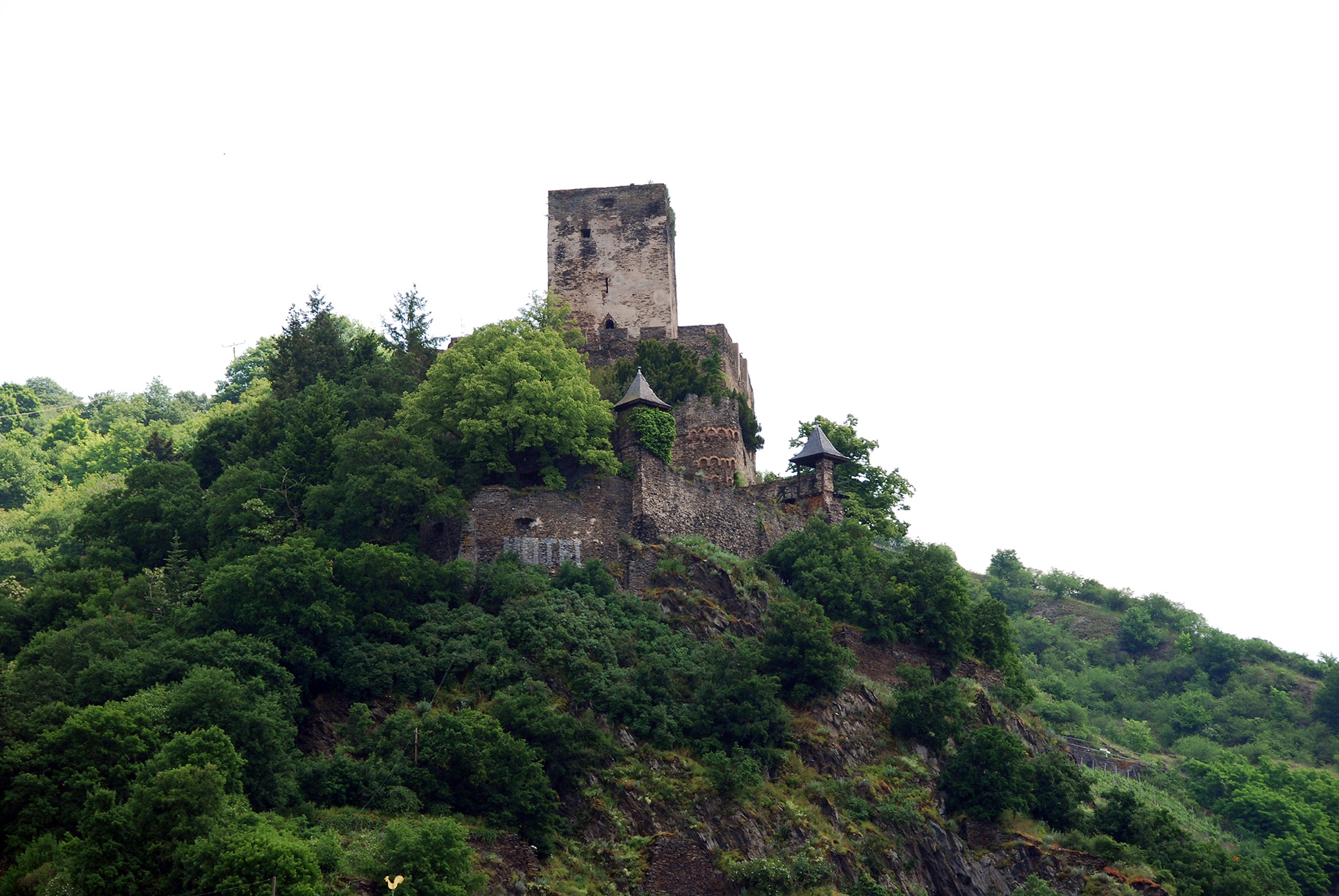
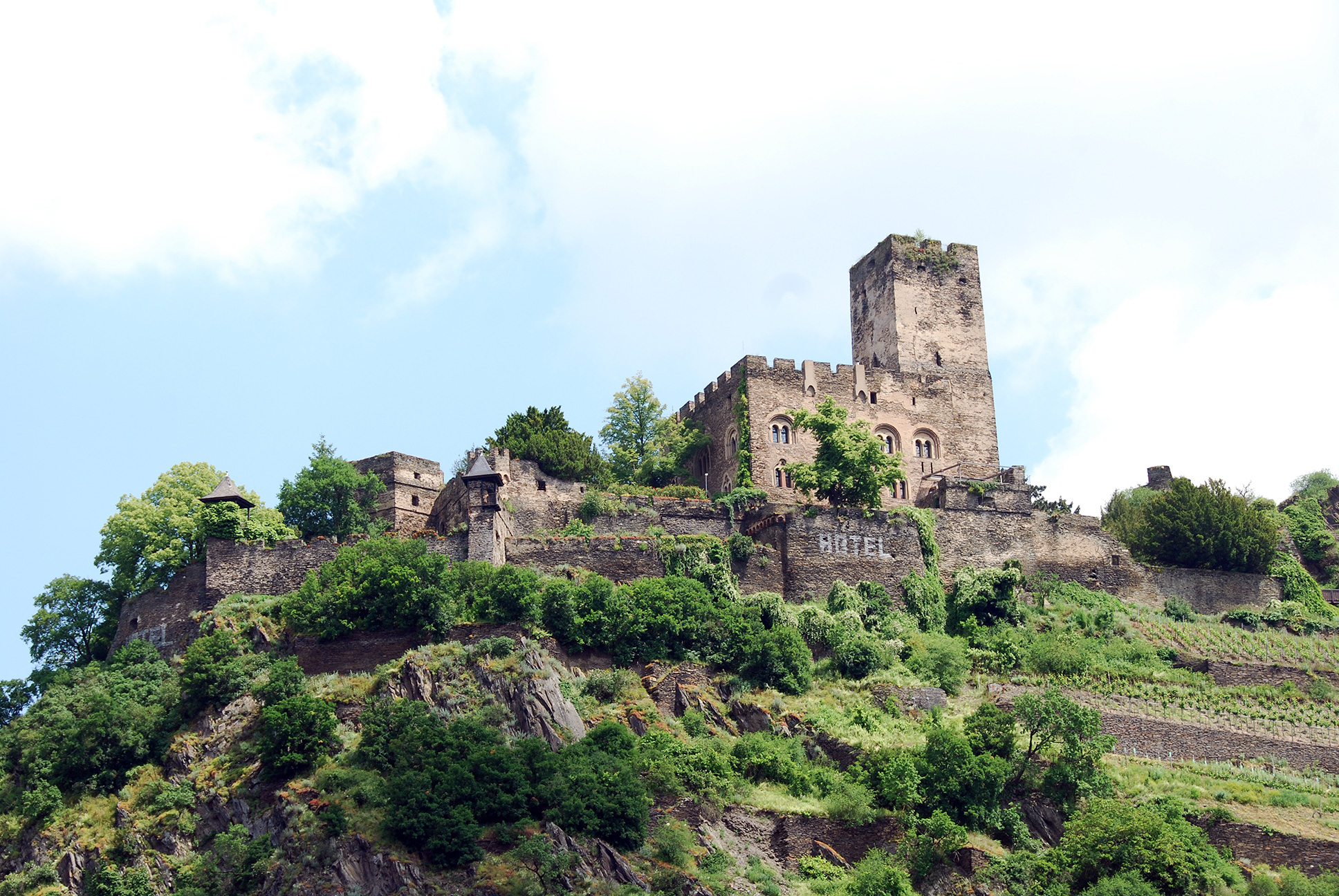
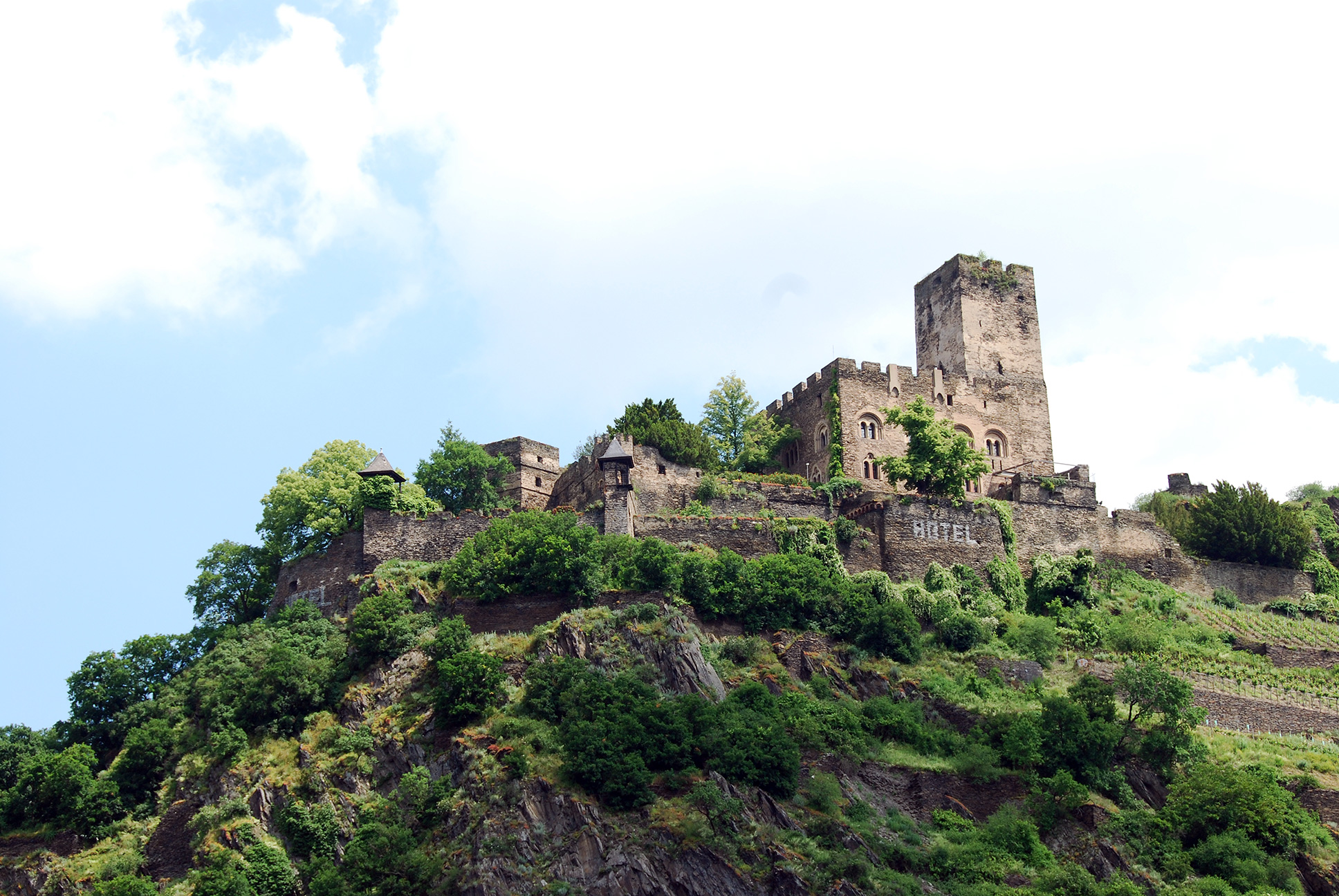
Burg Gutenfels
History
Burg Gutenfels, originally called Burg Kaub, was built in the early 1220s, probably by the Lords of Falkenstein-Münzenberg, and served as a toll castle to secure the River Rhine customs in the area, for the Holy Roman Emperor, along with Pfalzgrafenstein.
In 1252, William of Holland besieged the castle without success. In 1277, the castle and town of Kaub became part of the Electorate of the Palatinate, as the Falkenstein lords transferred them to the Count Palatine, and by 1289, the Falkensteins had sold their remaining holdings in Kaub to Count Palatine Louis the Stern. In the 14th century, a ring wall was built, along with an outer bailey on the side most open to attack.
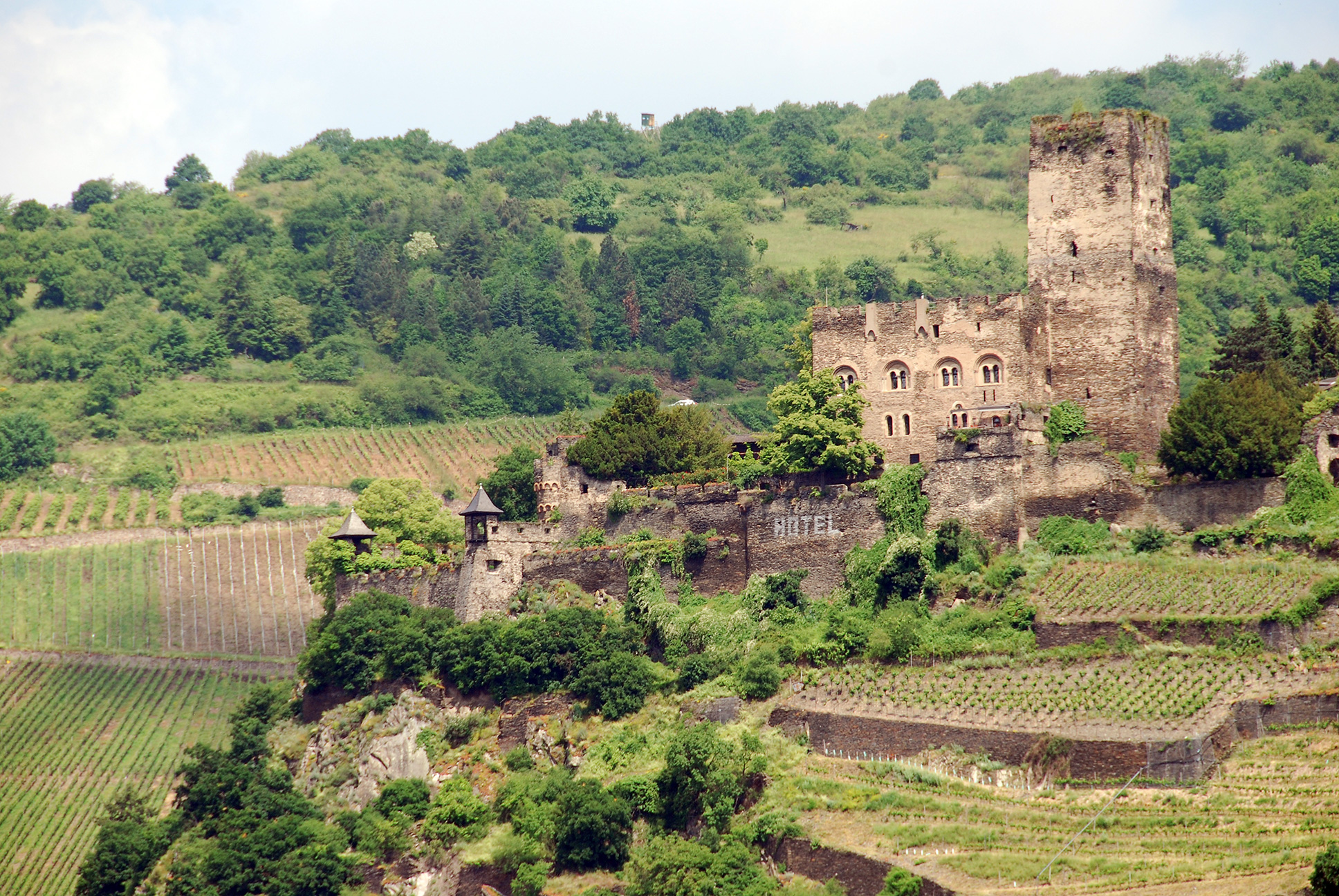
The keep and residential building above the vineyard terraces.
In 1504, the town of Kaub and Burg Gutenfels withstood a 39-day siege by the troops of Landgrave Wilhelm II of Hesse as part of the War of the Succession of Landshut. It was after this unsuccessful siege that the castle was called Gutenfels, and Elector Louis V of the Palatinate had it restored and extended in 1508. The 16th-century customs office remains in the town of Kaub.
During the Thirty Years' War, a vaulted round artillery tower, the Rondell, was added on the west side. The castle changed hands several times. Its last conquest came in 1647, in the final phase of the war, when Hesse-Kassel troops under General Mortagni took it from a French garrison after a one-day bombardment. In 1793, Gutenfels was garrisoned by companies of Palatine veterans that surrendered intact to French revolutionary forces, and it housed a garrison of invalid soldiers until 1804.
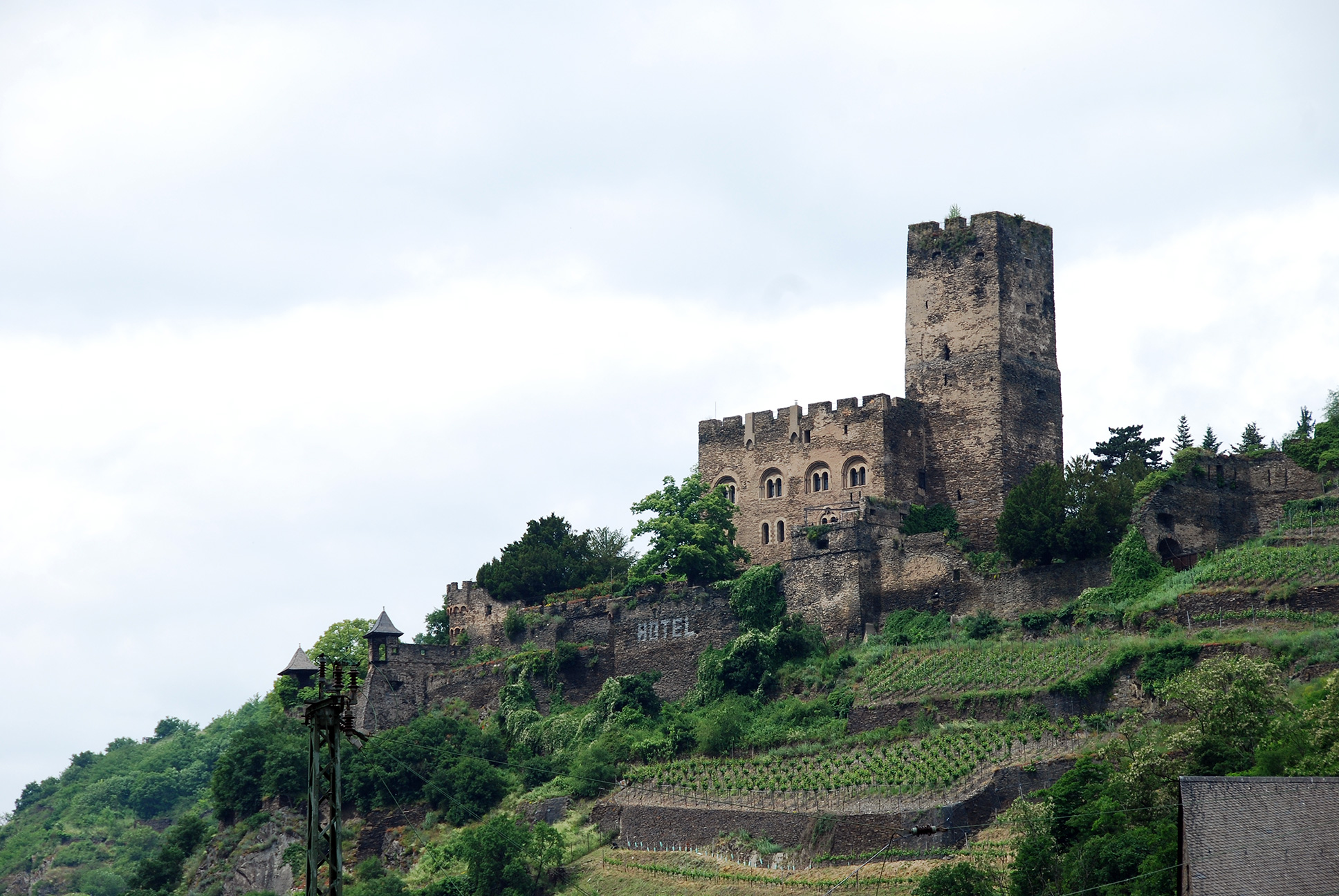
The castle seen from the Rhine.
In 1803, the castle passed to the Duchy of Nassau with the dissolution of the Holy Roman Empire. The Nassau government had intended to use the castle as a workhouse and prison, but was ordered by Napoleon Bonaparte in 1806 to dismantle and disarm the castle. The castle was partially demolished by 1807, with weapons and castle artifacts being distributed to other nearby castles along the Rhine. The moat was filled in, and stone from the castle walls was sold in late 1807, when the ruin was auctioned for demolition.
In 1833, Friedrich Gustav Habel bought the ruin and prevented further decay. In 1866, Prussia purchased the area along the Middle Rhine and ended the river tolls in 1867. In 1888, the Cologne architect Gustav Walter bought the castle from Habel and rebuilt it between 1889 and 1892, largely preserving the original fabric and the character of a ruin. The castle has been part of the Rhine Gorge, a UNESCO World Heritage Site, since 2002.
The castle later passed through several owners, including Duke Heinrich Borwin of Mecklenburg in 1909, the industrialist Josef Massenez in 1911, and the Boppard firm Rei-Werke in 1959. It operated as a hotel until 2006, when it was sold to a private owner and extensively renovated. The vineyard terraces at the foot of the castle were replanted from 2008, and the castle has served as a hotel again since March 2022.
Castle Highlights
Burg Gutenfels is perched atop a cliff about 110 meters above the River Rhine and the town of Kaub. The castle is closed to visitors, but it now functions as a hotel once again, having reopened in 2022, with five guest rooms, making it a good central point to base yourself while visiting other castles along the Rhine. It is also located near the Rhine Trail.
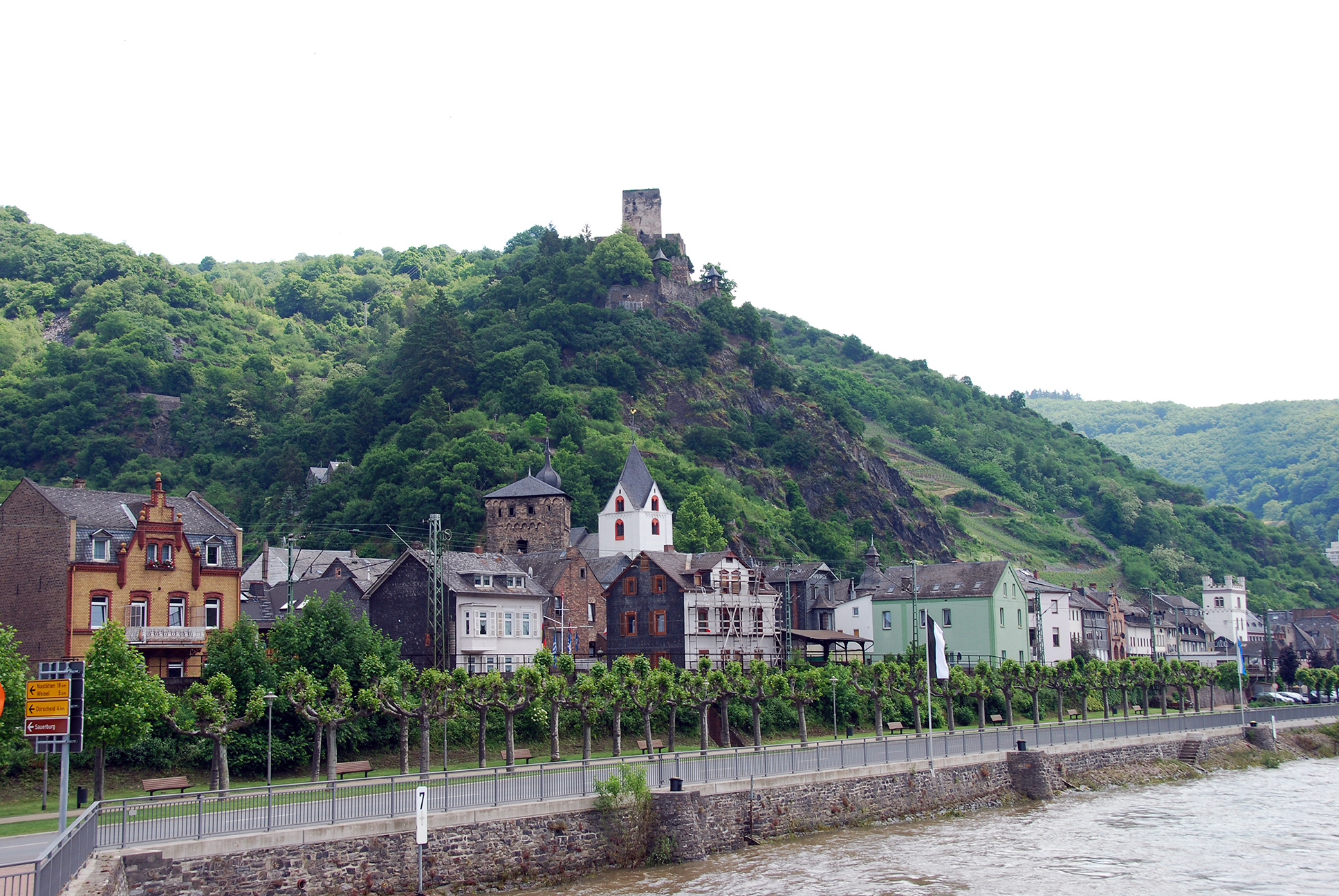
The town of Kaub below the castle.
The square keep stands about 35 meters tall, and the three-story residential building beside it measures roughly 22 by 8 meters. The best views of Burg Gutenfels are from a boat cruise along the River Rhine. The town of Kaub, below the castle, is also where you catch the boat that takes you out to the middle of the river to visit Pfalzgrafenstein.
Burg Gutenfels occasionally conducts moonlight tours with wine tasting. Tickets can be booked through Loreley Tourism.