Siege of Perth (1339)
Robert Stewart and Thomas Ughtred
Background
The Siege of Perth lasted from June to August 17th, 1339, and it was one of the most important Scottish successes of the Second War of Scottish Independence. Forces loyal to the young David II, led by Robert Stewart, the Guardian of Scotland, besieged the town, which was held for Edward Balliol and his English backers by a garrison under Sir Thomas Ughtred. After about ten weeks, Ughtred ran out of supplies and surrendered, and Balliol lost the base he had held in Scotland since 1333.

Pickering Castle in Yorkshire, where Thomas Ughtred was constable before he took command at Perth.
Perth stands on the River Tay, and Robert the Bruce had captured it from the English in 1313. After Edward Balliol won the Battle of Dupplin Moor near Perth in August 1332, the town became the center of his regime, and it was his base from 1333. An English garrison was installed in 1335, after Edward III's summer campaign, and in 1336 the king ordered stone walls built on three sides of the town, with three towers. He made six nearby monasteries pay for the work.
The Bruce cause had been on the defensive since Halidon Hill, but it recovered after Culblean. Sir Andrew Murray, the Guardian who won it, died in 1338, and Robert Stewart took his place. Stewart was the grandson of Robert the Bruce through his mother, Marjorie, and he would later become King Robert II. He stopped the raids into northern England that Murray had favored and tried instead to win back the parts of Scotland that still backed Balliol. By 1339, Balliol's supporters held only Stirling, Perth, and Cupar in Fife north of the Forth, while William Douglas, the Knight of Liddesdale, and his guerrillas controlled much of the Lowlands.
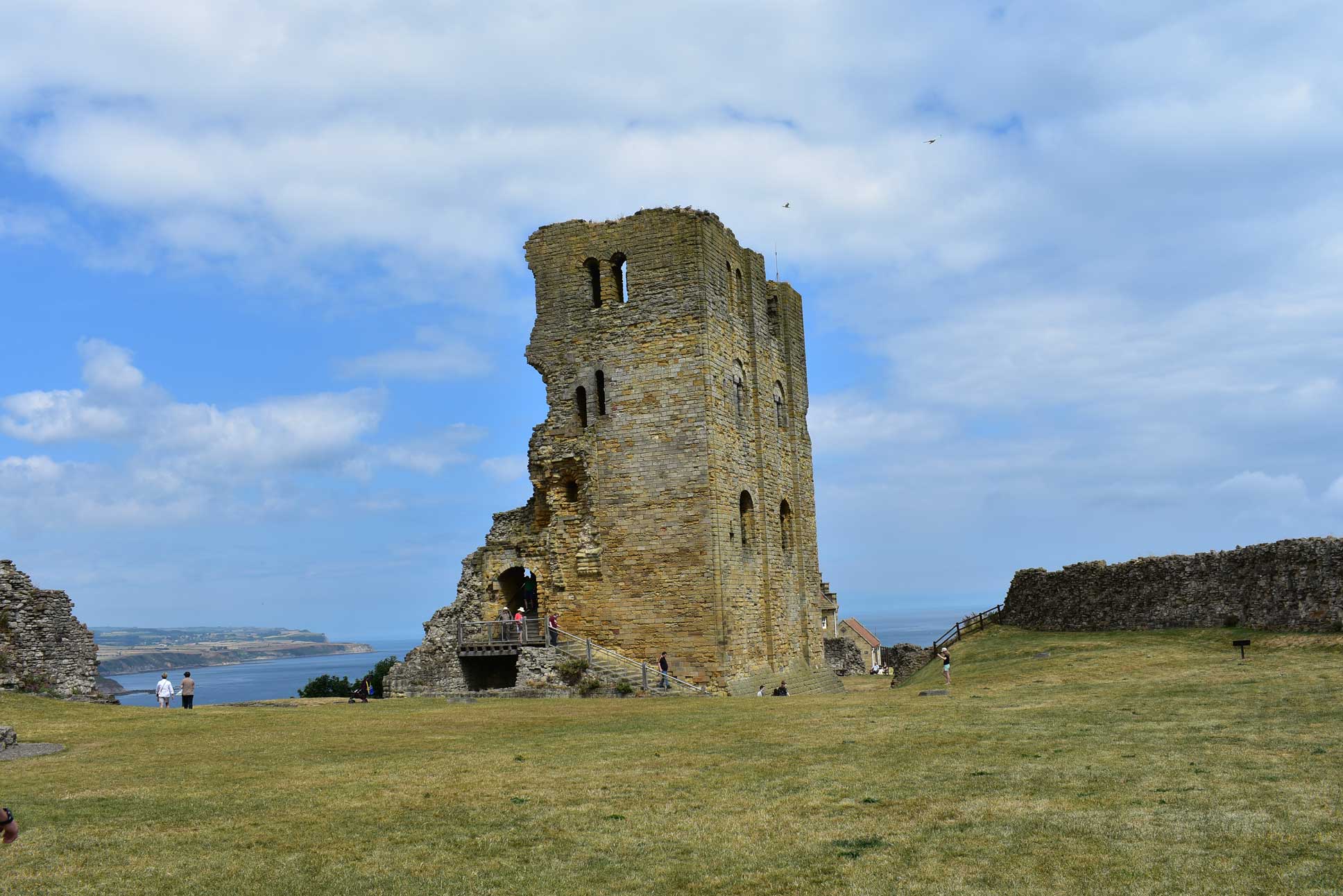
Scarborough Castle. Thomas Ughtred's father was lord of the manor of Scarborough.
The man holding Perth was a Yorkshire knight. Thomas Ughtred was the eldest son of Robert Ughtred, lord of the manor of Scarborough, and he had served in Scotland with Balliol since 1332. He had been constable of Pickering Castle in 1322, and in 1334 he held the bridge at Roxburgh to cover Balliol's retreat. In 1337, he sailed from Hull with 240 men to take over the keeping of Perth. In August 1338, a formal contract set his garrison at 460 men in peacetime and 800 in wartime, but those numbers were never reached. Supplies came by sea from Hull and King's Lynn, and within months of the contract, Ughtred was complaining that his men did not have enough. In April 1339, a small fleet hired in France began to attack the supply route.
The Siege
Robert Stewart began the siege in June 1339, and the earls of Ross and March came with him. William Douglas joined later and brought an important reinforcement. He had hired a French pirate named Hugh Hampyle, who commanded five barges, and he also brought Scottish exiles from David II's court at Château Gaillard in France, with several French knights and their followers. Hampyle's barges guarded the Tay estuary, cutting off the supplies that the town needed and preventing the people inside from getting help from outside. His best ship was captured at some point, although it is not clear whether this happened during the blockade or during an attack on the town.
On land, the besiegers worked on the defenses. Miners provided by the Earl of Ross drained the town's moat, and they tried to undermine the walls. During the siege, William Bullock, Balliol's commander at Cupar Castle, changed sides in return for land and possessions. The chronicler John of Fordun wrote that he "offered useful advice and brought appropriate help to the besiegers." One piece of his advice was to move the protective shelters closer to the walls as cover against the garrison's crossbowmen.
Ughtred's problem was supplies. The Scots had cut him off, and no relief came. After about ten weeks, he surrendered on August 17th, and the garrison was allowed to return home.
Aftermath
Ughtred was accused of giving up too easily. He defended himself, and an inquiry in parliament that autumn accepted his explanations, and in April 1340, the king confirmed his grant of the manor of Bonkill in Scotland. A warrant was issued in October 1339 to pay 1,264 men from Cumberland and Westmorland who were meant to relieve Perth, but they never reached it, and they seem to have spent about three weeks raiding elsewhere in Scotland. Ughtred went on to a long career, he was summoned to parliament in 1344 as a baron, and he became a Knight of the Garter around 1358.
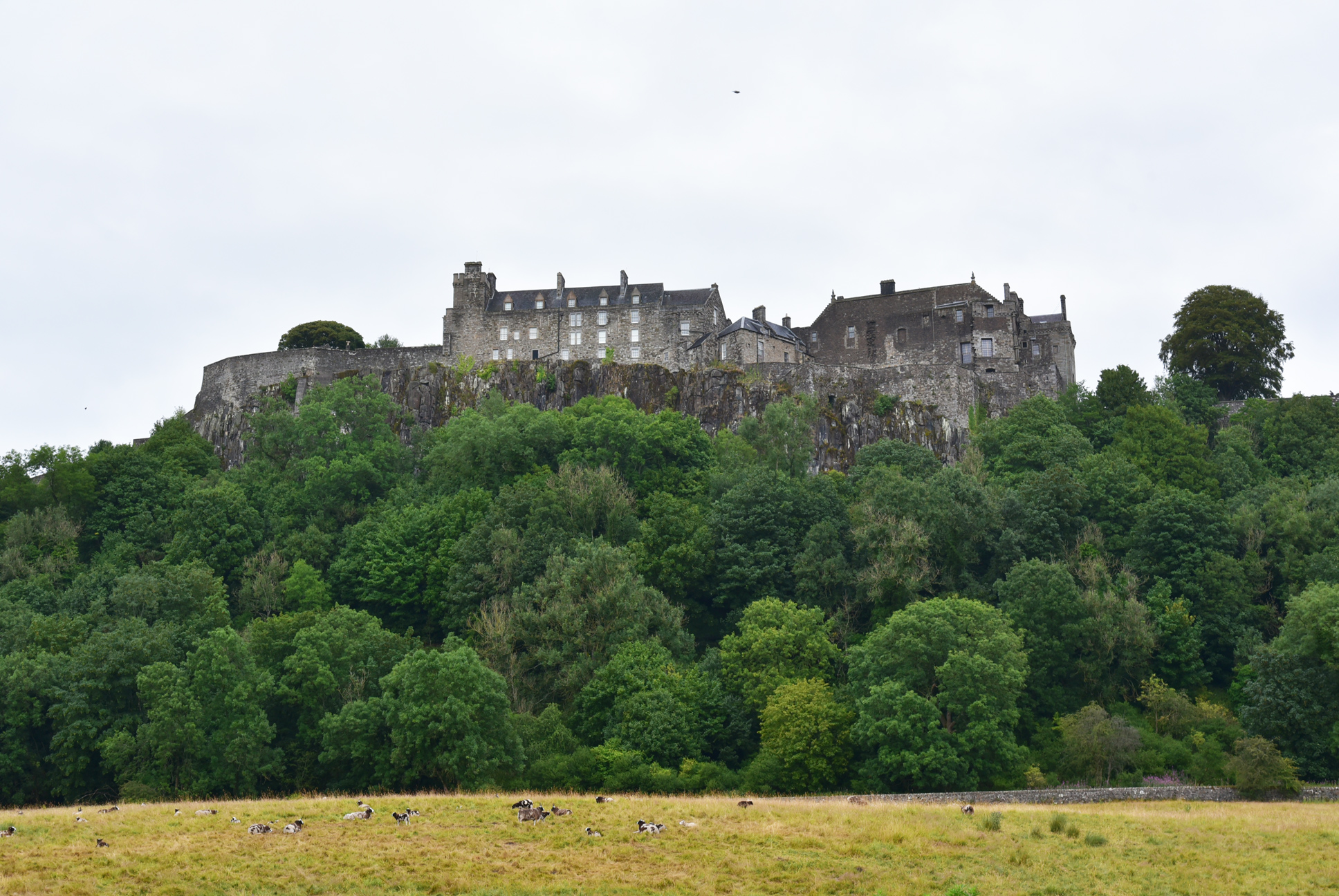
Stirling Castle, which the Bruce side besieged after Perth fell.
After Perth and Cupar fell, Stewart turned to Stirling Castle, the last of Balliol's strongholds north of the Forth. The first attempt faltered when the Scottish nobles quarreled and the Earl of Ross left. The Bruce side kept up the pressure, and they retook Edinburgh in 1341. David II came home from France that June, and in 1342, Stirling and Roxburgh fell. Balliol was left with almost nothing in Scotland, and in 1356, he gave up his claim to Edward III in return for an annuity of £2,000. David II invaded England in 1346 and was captured at the Battle of Neville's Cross, and he was not released until 1357.