Siege of Windsor Castle
Background
After the Siege of Winchester, Prince Louis moved on to take other castles in Hampshire.
He took Porchester Castle, then Odiham Castle, which held out with a small garrison and put up strong resistance before surrendering.
Louis's forces then moved towards Windsor Castle.
King John's castle constable, Engelard de Cigogné, held Windsor Castle for the King with 60 knights, including foreign mercenaries led by Fawkes de Breauté, one of John's advisors.
Battle
The siege of Windsor Castle began in late June 1216. Hervé IV of Donzy, Count of Nevers, led the French and baronial forces.
Like at Winchester, the besiegers used siege engines to bombard the castle. The lower ward suffered severe damage, but the garrison held out.
In early September, King John moved towards Windsor, arriving at Sonning, about 14 miles to the west. He deployed Welsh archers to harass the besiegers' camp at Windsor.
The besiegers gained little advantage during the siege and raised it to deal with John's threats elsewhere. Some accounts say they burned their siege engines before moving on, ending the siege which lasted about two to three months.
Windsor Castle was one of the few strongholds, alongside Dover, to hold out against the rebel forces during the First Barons' War.
Aftermath
The siege of Windsor Castle ended when the besiegers withdrew, a success for King John's cause, but the war continued elsewhere, notably at Dover Castle.
Windsor Castle was still in Royalist hands when King John died in October. It remained a key royal stronghold near London and the River Thames.
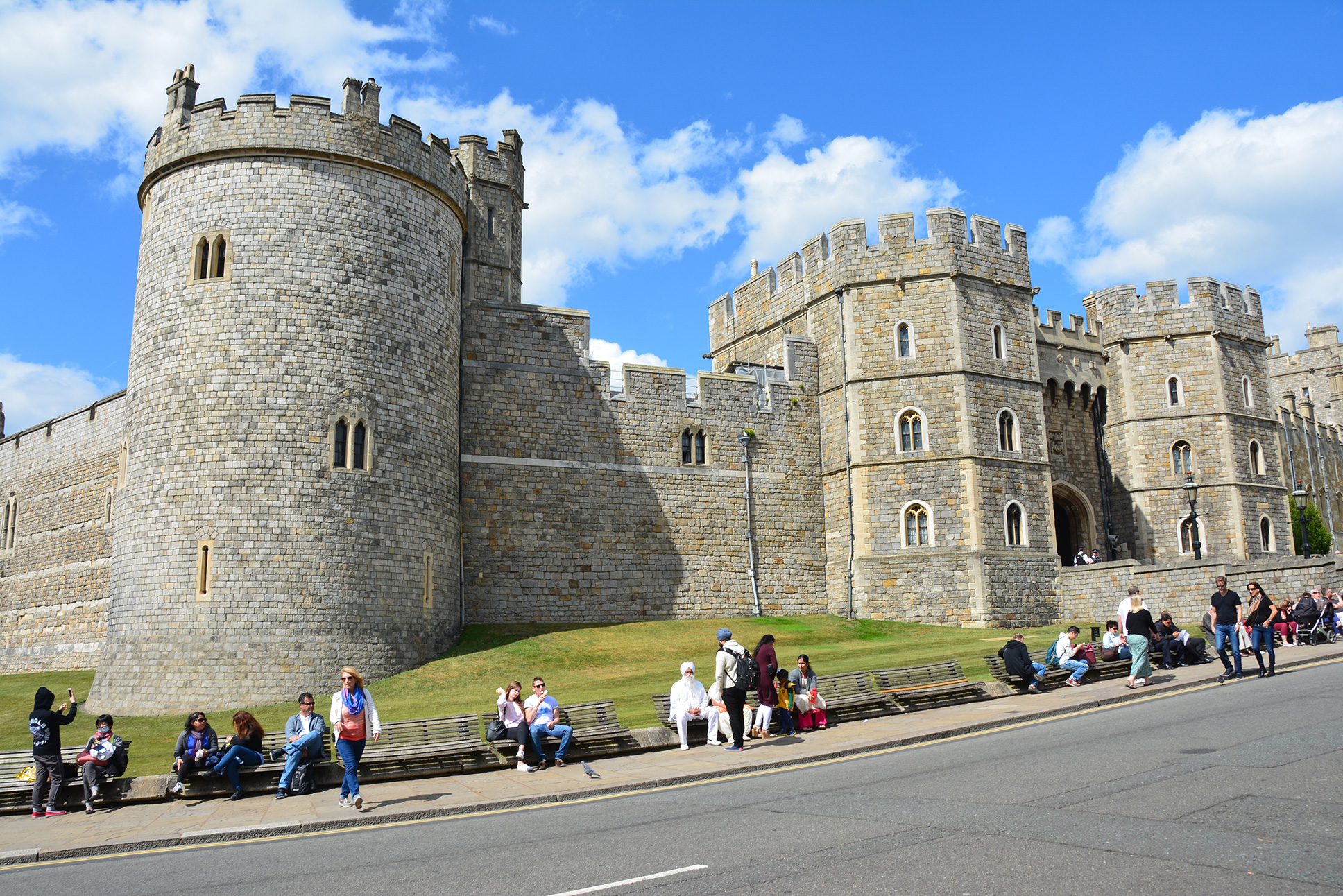
Engelard de Cigogné repaired the damage to Windsor Castle in 1216 and 1221 on behalf of King Henry III, John's son and successor to the throne. Between 1223 and 1230, under Henry III, the western curtain wall and lower ward were rebuilt in stone and a new gatehouse was added, along with the Curfew, Garter, and Salisbury Towers.
 Engelard de Cigogné