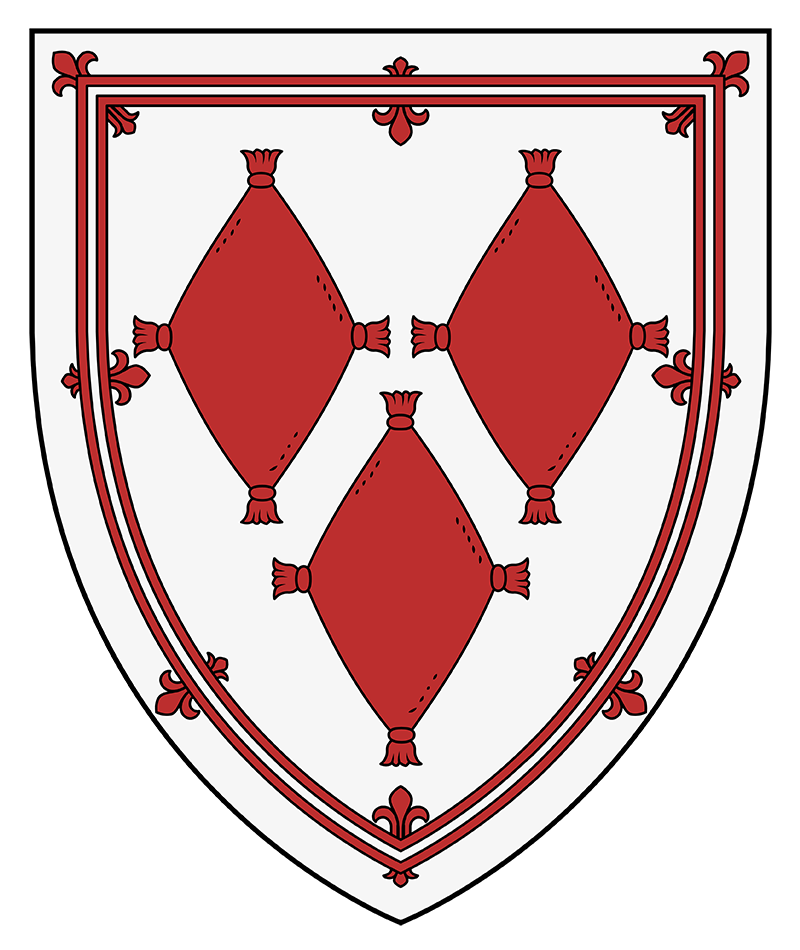
Thomas Randolph - 1st Earl of Moray
Thomas Randolph, 1st Earl of Moray, was a leading Scottish Nobleman and diplomat during the First War of Scottish Independence. As nephew to King Robert the Bruce, he served as one of Robert's most trusted commanders, advisers, and as regent of Scotland.
Thomas was born around 1285 near Stranith (Nithsdale) in Dumfriesshire, Scotland. His parents were Thomas Randolph, Chamberlain of Scotland and Sheriff of Roxburgh, and Martha of Kilconquhar, who was Robert the Bruce's half-sister.
When Balliol gave homage to King Edward I on December 26th, 1292, Thomas Randolph was present with his father at Newcastle-upon-Tyne.
Isabel Stewart of Bonkyll became Thomas Randolph's wife, likely between 1303 and 1310. Together, they had four children: Thomas, John, Agnes, and Isabel.
Backing Robert the Bruce's attempt to take the throne, Thomas witnessed the coronation at Scone in 1306. After fighting for Scotland at the Battle of Methven in June 1306, he was captured by the English and placed under the custody of Adam Gordon and later Henry de Lacy, Earl of Lincoln.
He joined the English cause during captivity, but was captured by James Douglas in 1307 and persuaded to rejoin the Scots. Edward II noticed his defection from the English, forfeited Randolph's English lands, and bestowed them on his favorite, Hugh Despencer the Elder.
After his return to the Scottish side, Thomas quickly gained Robert the Bruce's confidence, was created Earl of Moray in 1312, and was granted the Isle of Man, becoming one of Robert's top lieutenants.
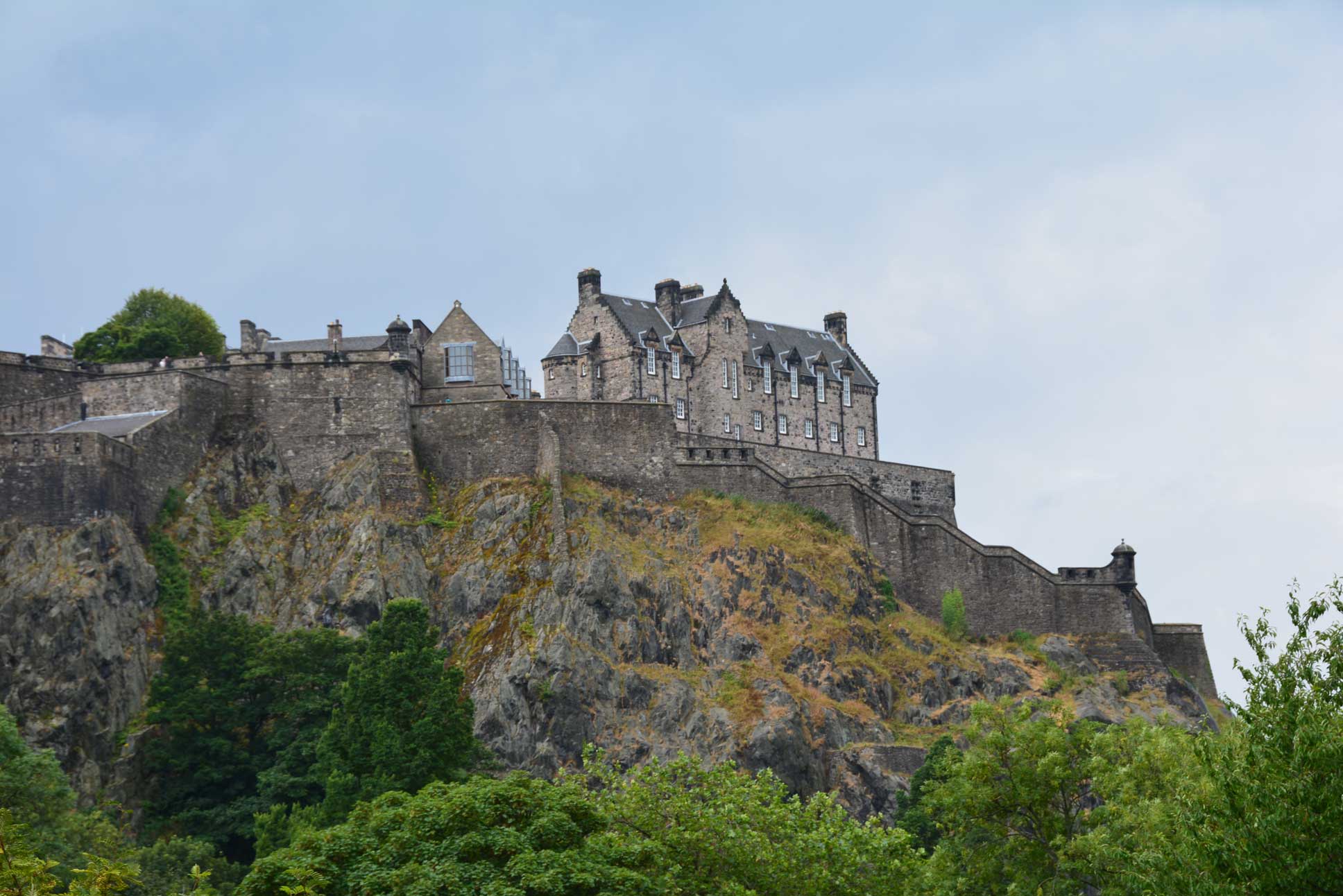
Edinburgh Castle was controlled by the English for nearly twenty years and was one of the few remaining Scottish castles under English rule. On March 14th, 1314, Thomas Randolph led a daring nighttime assault to reclaim the castle. A key member of his group, William Francis, knew a hidden path up the rock because he had previously used it to leave the castle to visit the town. Randolph and thirty men climbed the path with rope ladders, scaled the walls at night, and defeated the English garrison inside. The Scots regained control of Edinburgh Castle.
In June of 1314, Thomas Randolph was fighting for the Scots at the Battle of Bannockburn. He commanded one of the infantry schiltrons. On the first day of battle, 300 of the English cavalry under Robert de Clifford, Henry de Beaumont, and Thomas Grey, attempted to go around the Scottish army in order to relieve Stirling Castle. Seeing this unfold, Randolph led his schiltron to block the road. They were attacked on all sides, but the English were unable to break the hedge of spearmen and began to waver. James Douglas was given permission to aid Randolph's men, but seeing he was not needed, took no part in the action. The next day, Randolph was in command of the center of the battle.
Accompanying Edward Brus, King Robert's brother, Thomas Randolph played a leading role during the invasion of Ireland. During this campaign, he fought at the Battle of Moiry Pass in June of 1315 and later at the Battle of Kells in November of 1315.
Returning to Scotland, Randolph joined James Douglas on raids along the Scottish Borders and into Northern England. In 1318, Berwick-upon-Tweed fell to their efforts. The following spring, as they pushed as far south as York, they attempted to seize Queen Isabella of England. Although they defeated the Archbishop of York at the Battle of Myton, the queen escaped south. Later, Randolph also took part in Douglas's exploits at the Battle of Old Byland.
In the following years, Randolph's name appears directly after Robert the Bruce on the Declaration of Arbroath, signed in 1320, a document sent to Pope John XXII to persuade him to recognize Scotland's Independence. Thomas was also a principal negotiator with Bishop William Lamberton, which resulted in a 13-year truce between Scotland and England. In 1324, he met the Pope in Avignon and successfully convinced him to recognize Robert the Bruce as King of Scots.
Traveling to France in 1325, Thomas sought to persuade King Charles IV to sign the Treaty of Corbeil, successfully renewing the Franco-Scottish alliance.
Subsequently, in the summer of 1327, Randolph held a commanding role at the Battle of Stanhope Park, leading to the Treaty of Edinburgh-Northampton, which finally recognized Scotland's independence from England.
In King Robert the Bruce's final years, Thomas Randolph was always with him and managed the young heir David's household. Before Robert died, he decided Thomas would be regent for David, who was only five when he became King David II. Thomas carried out his duties as regent but died at Musselburgh on July 20th, 1332, while heading to stop an invasion by Edward Balliol. At the time, people thought he had been poisoned by the English, but modern historians believe he likely died from a kidney stone.
After his passing, Thomas Randolph was buried at Dunfermline Abbey, near Robert the Bruce. His son Thomas succeeded him as 2nd Earl of Moray for 23 days before dying at the Battle of Dupplin Moor. His second son, John, became the 3rd Earl of Moray.