Weobley Castle / Castell Weble
History
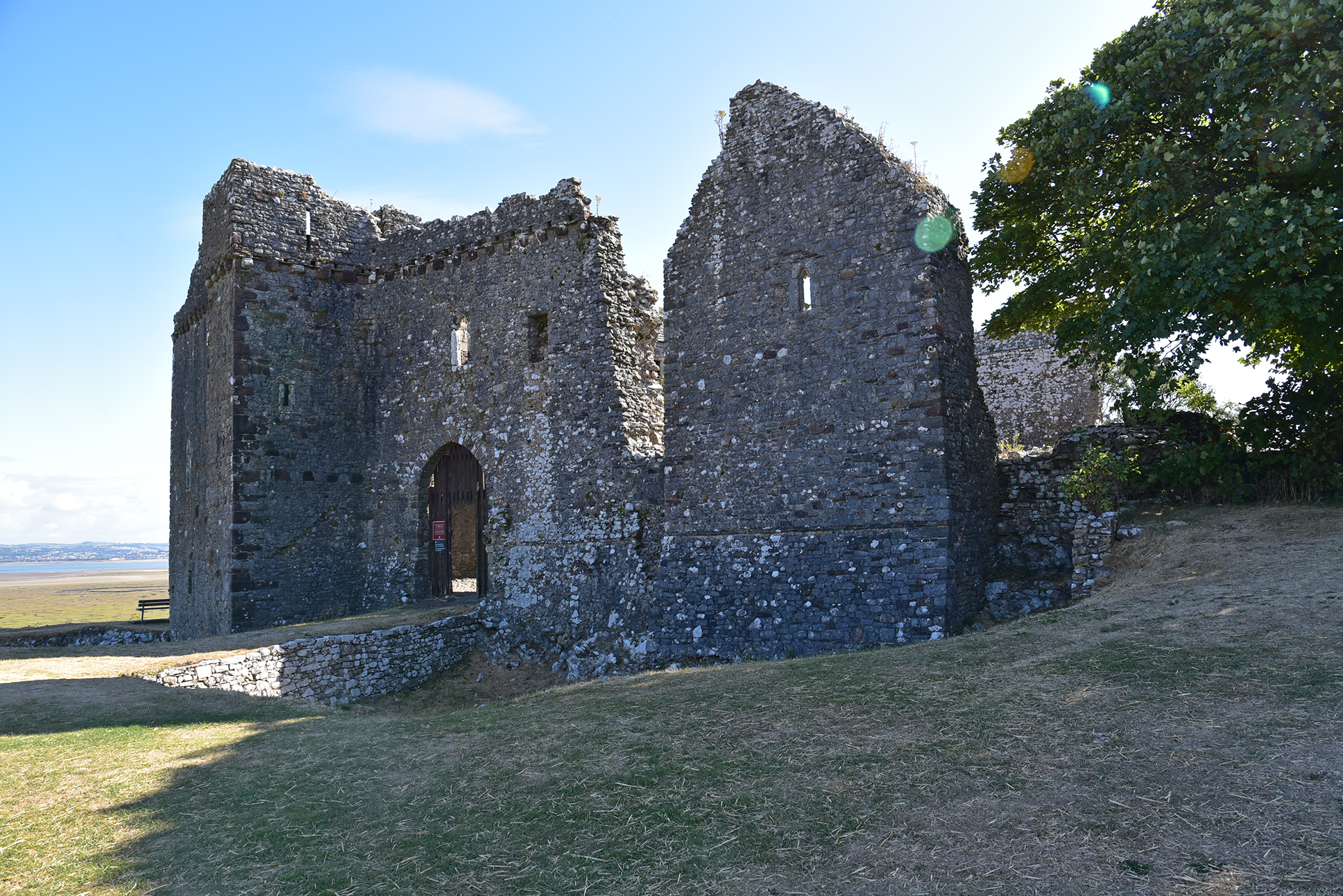
Weobley Castle is a 14th century fortified manor house, overlooking the Llanrhidian salt marshes and the Loughor estuary in southwest Wales.
The de la Bere family built the castle in the early 14th century, serving as stewards to the Lords of Gower, notably William de Braose. David de la Bere received lands around Weobley from John Tuberville and began building the castle between 1304 and 1327. It was first mentioned in a charter in 1306, and Adam de la Bere signed a deed at the castle in 1318.
The first castle consisted of the hall block, with the kitchen below and a turret with a spiral staircase, the southern towers, and parts of the east curtain wall. The solar block, west gateway and chapel were later added.
The de la Beres held the castle into the 15th century, when it was attacked and damaged during Owain Glyndŵr's uprising between 1403 and 1406. John de la Bere may have been killed during the fighting.
Near the end of the 15th century, Weobley Castle passed to Rhys ap Thomas, for his support of Henry Tudor at the Battle of Bosworth Field in 1485. He added a two-story block as a more stately entrance to the hall and private quarters. His grandson, Rhys ap Gruffudd, was executed for treason in 1531, and the castle reverted to the Crown under Henry VIII.
In 1560, the castle was sold to William Herbert and passed through various families, including the Mansel family, before becoming a tenanted farmhouse as it fell into ruin.
By the 17th century, the castle was in ruins, and a new farmhouse was built nearby. The last private owner, Emily Talbot, gave the castle to the state in 1911, and CADW now cares for it.
Castle Highlights
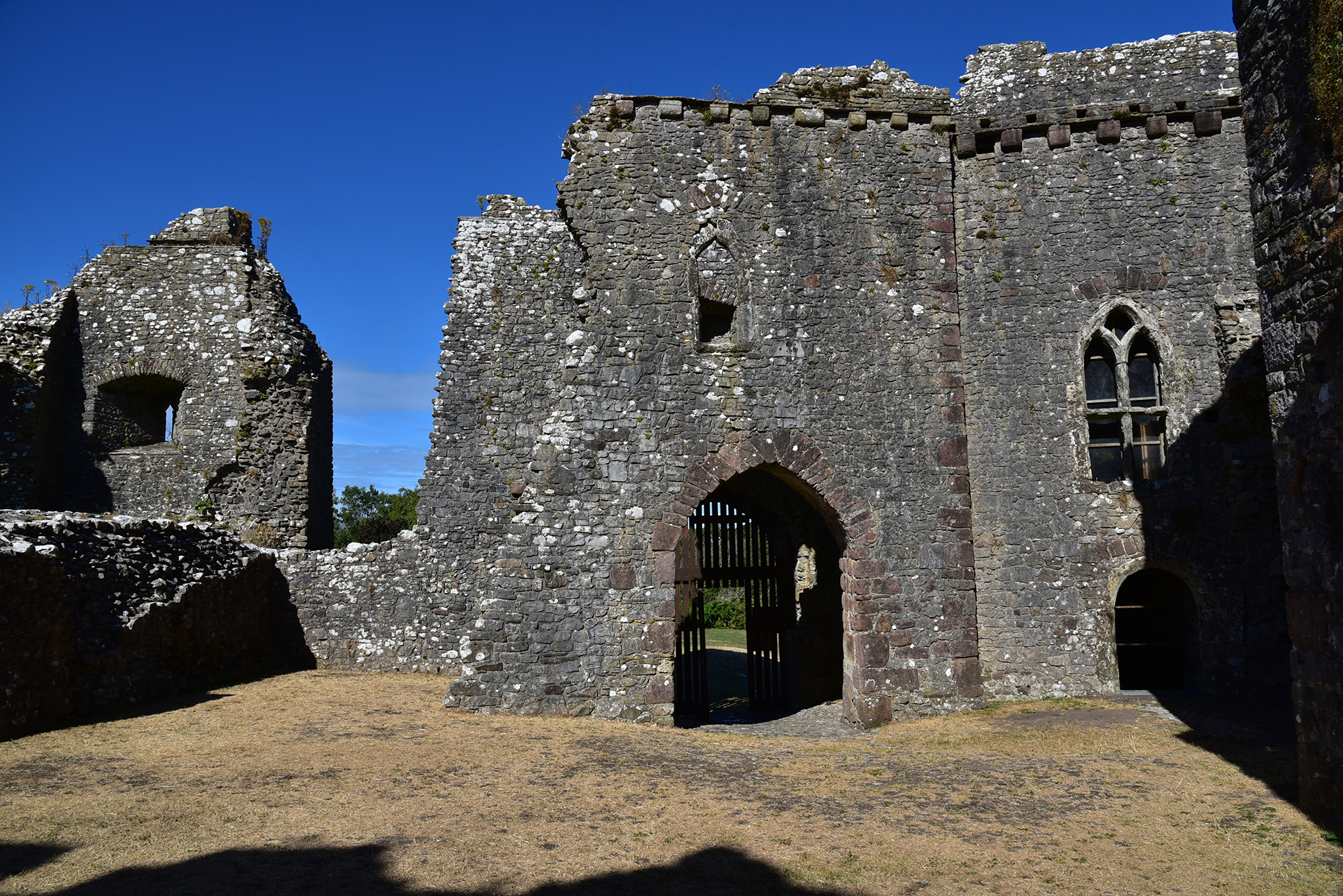
Weobley Castle sits prominently on the windswept coast of the Gower Peninsula. The castle was originally intended as a stately fortified manor house for entertaining high-ranking guests. Still, the watchtower, crenelated walls, and southwest tower raised to battlement height made its defensive purpose clear.
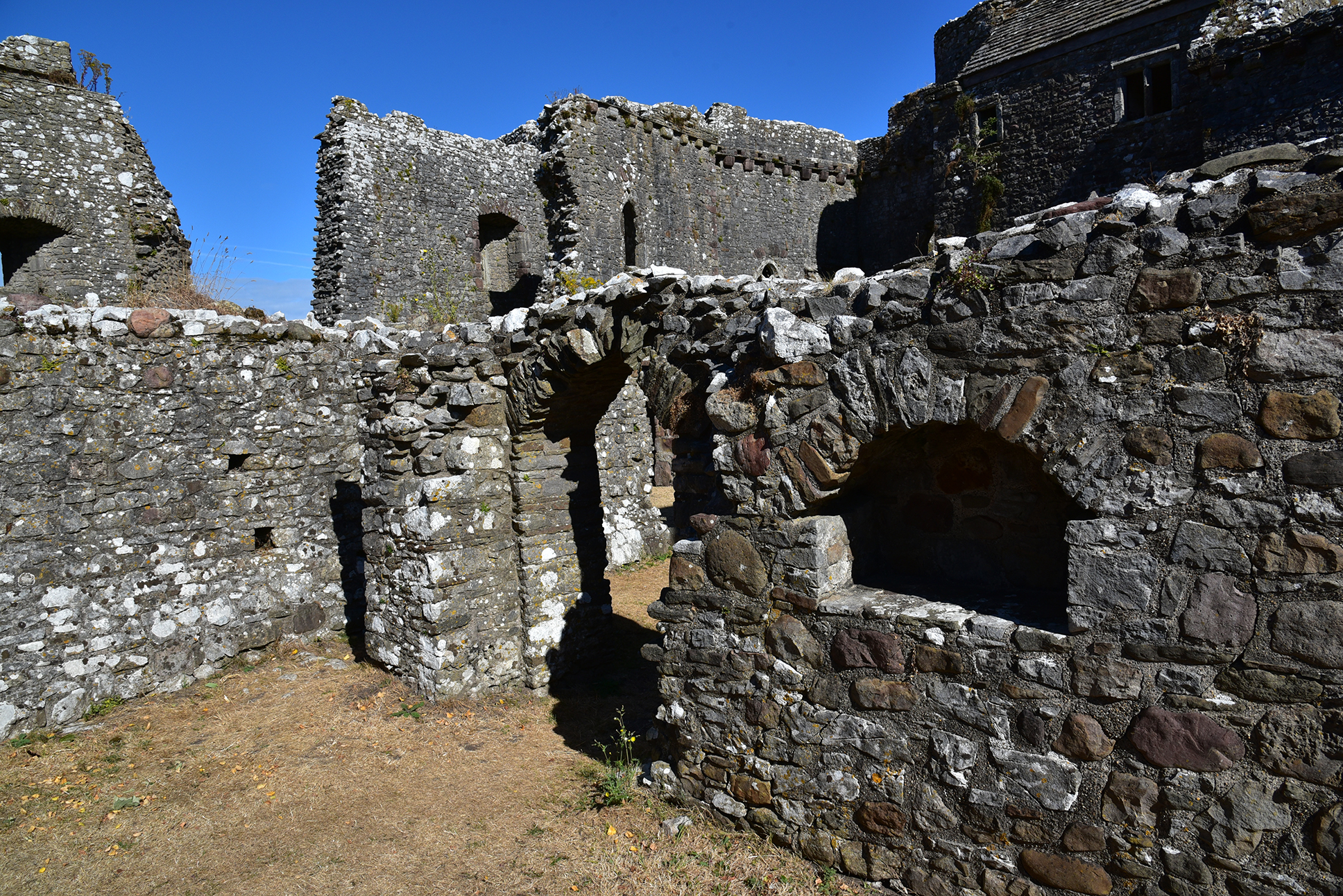
The surviving castle includes an enclosed courtyard with a gateway, hall, and kitchen. Also present are the remains of a chapel, solar or private chamber, and east range, as well as a private withdrawing room.
Enough survives to identify fireplaces, garderobes, and evidence of guest accommodation.
Weobley Castle is smaller than most castles and can be explored in an hour. I would combine it with a visit to Oystermouth Castle to make a full day to explore castles.