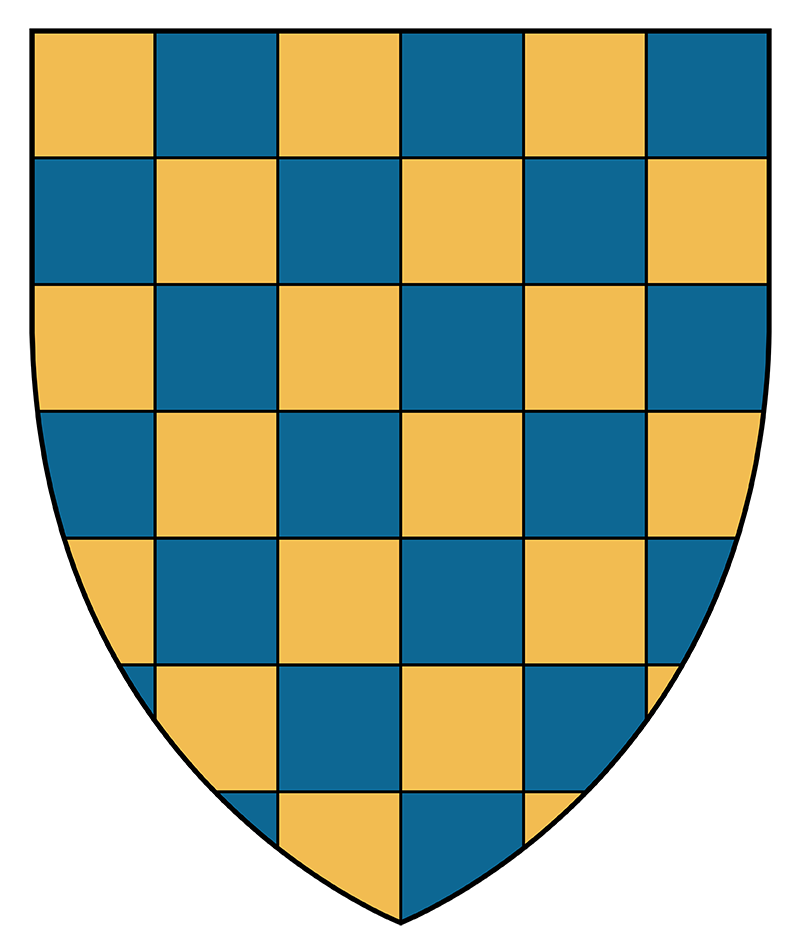
William de Warenne - 1st Earl of Surrey
William de Warenne was a Norman Nobleman and one of the few confirmed companions of William the Conqueror at the Battle of Hastings. Born around 1035 near Varenne in Seine-Maritime, Normandy, William was the younger son of Ralph (Rodulf) de Warenne and Emma. The family name is derived from the River Varenne.
As a second son, William would not inherit the family's modest estates, so he distinguished himself through military service. He played a pivotal role in quelling Norman rebellions from 1052 to 1054, especially during the Battle of Mortemer. His loyalty secured him confiscated lands from his kinsman, Roger de Mortimer, including Château de Mortemer and Château de Bellencombre, which became the seat of his Norman estates.
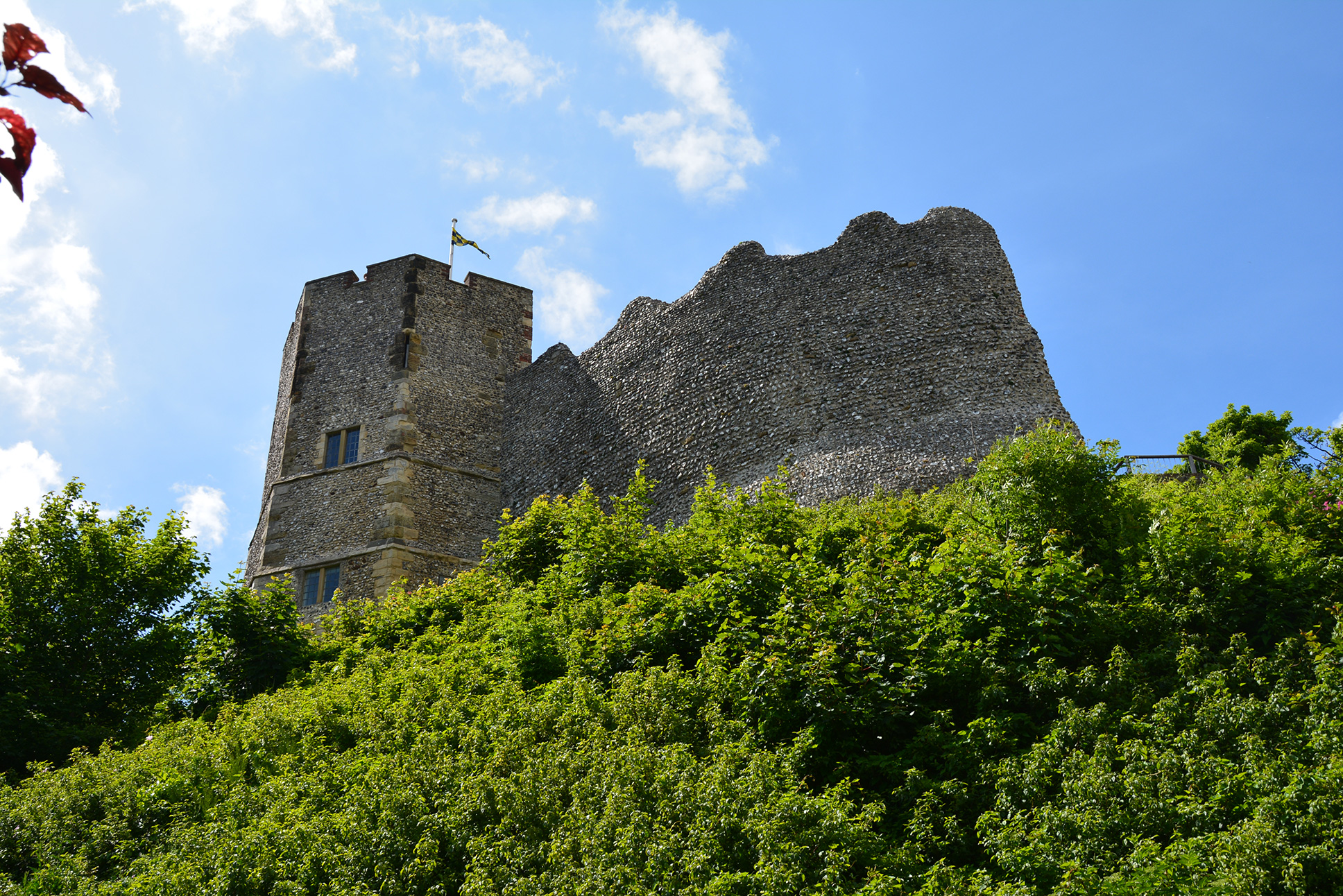
At the Council of Lillebonne, William, Duke of Normandy, conferred with de Warenne while planning the 1066 invasion of England. De Warenne fought at Hastings and was granted the Rape of Lewes in Sussex, manors in Norfolk, Suffolk, Essex, Yorkshire, and Castle Acre in Norfolk, which became his English headquarters.
William de Warenne married Gundred, a Flemish Noblewoman. They had four children: William, Edith, Reynold, and an unnamed daughter.
In 1071, he crushed a rebellion on the Isle of Ely and hunted Hereward the Wake, who had previously slain his brother-in-law, Frederic.
Between 1078 and 1082, William and Gundred traveled to Rome, visiting monasteries along the way. When they reached Cluny Abbey in France, they were so impressed by the monks that they decided to found Lewes Priory, dedicating it to St Pancras. This became the first Cluniac priory in England and served as the family mausoleum. William endowed the priory with monks from Cluny.
On May 27, 1085, Gundred died at Castle Acre during childbirth. William remarried a sister of Richard Gouet, but they had no children.
By 1086, de Warenne was among the wealthiest men in England, surpassed only by a few, including the King's half-brother. He gained wealth by consolidating power and acquiring former Anglo-Saxon or disputed lands while administering England during King William's absences.
De Warenne supported William the Conqueror's sons and backed William II (Rufus) in the 1088 rebellion against Robert Curthose's supporters. William II made him Earl of Surrey in 1088.
William de Warenne was mortally wounded in the leg during the six-week siege of Pevensey Castle in 1088. He was carried to Lewes, where he died on June 24th, 1088, and was buried beside his first wife, Gundred, in the Chapter House of Lewes Priory. His son William succeeded him as the 2nd Earl of Surrey.
In 1845, their leaden coffins were discovered at the priory during railway construction. Their bones were reinterred in the Gundrada Chapel at Trinity Church in Lewes.