Battle of Lincoln (1217)
Second Battle of Lincoln
Background
During the First Barons' War, a royal army led by William Marshal, Earl of Pembroke, regent for the young King Henry III, defeated a baronial and French army at Lincoln on May 20th, 1217, in a battle that became a turning point in the war.
Prince Louis of France had landed in England in 1216 at the invitation of the rebel barons, who wanted to replace King John. Louis took London and much of southern England, but the royal garrisons at Windsor and Dover held out against him, and he failed to capture Dover in the first siege.
When King John died on October 18th, 1216, his nine-year-old son became King Henry III, and William Marshal, Earl of Pembroke, led the regency council. Many barons began to return to the royal side. Louis went back to France for reinforcements early in 1217, and in March, the Marshal launched an offensive that recaptured several strongholds. Louis returned in May and began the second siege of Dover Castle.
Meanwhile, rebel barons and French forces had taken the city of Lincoln. Its castle, built by William the Conqueror on a hilltop over a Roman fort, was still holding out for the king. Lincoln also sat where two major Roman roads, Ermine Street and the Fosse Way, crossed, so it mattered to both sides.
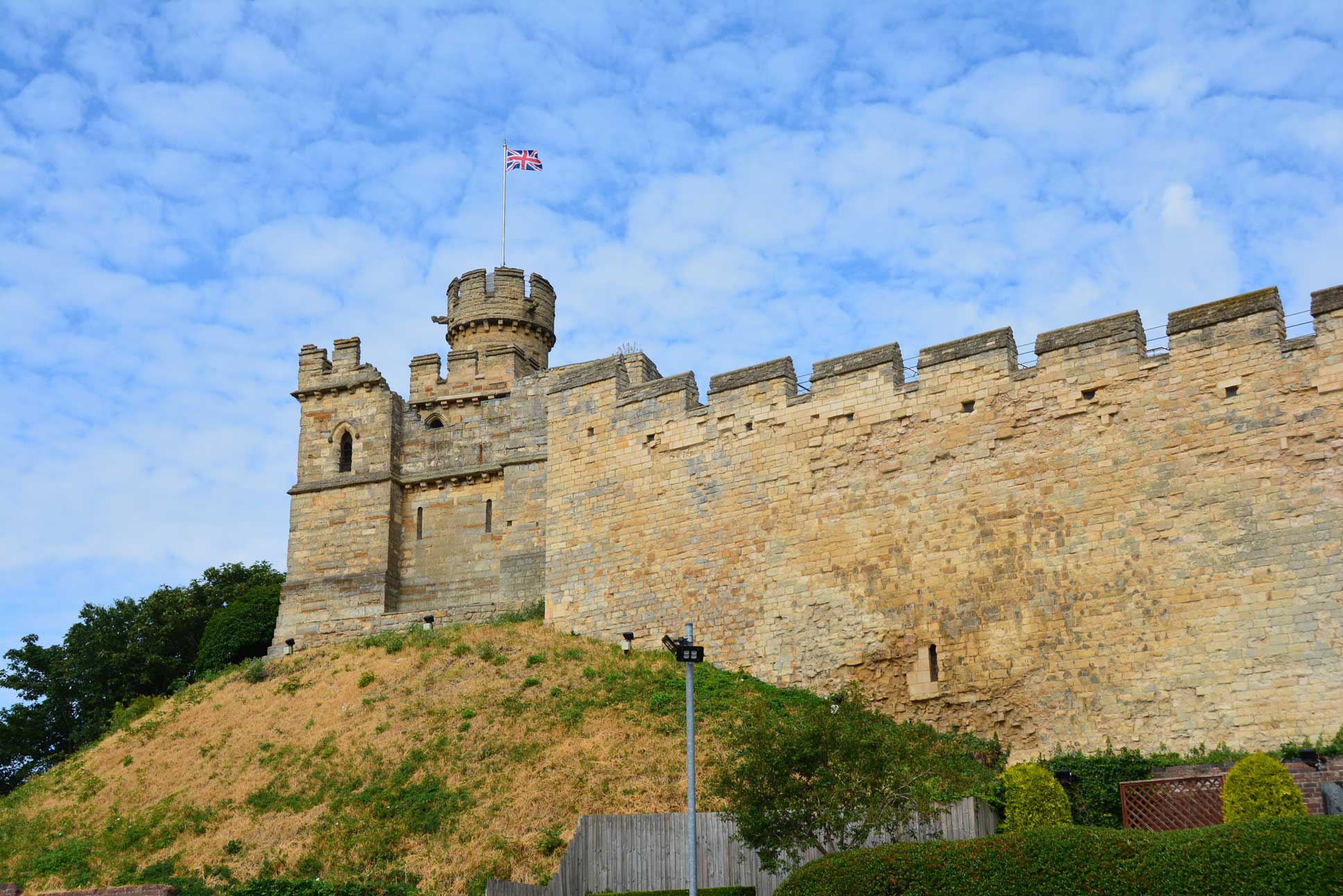
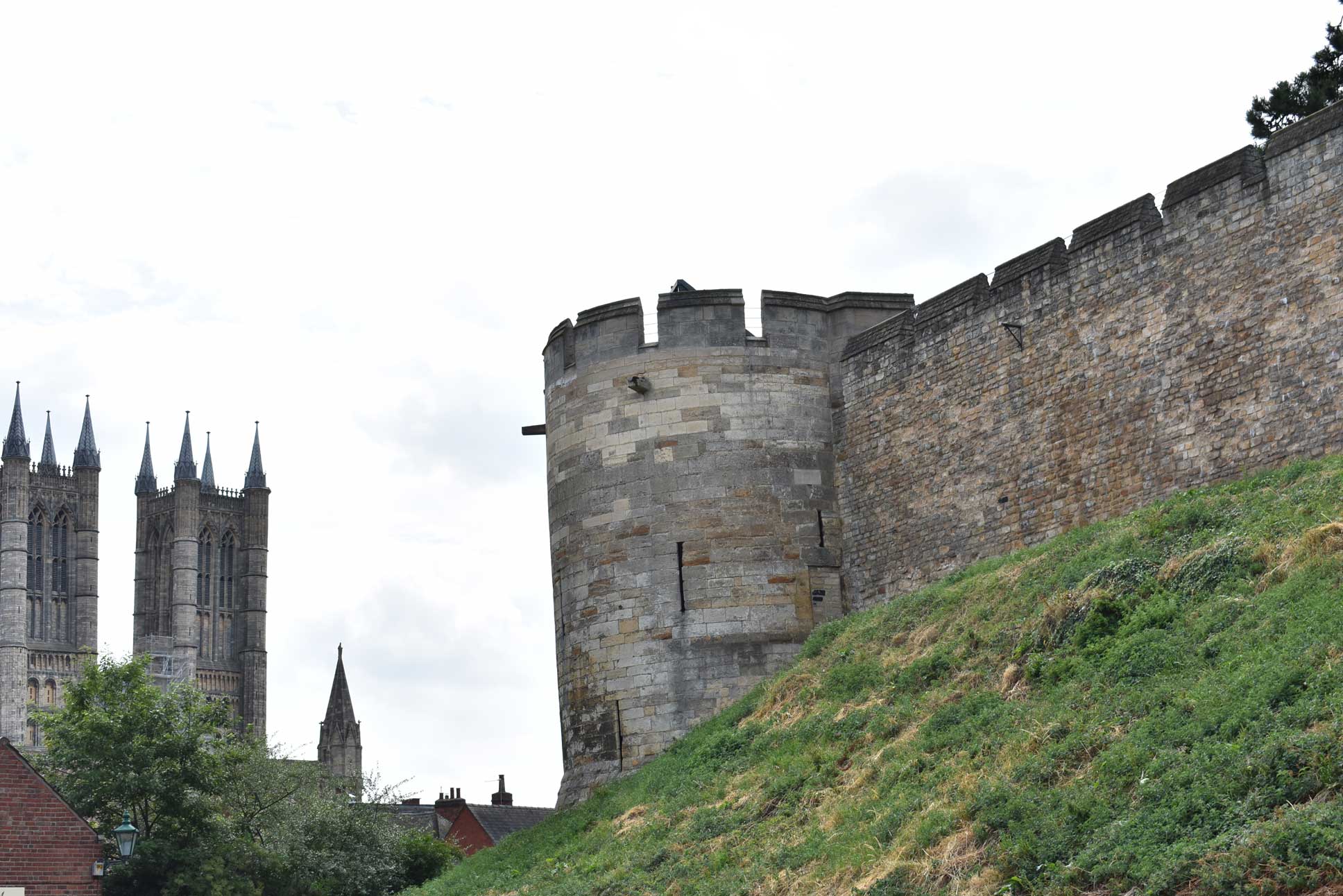
The Observatory Tower at Lincoln Castle.
The castle's hereditary constable was Nicola de la Haye, a woman in her sixties who had inherited the post from her father. She had already defended the castle against an earlier siege in 1191, and King John had appointed her sheriff of Lincolnshire in October 1216. Her sturdy defense kept the castle in royal hands throughout the siege until the battle in May 1217.
The besiegers were led by Thomas, Count of Perche, a French nobleman who commanded a force that included 611 knights and about 1,000 infantry. Alongside him were English rebel barons, including Robert Fitzwalter, Saer de Quincy, the Earl of Winchester, and Gilbert de Clare, Earl of Gloucester.
The Marshal needed a decisive victory before the crown's funds ran out. He gathered a royal army at Newark, including about 400 knights, 250 crossbowmen, and a larger force of mounted and foot soldiers. His commanders included Ranulf de Blondeville, Earl of Chester, Peter des Roches, Bishop of Winchester, William Longespée, Earl of Salisbury, the crossbow captain Fawkes de Breauté, and William de Forz, who had fought at the siege of Mountsorrel earlier in 1217. Wendover says the army rested for a few days and prepared with confession and communion before it marched.
Battle
The royal army advanced from Stow, about eleven miles northwest of Lincoln. When Perche learned that it was coming, his commanders disagreed. Some wanted to march out and fight in the open at the foot of the hill, while others preferred to hold the city gates and keep pressing the siege of the castle. The defensive plan won, but with one critical mistake. The city's western gate was left undefended because it was believed to be blocked with rubble.
The Marshal divided his forces. Ranulf of Chester attacked the northern gate, while Fawkes de Breauté led the crossbowmen into Lincoln Castle through its postern gate. A third force cleared the rubble from the western gate, and the Marshal's army poured into the city.
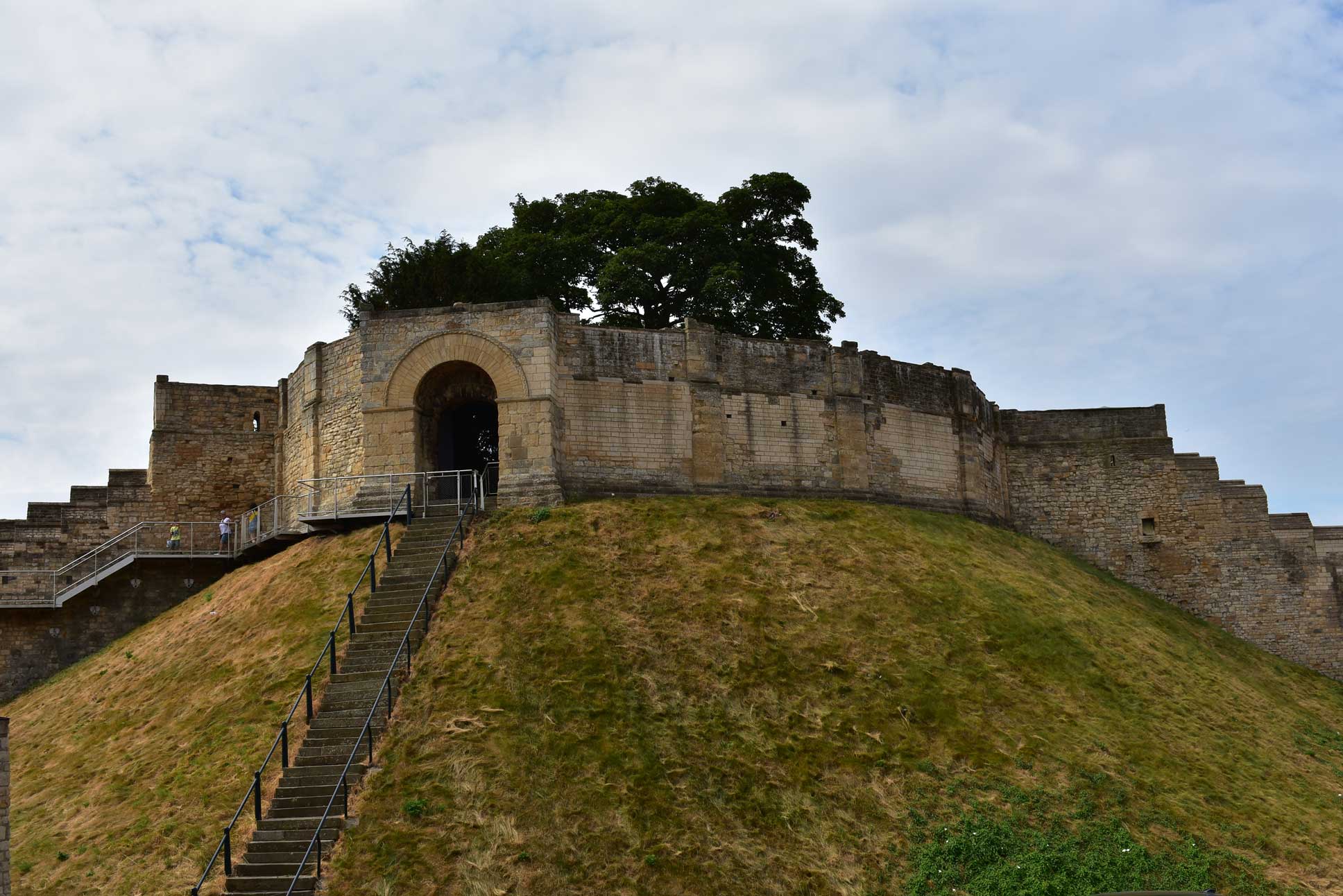
The Lucy Tower on its mound at Lincoln Castle.
From the castle's high ground and the rooftops of nearby houses, the crossbowmen shot down into the streets, and their bolts caused death, damage, and confusion among Perche's men. The Marshal, despite his age, personally led the cavalry charge. According to the biography of his life, he had forgotten his helmet in the confusion and had to borrow one.
A vicious melee followed in the narrow streets and lasted about six hours. Perche was caught in the melee. Reginald Crocus, a knight in the household of Fawkes de Breauté, struck him with a spear through the eye-slit of his helmet, piercing his eye and his brain, and the count fell dead without a word. Crocus himself was killed in the fighting soon afterward.
With their commander dead, the baronial and French forces broke and fled south through the city toward the southern bridge. The southern gate hindered their flight, and the royal knights pursued them, capturing many. Wendover says the fighting began between the first and third hour and was over before the ninth.
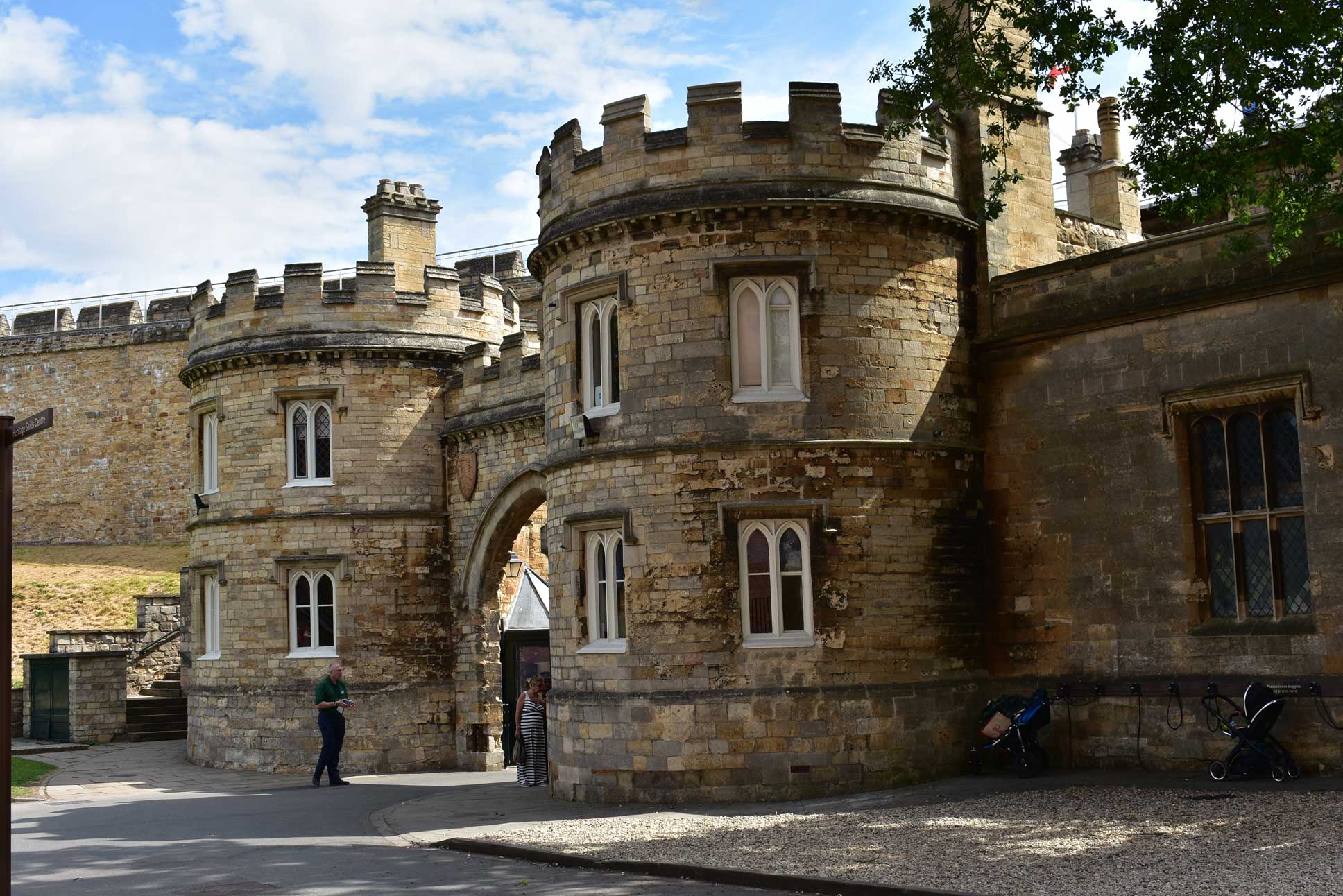
The East Gate of Lincoln Castle.
Roger of Wendover claims that only three men were killed: the Count of Perche, Reginald Crocus, and one soldier. Other deaths, especially among the fleeing foot soldiers, may have gone uncounted. About 300 knights were captured, including Saer de Quincy, Henry de Bohun, Earl of Hereford, Gilbert de Clare, Earl of Gloucester, Gilbert de Gant, Robert Fitzwalter, Richard de Montfichet, and William de Mowbray, along with many soldiers on horse and foot.
Aftermath
Lincoln had supported Louis, so the victors sacked the city, stripping houses, churches, and even the cathedral of their valuables. The plundering was so profitable that people called it the "Lincoln Fair," a sarcastic name for the capture of so many knights and so much treasure. Nicola de la Haye kept the royal castle and its garrison safe through it all. She continued to hold Lincoln Castle until 1226 and died around 1230.
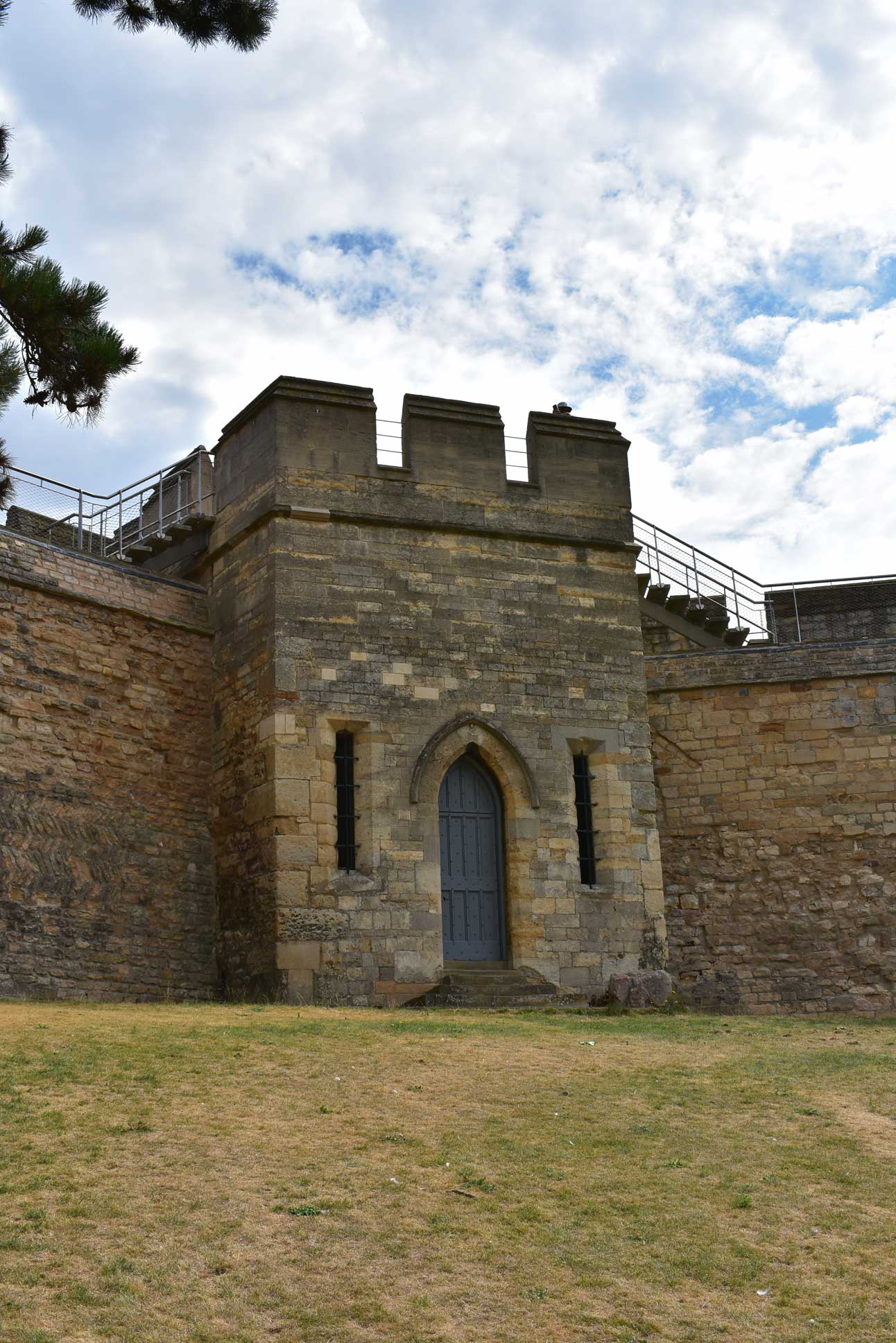
Cobb Hall at Lincoln Castle.
When news of the defeat reached Louis at Dover, he abandoned the siege of the castle, took down his trebuchet, and withdrew to London. Most of the baronial supporters of his cause had been captured or discouraged, and his position in England collapsed.
Louis's remaining hopes rested on reinforcements from France, but in August 1217, Hubert de Burgh's fleet destroyed the French convoy at the Battle of Sandwich. In September 1217, Louis signed the Treaty of Lambeth, gave up his claim to the English throne, and returned to France. The First Barons' War was over.
Lincoln saw another important battle earlier in the 12th century, the Battle of Lincoln in 1141, during the Anarchy.
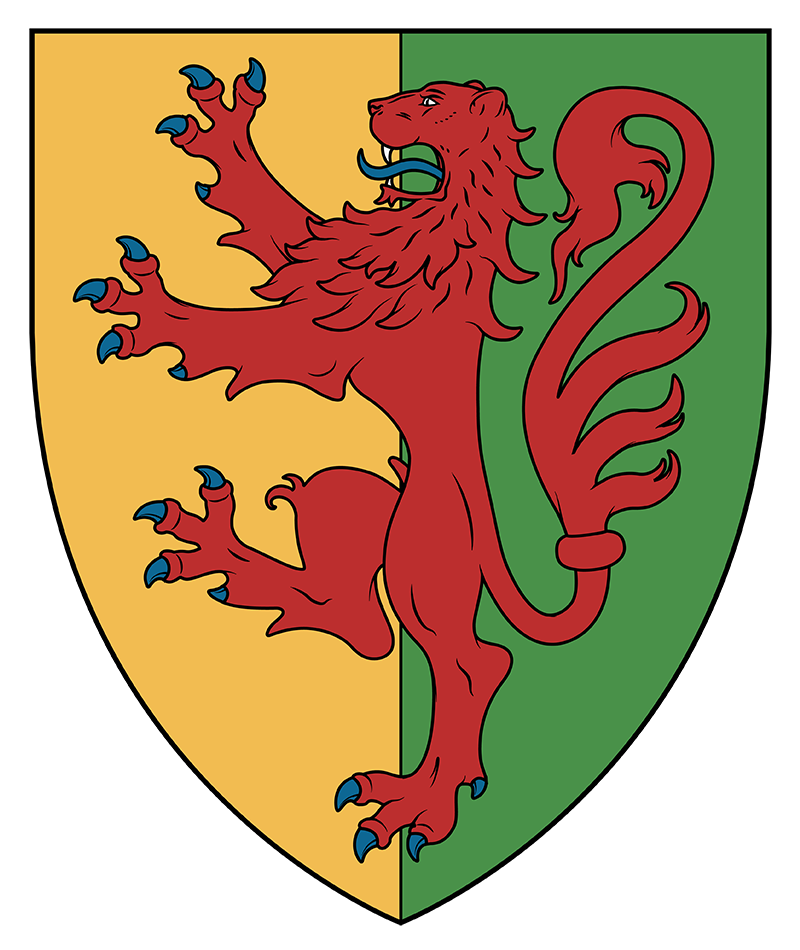

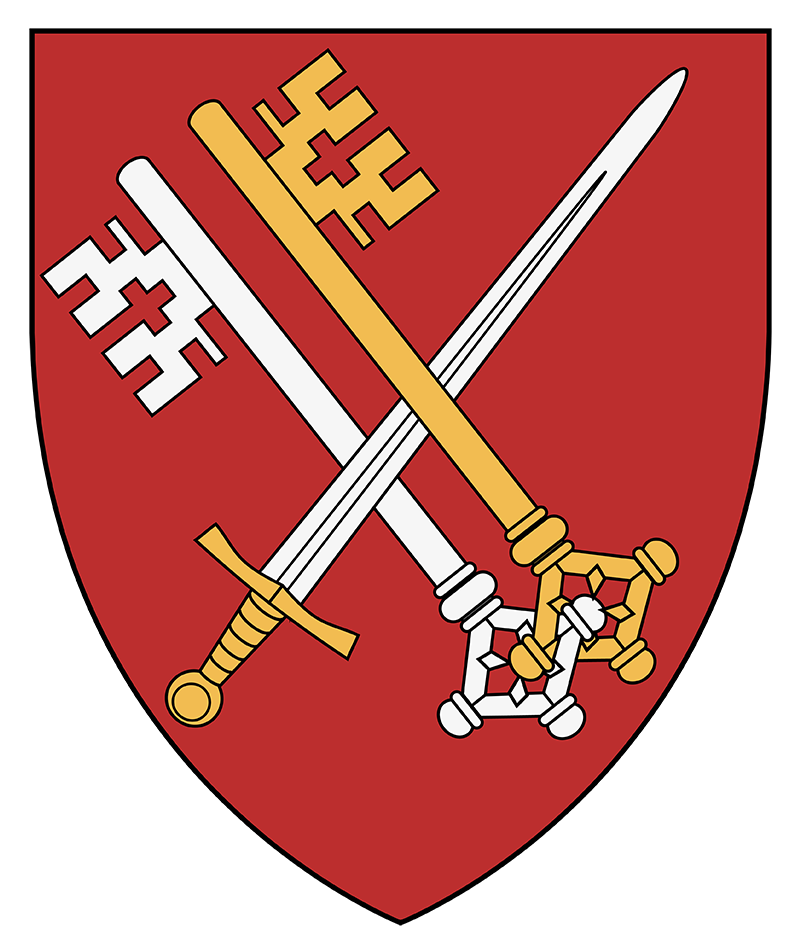

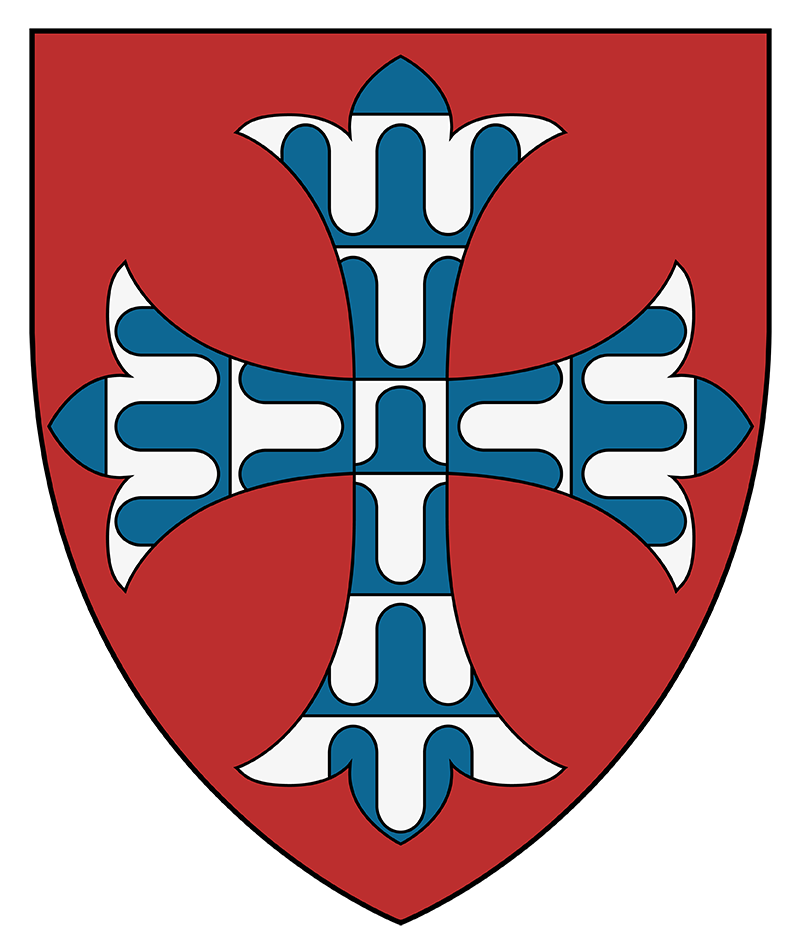
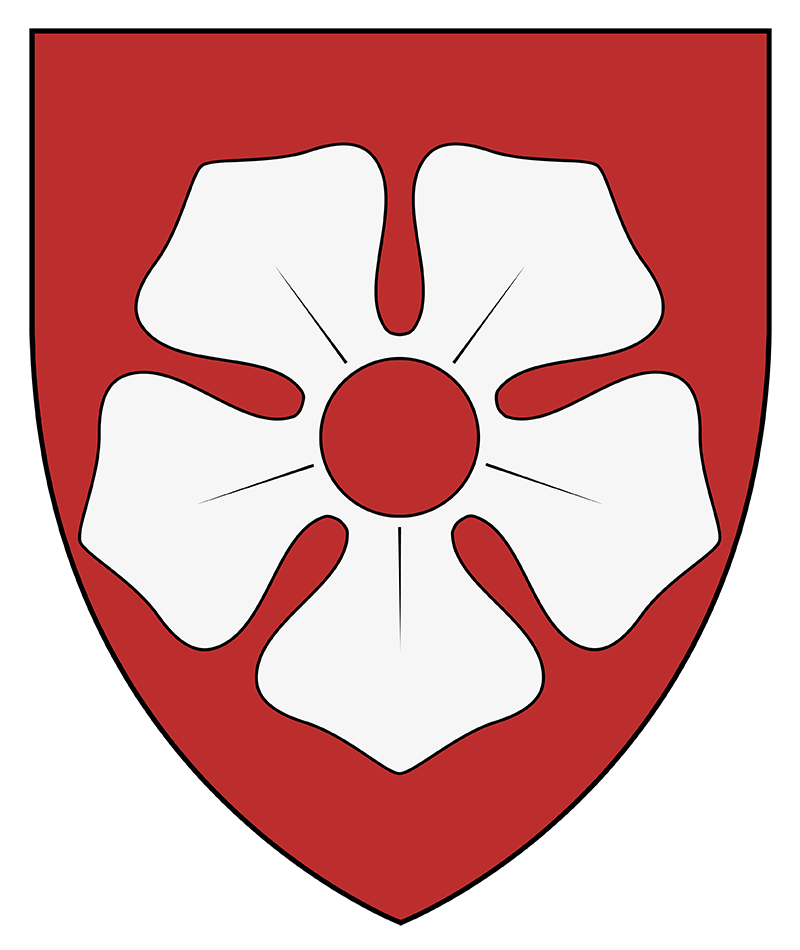
 Nicola de la Haye