Castell Coch
The Red Castle
History
Castell Coch stands above the town of Tongwynlais in Wales, rising above the beech woods of Fforest Fawr. The first castle at this location was a timber castle built on a motte by the Normans around 1081 to protect the newly conquered town of Cardiff. It was one of eight castles built to protect the town and control the route along the Taff Gorge.
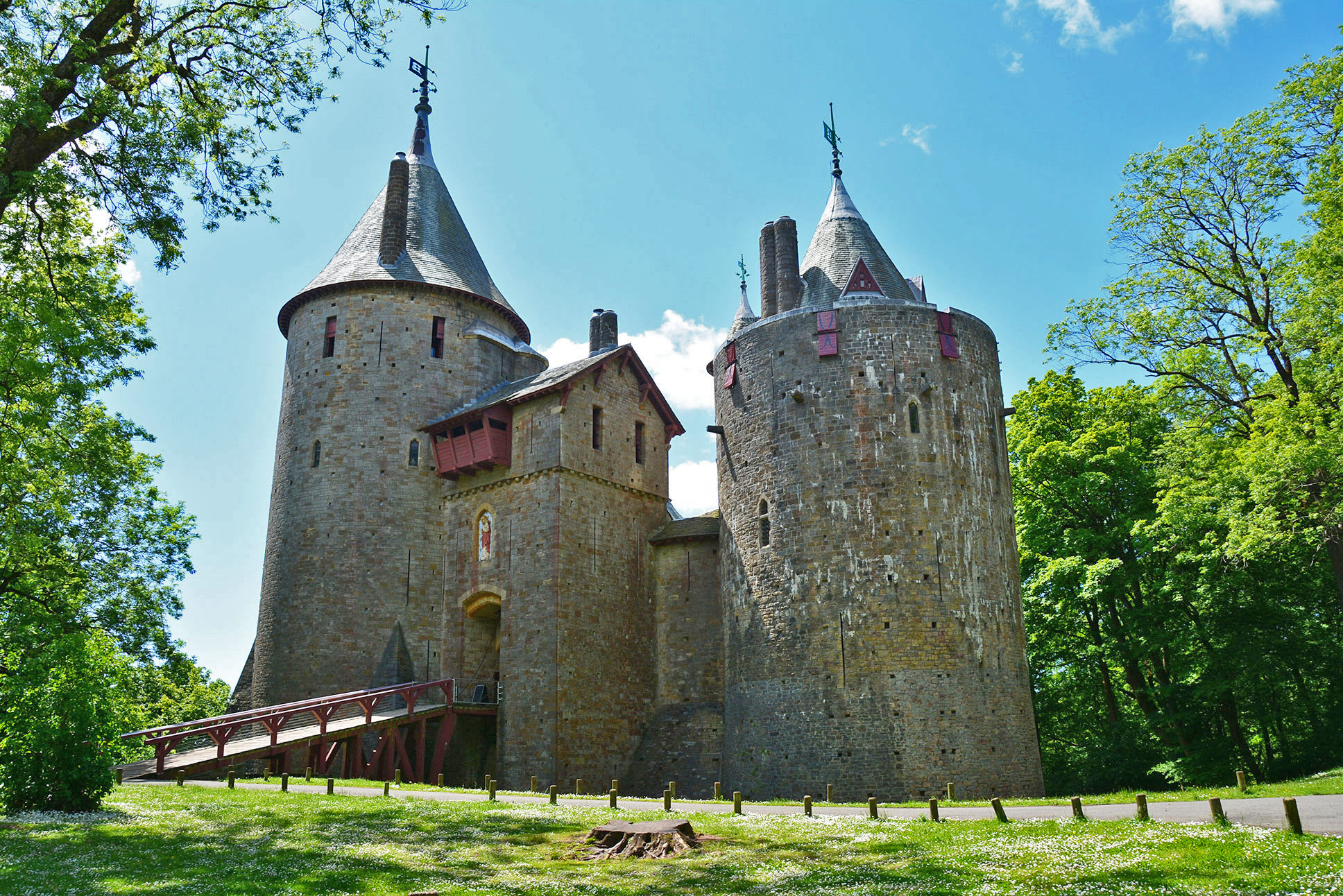
The Normans abandoned the motte castle around 1093. Before 1280, Gilbert de Clare, 7th Earl of Gloucester, built a new castle at the site to control the Welsh lands under his authority. He also built his nearby fortress of Caerphilly Castle.
De Clare's castle was a stone castle built on the motte, with a protruding circular tower, a gatehouse, and a hall above an undercroft or cellar. By 1277, two large round towers were added along with a drawbridge for the gatehouse. Gilbert used the castle as a hunting lodge.
Gilbert de Clare died on December 7th, 1295, at Monmouth Castle. By then, the castle was referred to as Castrum Rubeum, Latin for “The Red Castle”. This may have reflected the red sandstone defenses, or perhaps Gilbert de Clare's nickname, "Red", for his hair color and fiery temper on the battlefield.
Castell Coch passed to his widow, Joan of Acre, and, upon her death in 1307, to their son, Gilbert de Clare, 8th Earl of Gloucester. Gilbert, 8th Earl of Gloucester, died at the Battle of Bannockburn in 1314. Evidence suggests the castle was destroyed by military force in the early 14th century, perhaps during the Welsh rebellion in Glamorgan in 1316, led by Llywelyn Bren, the son of the ruler that Gilbert de Clare had dispossessed in 1267.
In the 16th century, the castle was described as "all in ruin, no big thing but high."
Profits from the industrial growth of Cardiff allowed John Patrick Crichton Stuart, 3rd Marquess of Bute, to engage architect William Burges to redevelop Cardiff Castle in the 1860s. In 1875, the Marquess commissioned Burges to create the Gothic Revival-style castle on the ruins of Castell Coch, which we see today.
Burges first rebuilt Kitchen Tower, Hall Block, and the shell wall. Then he rebuilt the Wall Tower and Gatehouse, raising the ruined towers and capping them with conical roofs. He then installed a wall walk and a timber fighting gallery, and restored the Keep Tower last. Most of the castle's exterior was completed by 1879. He also added modern conveniences, such as central heating.
Burges died in 1881 after catching a severe chill during a visit to the castle. Only the Banqueting Hall had been decorated and furnished. A team of craftsmen completed the most opulent rooms, including the vaulted Drawing Room. The castle was completed in 1891.
The Marquess rarely visited the castle after its completion. Bute died in 1900, and his widow and their daughter occupied the castle for a time.
It gradually fell into disuse, was requisitioned for British and American troops during World War II, and was used as a barracks.
In 1950, John Crichton-Stuart, 5th Marquess of Bute, placed the castle in the care of the Ministry of Works. Paintings in Castell Coch were removed and sent to Cardiff Castle, and the National Museum of Wales provided alternative paintings for Castell Coch.
Since 1984, the castle has been managed by CADW.
Castle Highlights
With its conical tower roofs topped with copper weathervanes, Castell Coch feels like a fairy tale come to life.
You enter the castle across a wooden bridge and over the drawbridge into the Gatehouse. The original footings are still visible in the ditch below the castle. The drawbridge has a counterbalance pit below it, allowing the bridge to pivot and still be raised or lowered. Above the entrance way on the outer wall of the gatehouse is a sculpture of the Madonna and Child by Ceccardo Fucigna, dating from 1878.
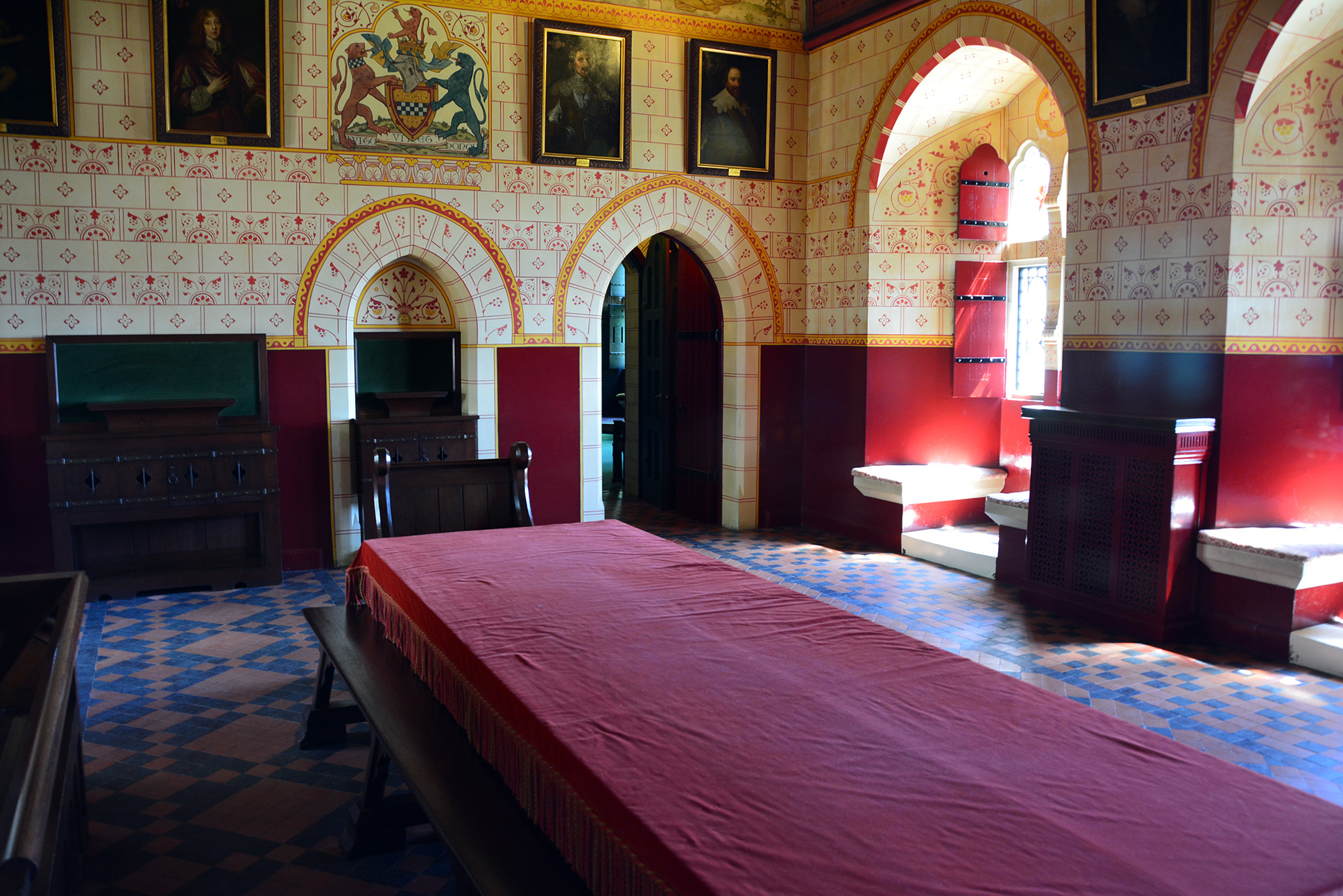
The Banqueting Hall is decorated more modestly than the other rooms, which suits its largely religious motif. Its scissor-trussed roof with chamfered tie-beams is hidden by a boarded ceiling. The statue above the fireplace represents St Lucius, believed to be the first Christian King of Britain and the founder of the diocese of Llandaff.
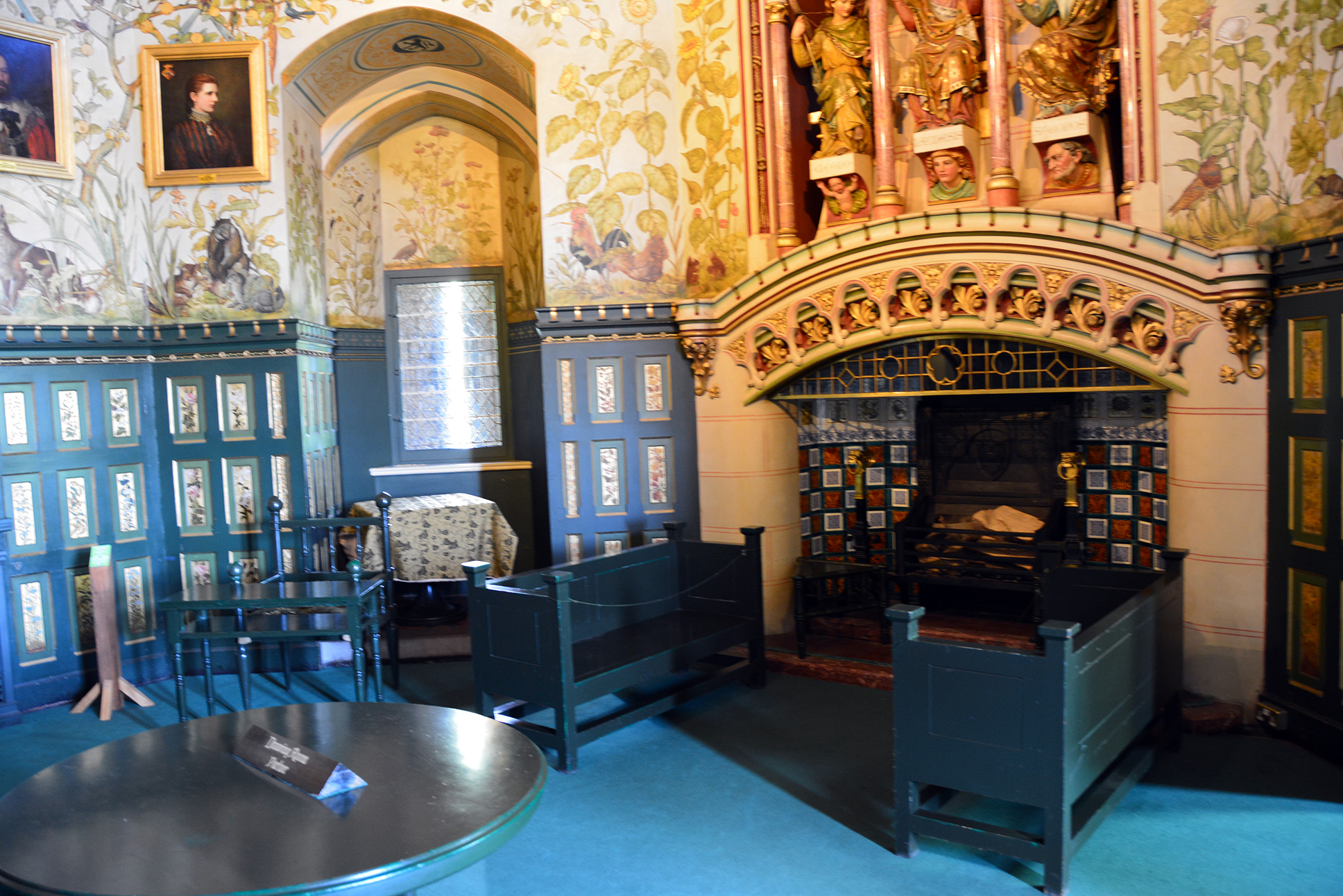
The Drawing Room is the highlight of Castell Coch. This room is elaborately decorated with walls featuring scenes from Aesop's Fables. The statues above the fireplace are the Three Fates. The stone ribs of the vaulted ceiling radiate from a golden sunburst at the center. In between the vaulted ribs are stars, butterflies, and birds.
Beyond the Drawing Room is the Portcullis Chamber, where the machinery to raise and lower the portcullis above the gatehouse is located. Murder holes can be seen in the floor, where guards could drop hot oil or sand on enemies trying to enter the castle.
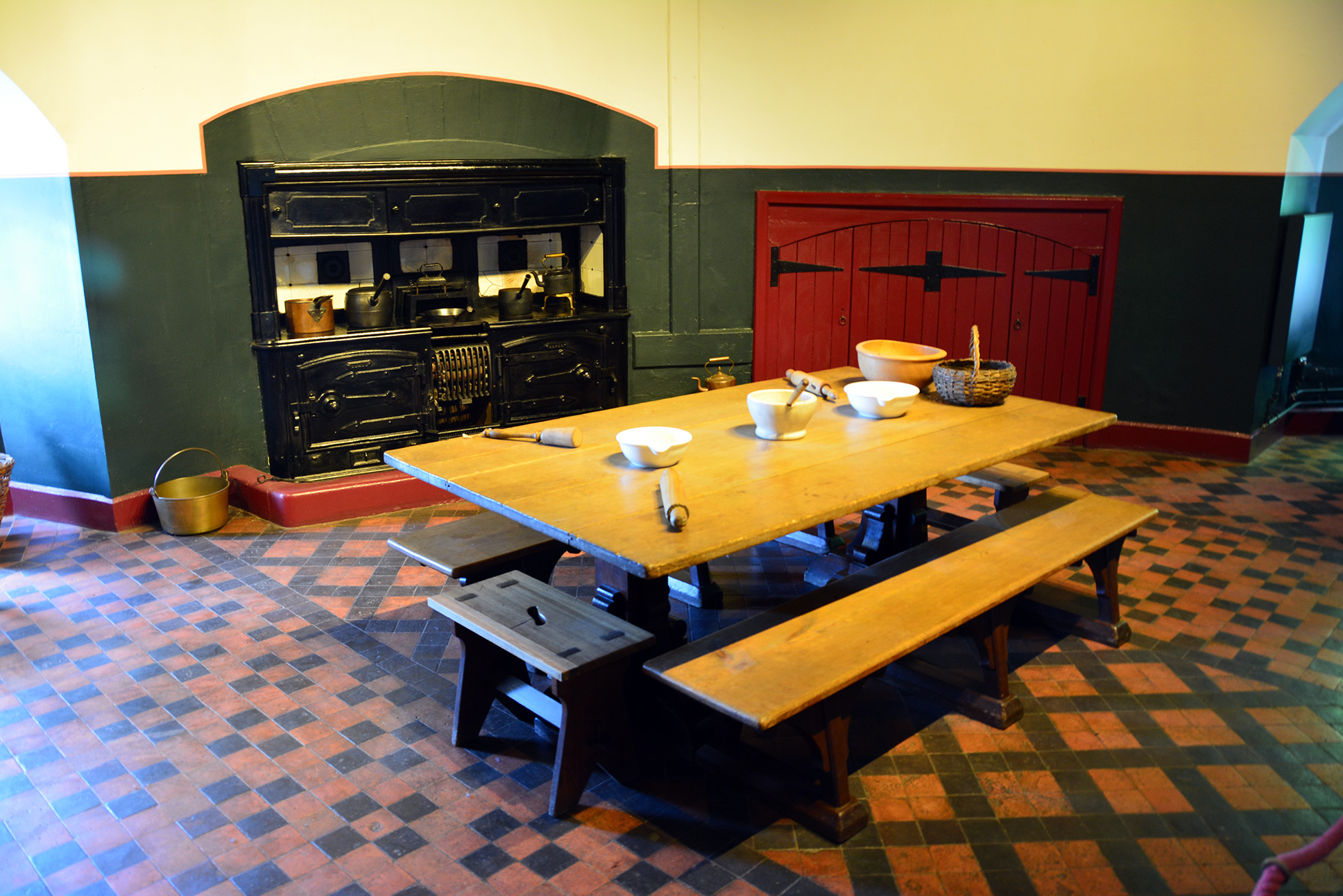
The spiral staircase takes you up to the next floor, where Lord Bute's Bedroom and Lady Bute's Bedroom are located. Both are richly decorated. Another staircase back down a floor will take you through the Kitchen, thought to stand where the medieval castle's kitchen once was, based on three fireplaces found in the ruined walls.
Castell Coch is smaller than most castles and can easily be explored in two hours. A visit should be combined with a visit to Cardiff Castle to see the Marquess of Bute's other restored castle, or Caerphilly Castle to see Gilbert de Clare's other fortress.
Castell Coch is also haunted.