Burg Kastellaun
History
Burg Kastellaun is a 13th century ruined castle in Germany's Rhein-Hunsrück region. Built between 1200 and 1226 by the Counts of Sponheim, it was first recorded in 1226 as Kestilun, although the 1226 charter names two men of Kestellin, and the castle itself is first documented in 1248 as a possession of the Counts of Sponheim. The castle was the residence of Simon II, Count of Sponheim-Kreuznach, in 1301.
The castle was besieged by Archbishop Baldwin of Trier in 1321. Baldwin built the nearby Burg Balduinseck as a rival castle in 1325.
In 1340, Walram of Sponheim-Kreuznach abandoned the castle. Bailiffs and Burgmanns, knights or nobles who guarded castles, managed it. After the Counts of Sponheim died out, Bernhard II, Margrave of Baden, and Count Friedrich of Veldenz ruled the castle together.
In 1444, the last Count of Veldenz died. As a result, his half of the castle passed to his son-in-law, Stephen, Count Palatine of Simmern-Zweibrücken. Consequently, this drew the County of Sponheim into the Palatine sphere of influence and involved the castle in regional wars.
In 1594, after losing his margraviate, Edward Fortunatus of Baden retreated to Burg Kastellaun, which once again became a residence. In 1600, Edward died, aged 35, after falling down the stairs, earning the name "Unfortunate Fortunatus."
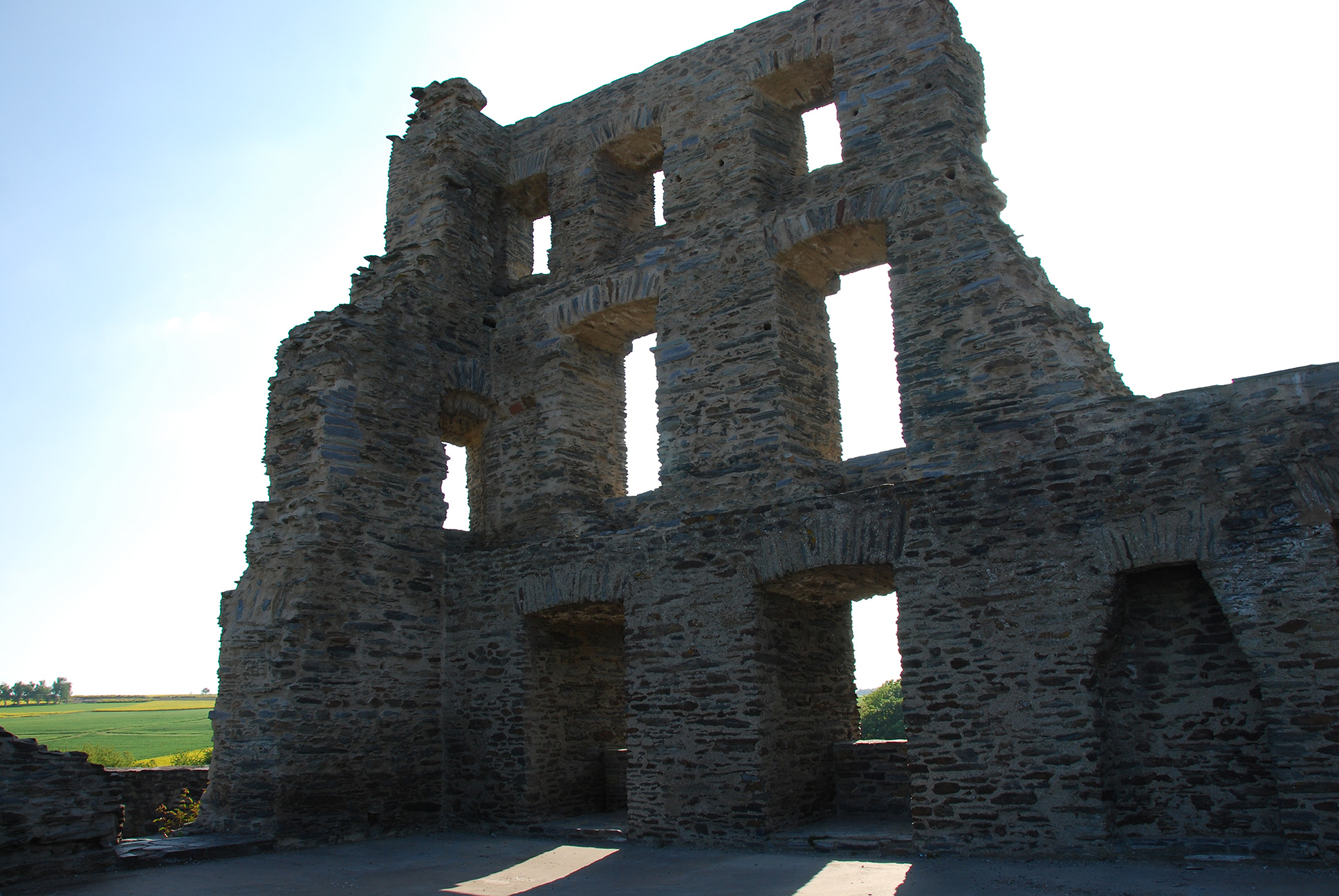
The ruined walls of the palas.
During the following decades, the castle was occupied in the Thirty Years' War (1618-1648) by Spanish, Swedish, Lorraine, Hessian, and French troops.
In 1689, the French blew up the castle during the War of the Palatine Succession, but part of the explosive failed to detonate, which is why the powder tower partly survives. It remained a ruin from then on. In 1820, it passed into private ownership, and in the early 19th century, ruins supplied stones for houses in Kastellaun.
In 1884, Kastellaun's municipality bought the castle and began repairs. Later, between 1990 and 1993, the ruins and the hill were cleaned up, and access to the lower castle was restored. Excavations during this work uncovered the cellar of the east building.
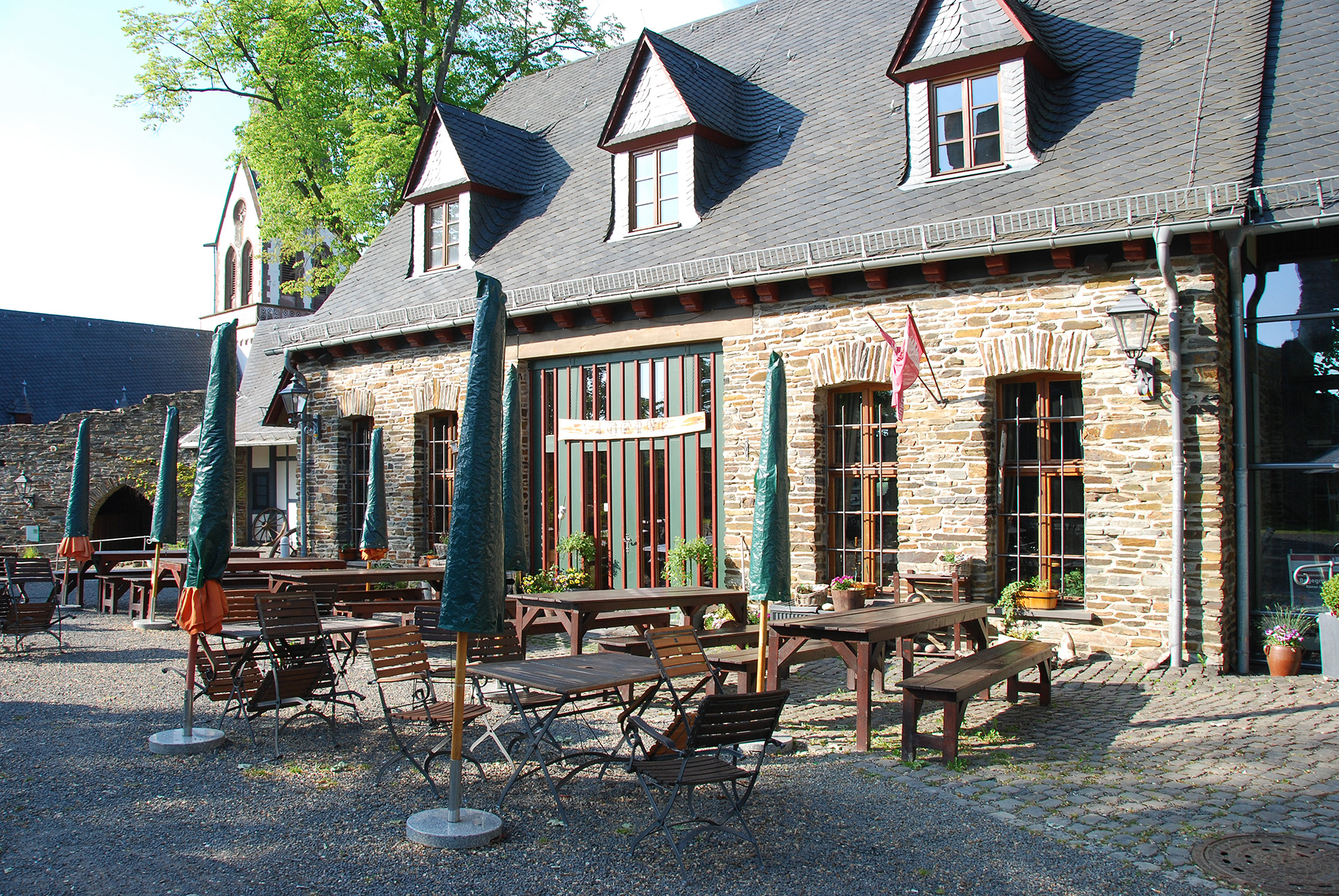
A restaurant within the castle.
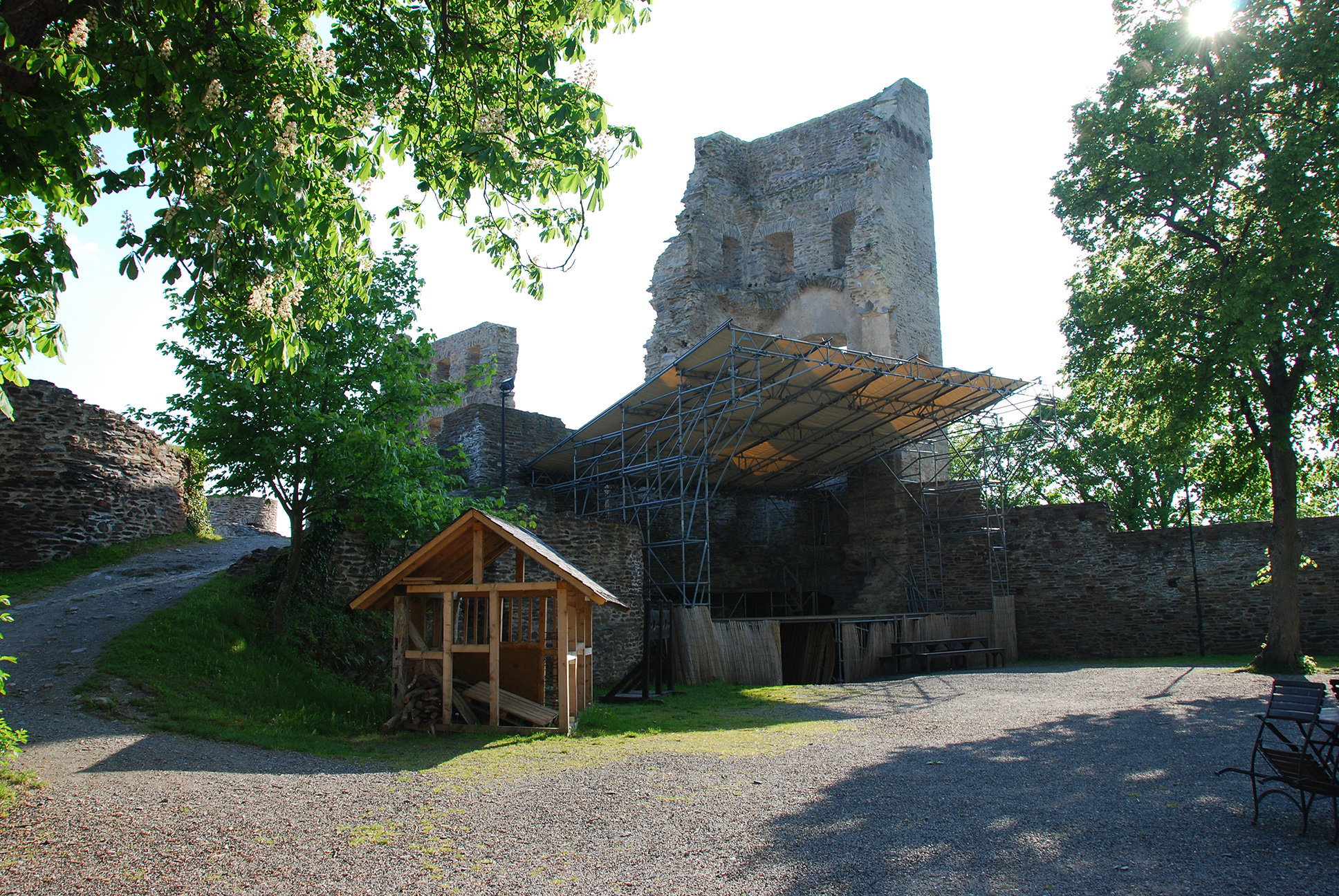
Today, the castle has found new life: the former great hall is used as an open-air stage for theatrical performances, while restaurants now operate in the castle cellars and offer medieval-style knights' banquets. The town runs a children's program on Sundays in summer. A documentation center in the lower castle, the House of Regional History, opened on September 9th, 2007. Its ground floor covers Celtic and Roman history, including a reconstruction of a Celtic chariot grave, and its upper floor covers medieval knights, the former Pydna missile station, the Hunsrück peace movement, and the site's current use for the Nature One festival.
Castle Highlights
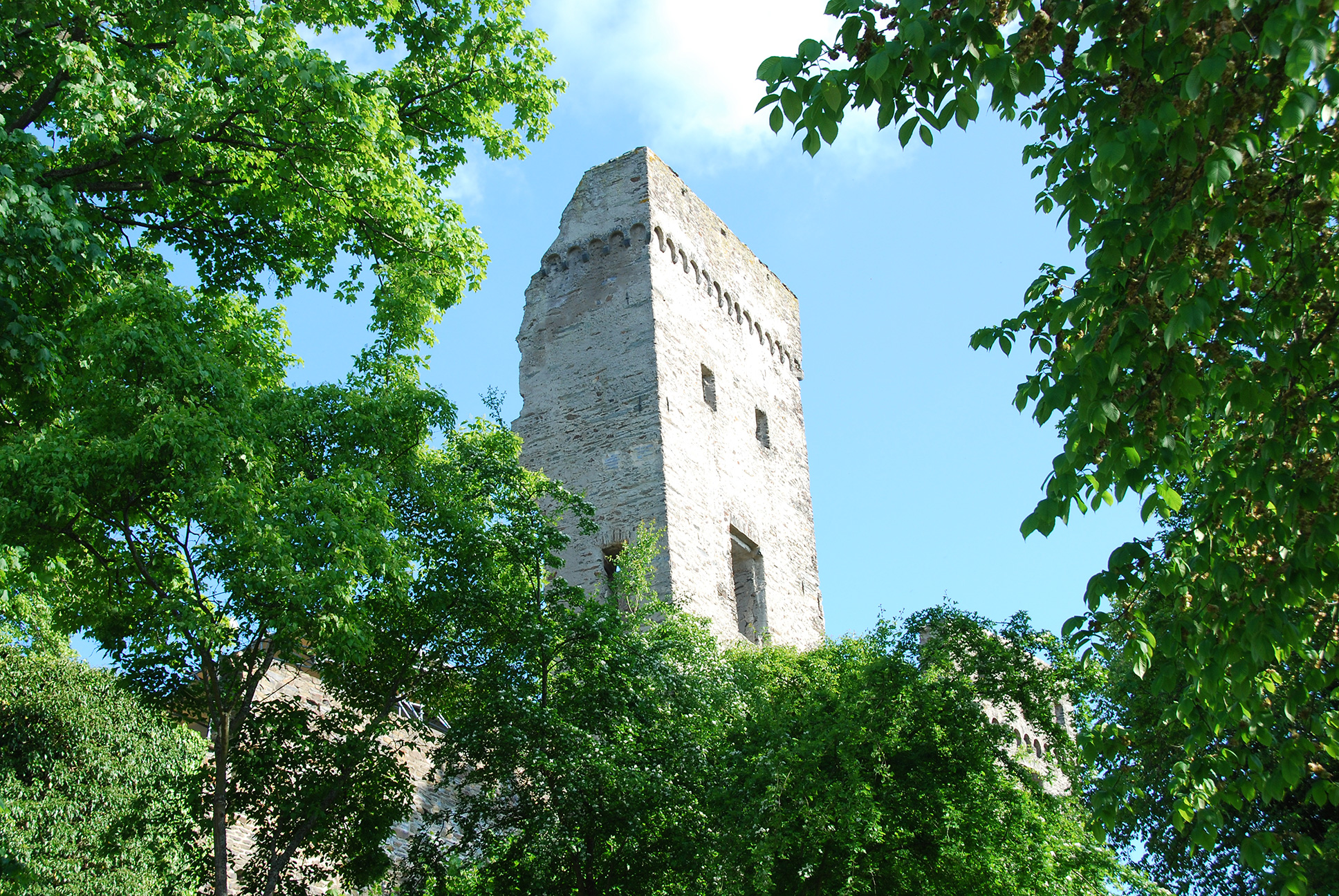
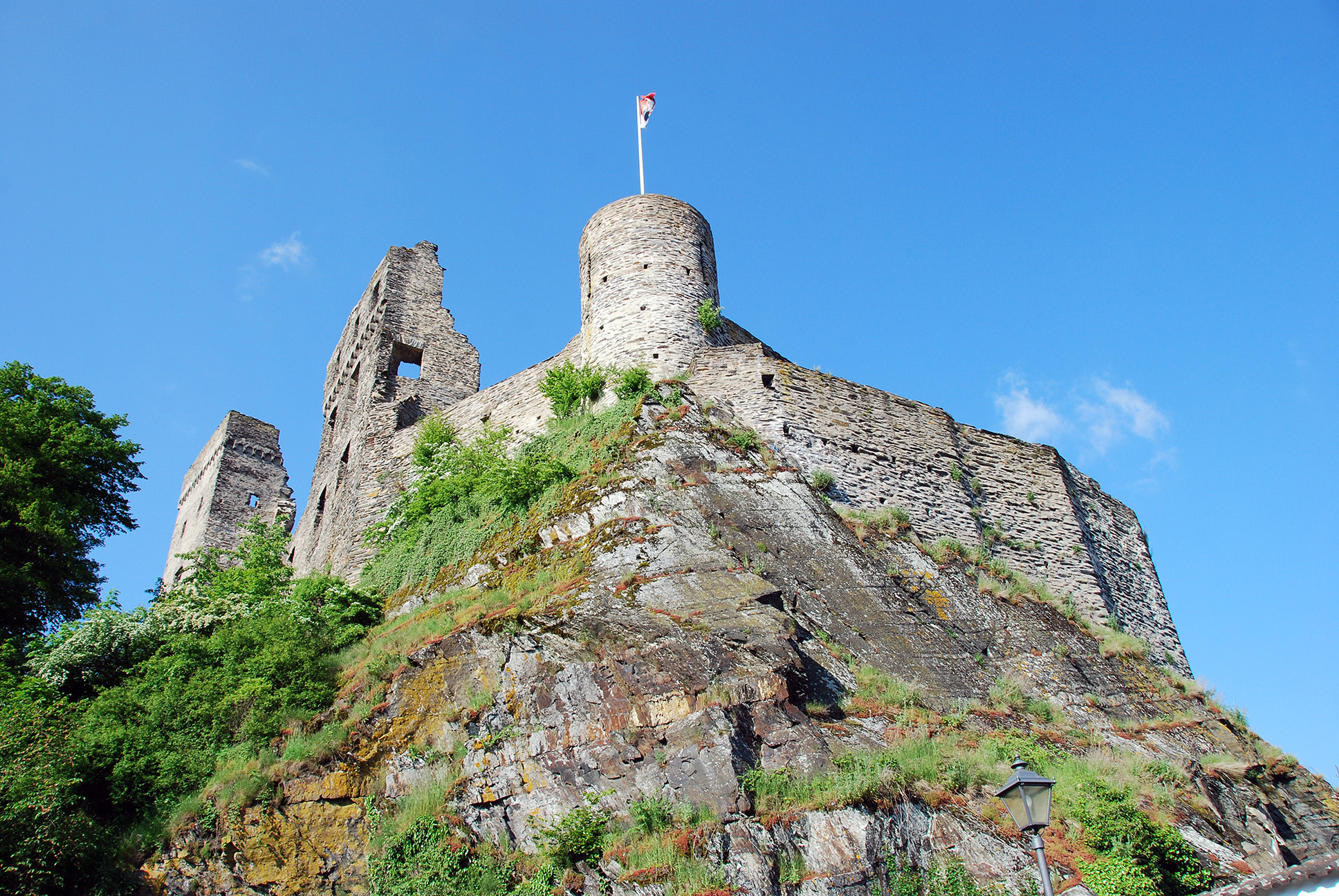
The ruins stand majestically on a hill above town. Visitors can enter at any reasonable time. The castle has an inner and an outer bailey. The inner bailey contains parts of the curtain wall, the keep, and two residential buildings, including the 14th century east building. On the west side are the ruined palas and the powder tower, both probably from the 16th century, and an outer enclosure faces the town on the east. The lower castle has two modern buildings on old foundations.
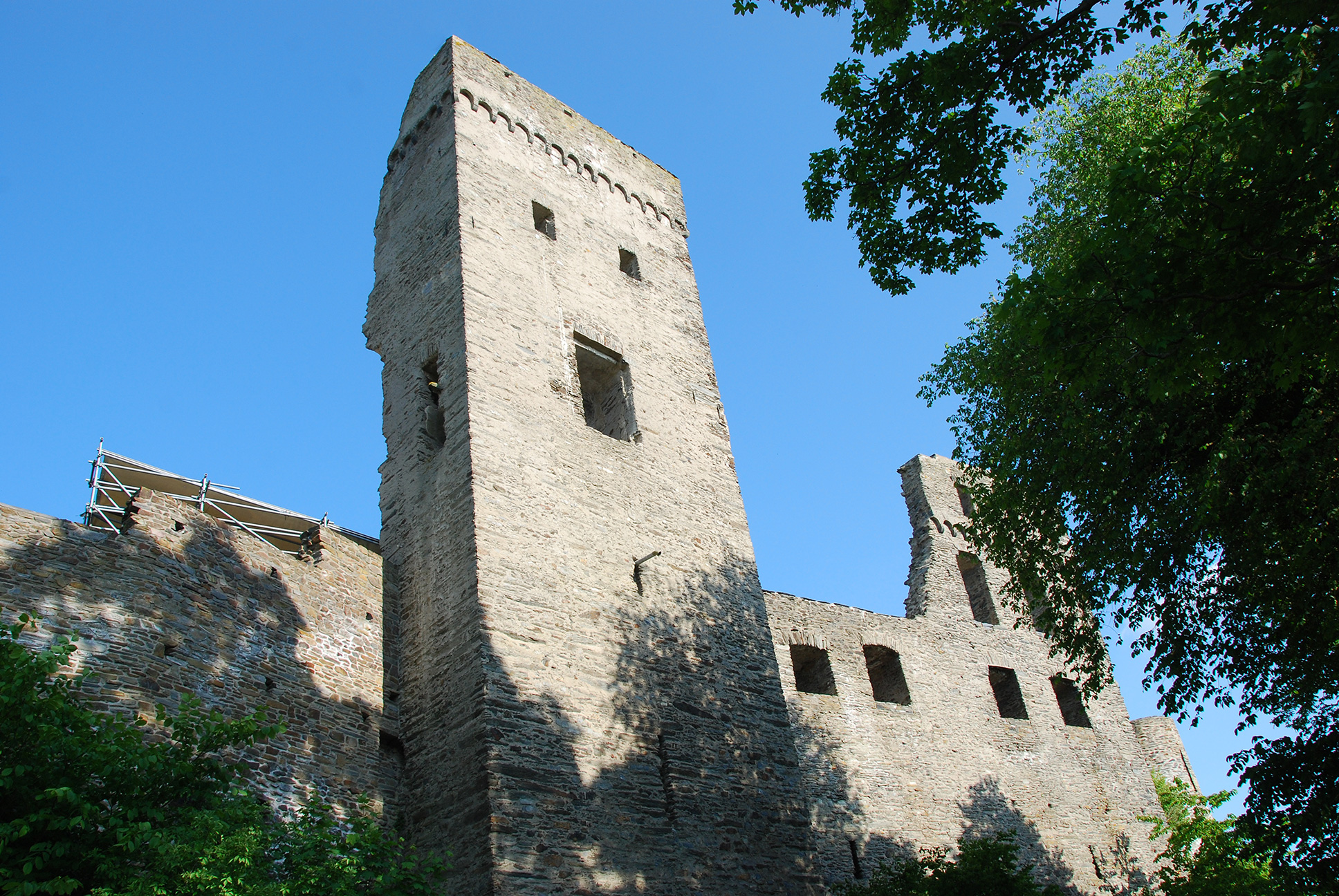
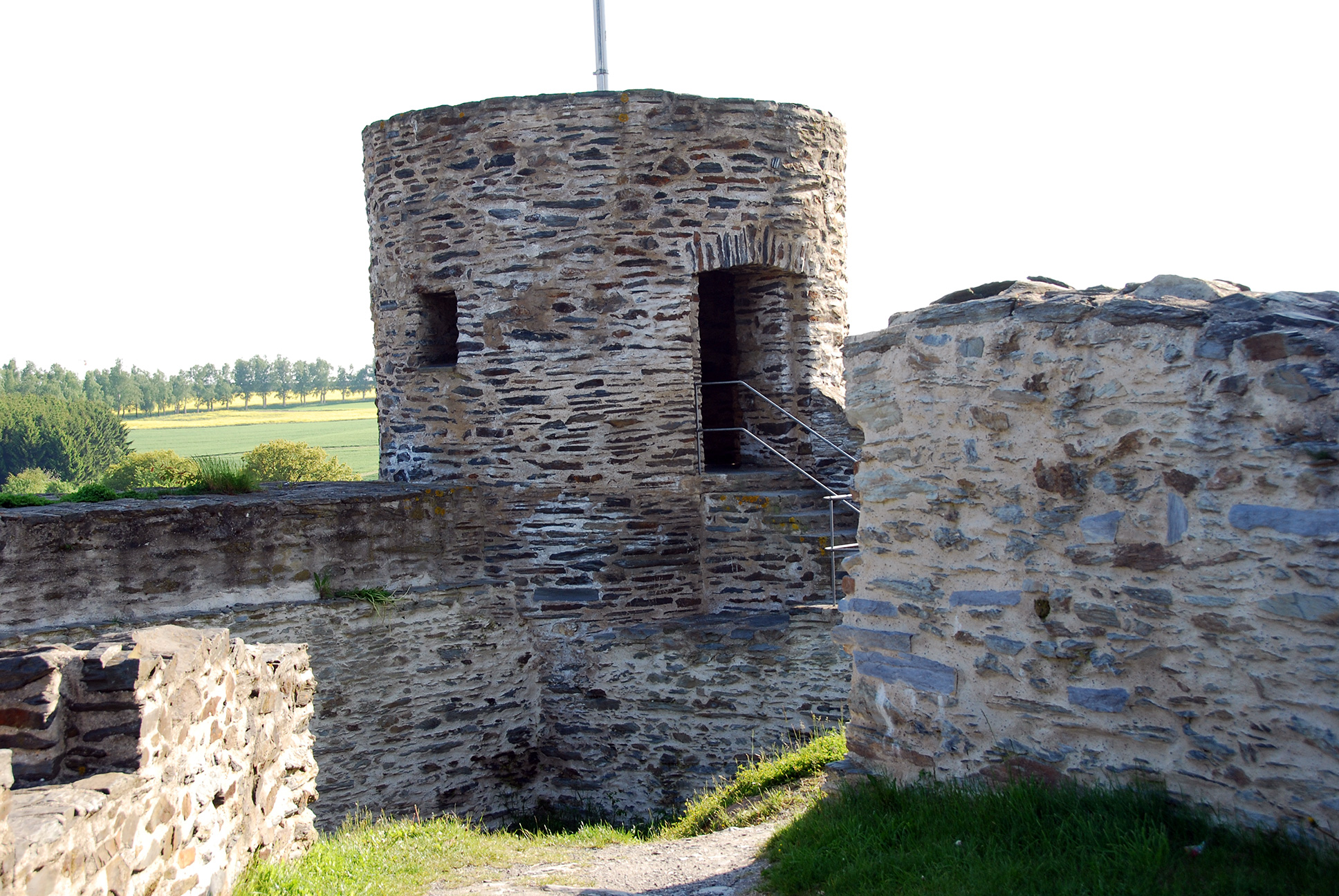
The renovated tower.
Climb the renovated tower for views of the castle, Kastellaun, and the countryside.
The great hall serves as a community stage for theatrical performances. The museum inside the castle features exhibits on local history, including artifacts and displays spanning the Celtic and Roman periods, the Middle Ages, and the end of the Cold War. The museum is located in one of the renovated castle buildings and features interactive displays and historical documents. Tickets for guided castle tours are available at the museum. The museum is open Thursdays through Sundays and on most holidays, with visitor information and temporary exhibits updated seasonally.
Burg Kastellaun is perfect for a one or two hour adventure. For an unforgettable day, head west to the stunning Reichsburg, in Cochem on the River Mosel, to explore a fully intact castle.