Burg Liebenstein
History
Burg Liebenstein stands on a rocky ridge above the village of Kamp-Bornhofen, on the right bank of the Middle Rhine, a little higher than its neighbor, Burg Sterrenberg. It was built in the late 13th century, between about 1284 and 1290, by Albrecht von Löwenstein, a son of King Rudolf I of Habsburg, as an outer castle beside Sterrenberg. Albrecht's wife, Luccardis, came from the Bolanden family, who held Sterrenberg as an imperial fief, and the new castle probably helped to back her claim against her uncle, Werner of Bolanden.
The Bolanden rights passed to the Counts of Sponheim, and in 1294 and 1295, Count Heinrich of Sponheim pledged and then sold Liebenstein to the brothers Siegfried and Ludwig Schenk von Sterrenberg, knights from the Sterrenberg garrison. They moved across to the new castle and began to call themselves "von Liebenstein," and the rivalry between the two castles started with that move. When Archbishop Balduin of Trier took over Sterrenberg in the early 14th century, Liebenstein stayed in family hands.
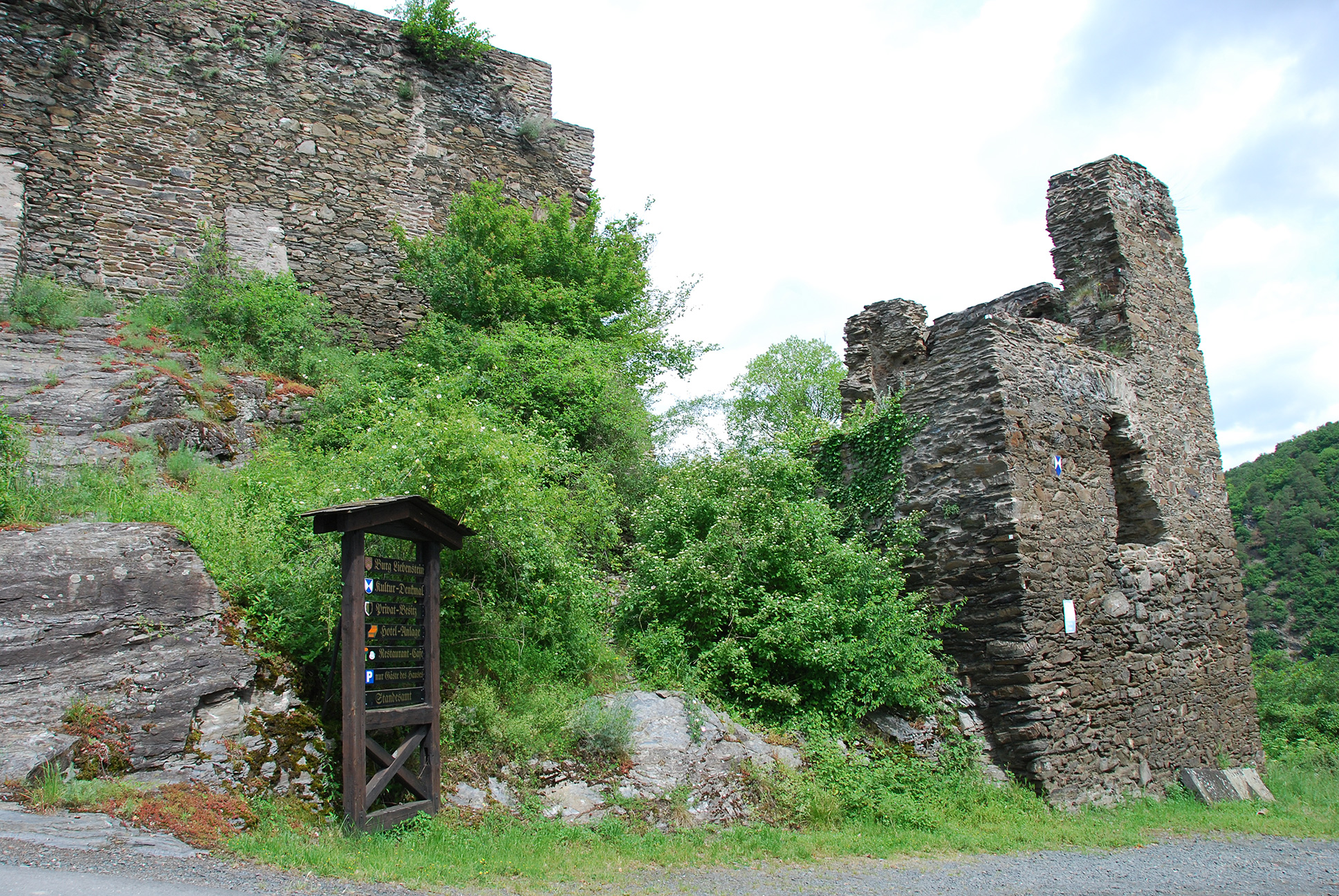
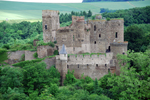
The gate tower ruin beside the approach road, with the rock of the keep above it.
Liebenstein became a Ganerbenburg, a castle held jointly by several heirs, and by the 14th century, up to ten families shared it, each building its own towers and residences on the ridge. A gate tower was added in 1363, a defensive tower around 1380, and the square residential tower, about 17 meters tall and seven stories high, dates from the 14th or 15th century. You can still see how the separate households were fitted into the ridge.
In 1510, Philipp von Liebenstein brought all the shares back into one hand, but the castle was already in decline, and around 1590, the family moved down to Schloss Liebeneck, above Osterspai. When the Liebenstein line died out in 1637, the emperor, Ferdinand II, gave the fief to Gerhard von Waldenburg, the chancellor of the Elector of Mainz, and the Peace of Westphalia confirmed it to the Waldenburg family in 1648. The castle was by then a ruin.
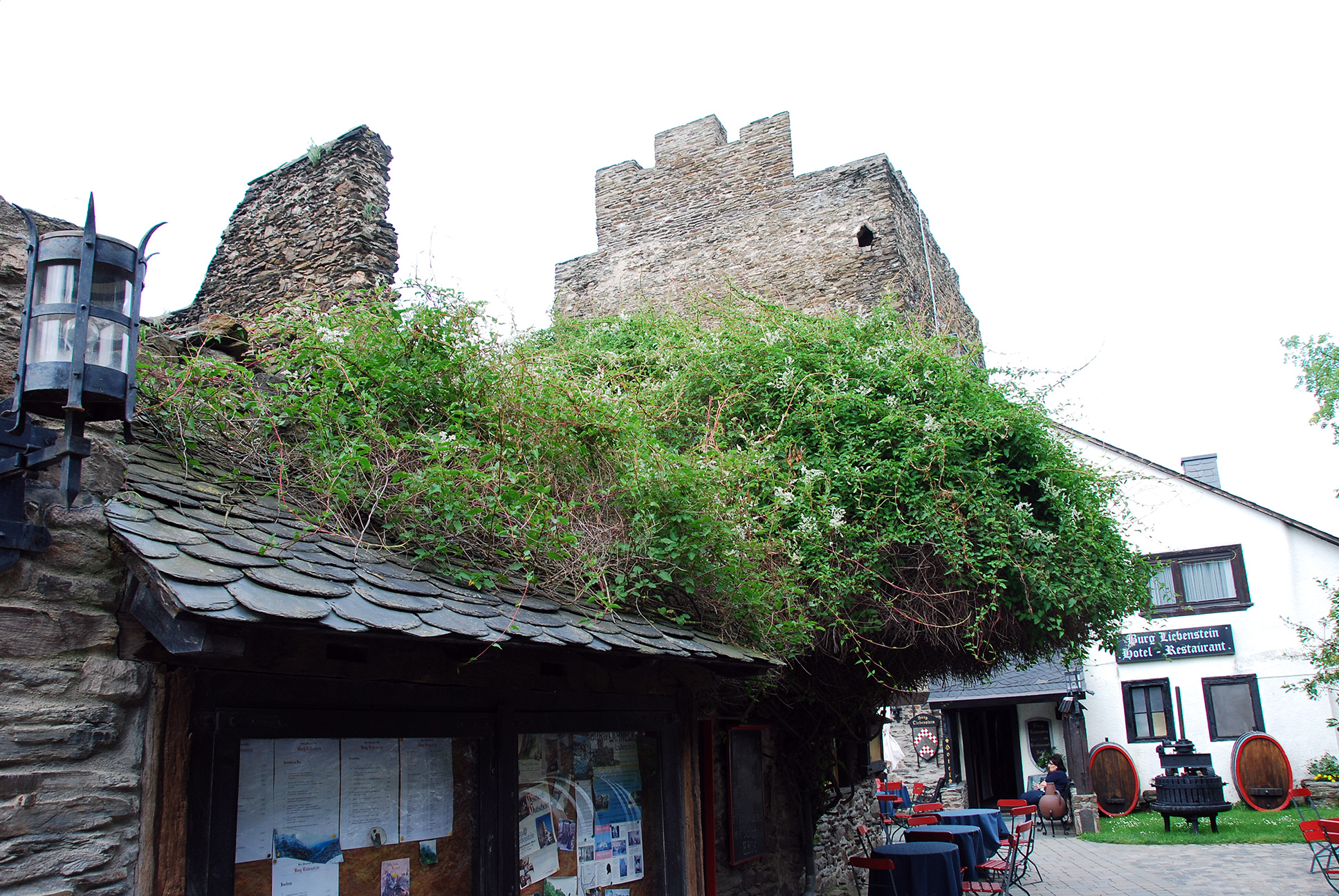
The courtyard of the hotel and restaurant.
After Karl von Waldenburg died childless, the Nassau family gave the castle in 1783 to Georg Ernst Ludwig von Preuschen von und zu Liebenstein, and his descendants, the Freiherren von Preuschen von und zu Liebenstein, still own it. Rudolf Freiherr von Preuschen carried out a thorough restoration in 1977 and 1978, and developed the castle as a hotel and restaurant. Since 2002, Burg Liebenstein has been part of the UNESCO World Heritage Site of the Upper Middle Rhine Valley.
Castle Highlights
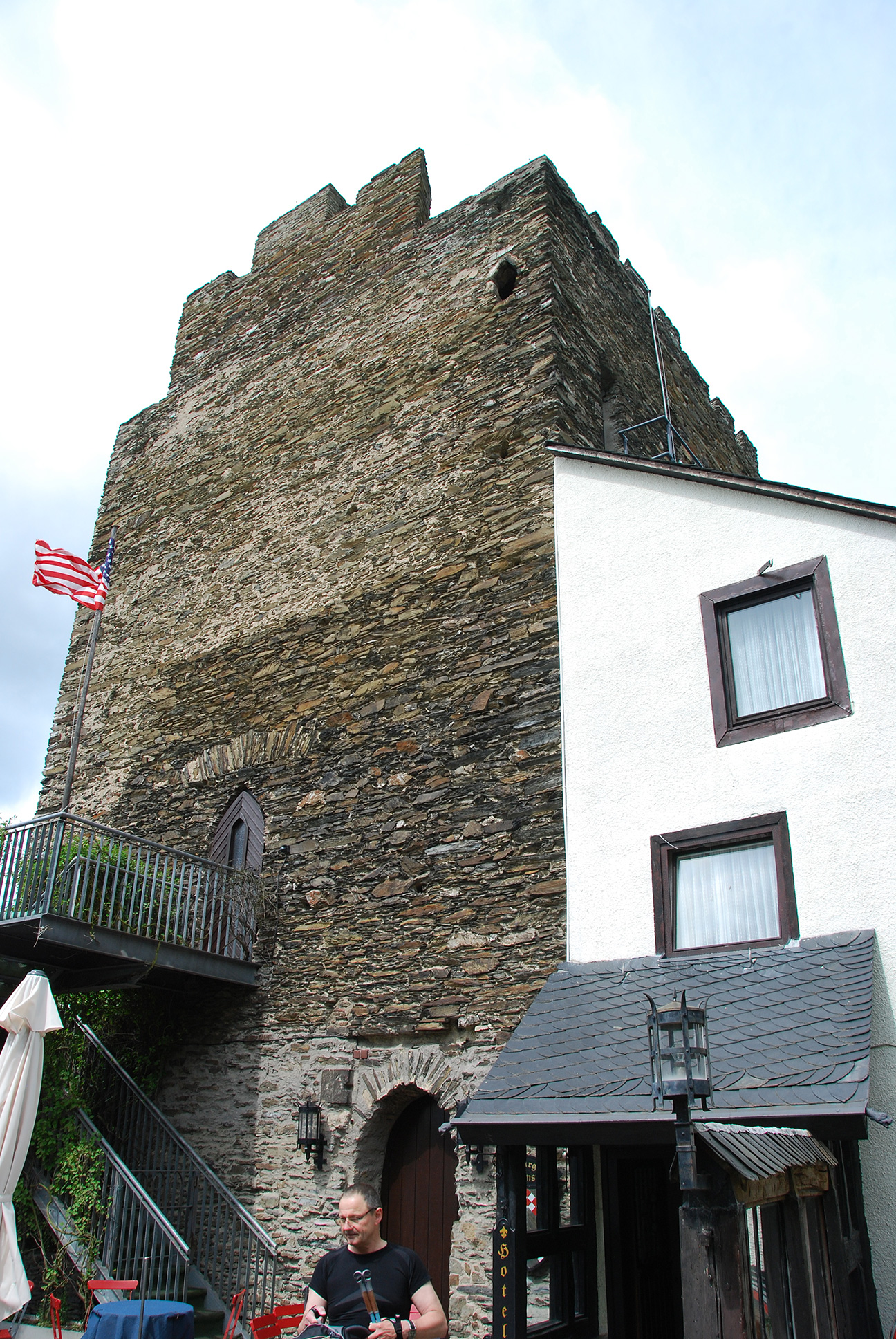
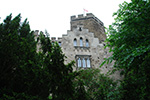
The residential tower, with the hotel buildings beside it.
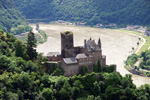
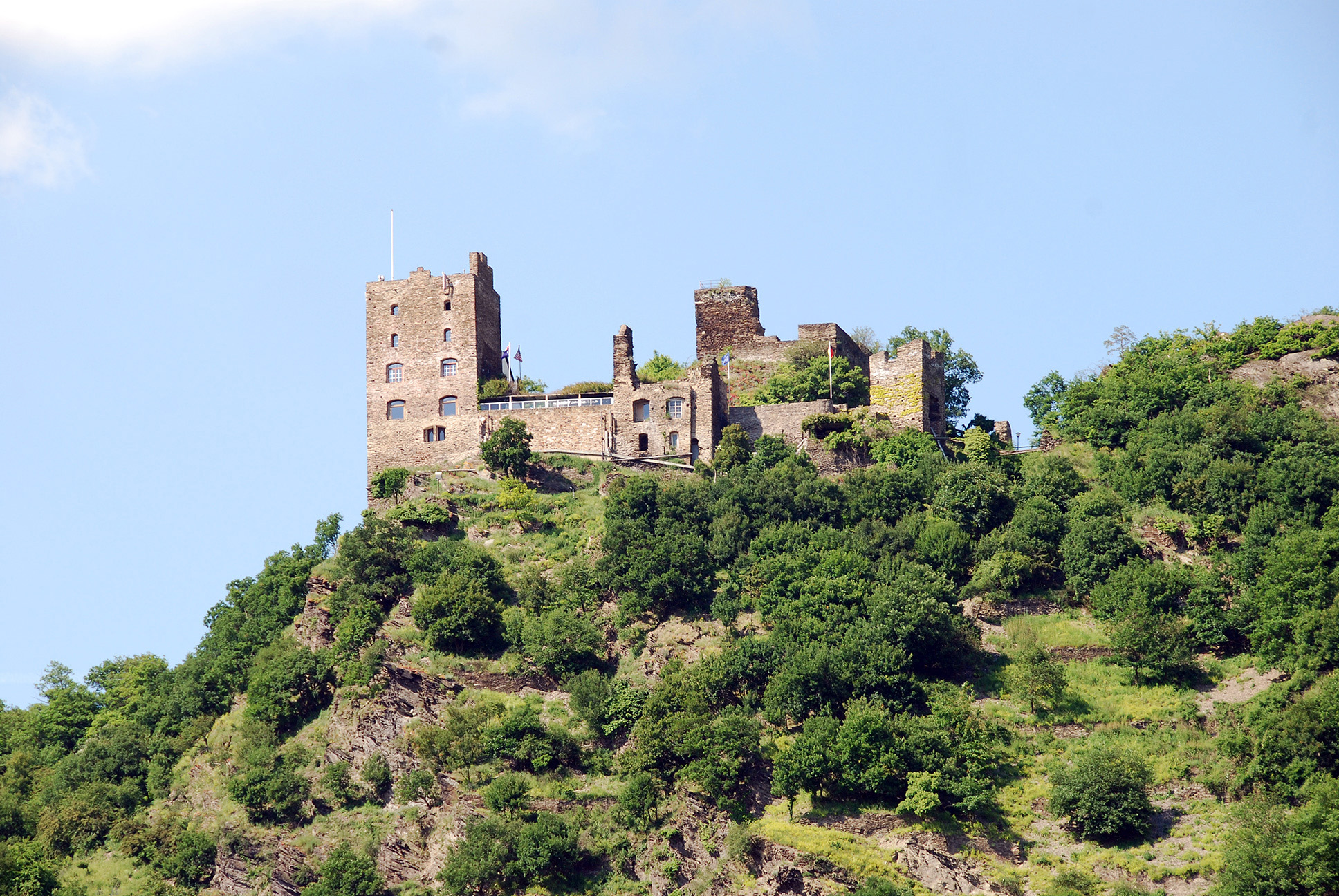
Burg Liebenstein and Burg Sterrenberg share a ridge about 300 meters long, and the best view of the pair is from the river, or from the Rhine bank at Kamp-Bornhofen. What remains of Liebenstein is a ruined square keep on its rock, a gate tower, a cannon battery on the Rhine side, a ruined tower at the east end, and the tall residential tower. The residential tower and the courtyard house beside it are the hotel, and the hotel's rooms look out over the Rhine valley.
The hotel and restaurant are open to visitors from April to October on weekends and public holidays, and at other times by arrangement. The small family-run hotel has nine rooms, and the courtyard has tables for meals in the open air. A visit combines well with Burg Sterrenberg, which is just along the ridge.
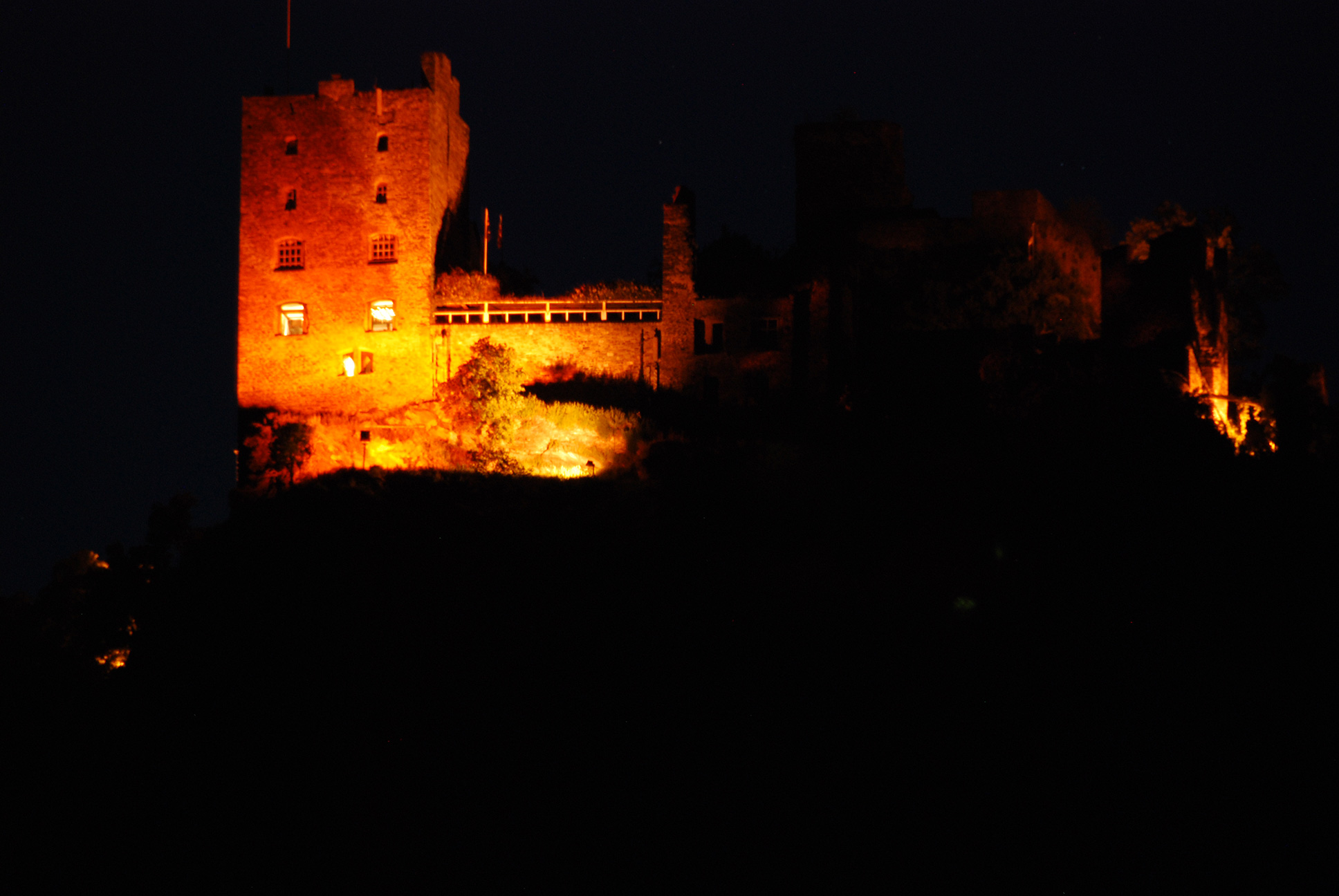
Burg Liebenstein lit up at night.
The two castles are known as the "Hostile Brothers," after a Rhine legend about two feuding brothers who built a wall between their castles. The wall, the Streitmauer, or "Quarrel Wall," stands on the Sterrenberg side, and no fighting between the two castles is recorded. The earliest record of the legend is from 1587, and Heinrich Heine retold it in his poem "Zwei Brüder."
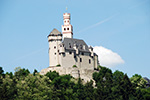
If you would like to see a more substantial castle on the same bank of the Rhine, head north up the B42 through Braubach to the Marksburg.