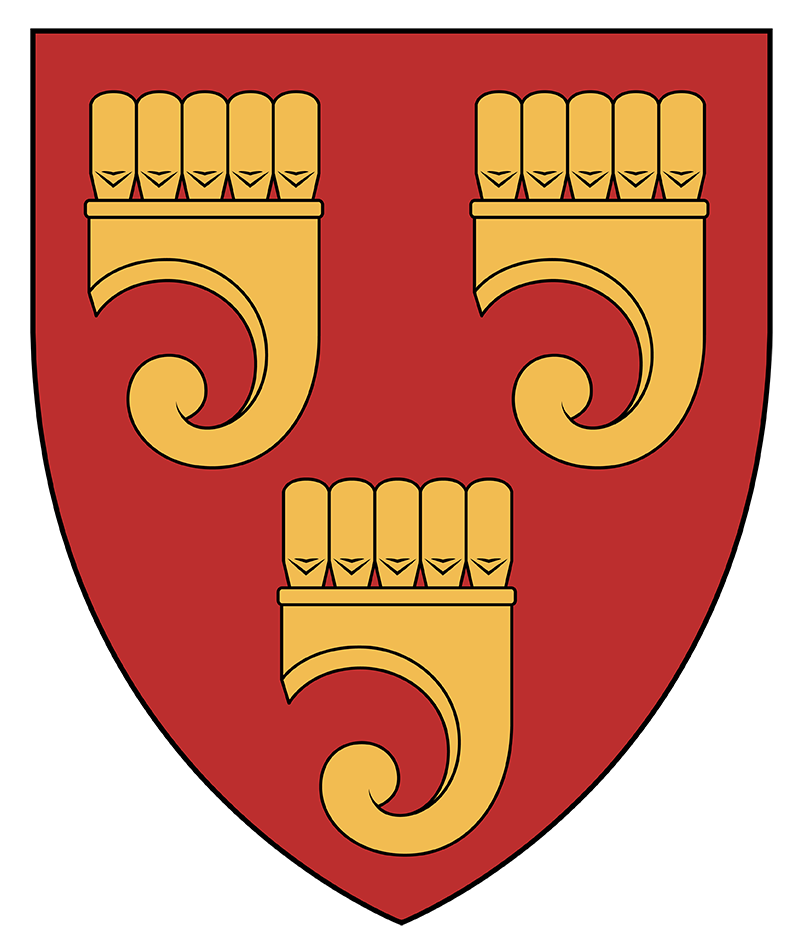
Robert FitzRoy - 1st Earl of Gloucester
Robert of Gloucester
Robert FitzRoy, 1st Earl of Gloucester, was the eldest of the many illegitimate children of Henry I and the most important supporter of his half-sister, Empress Matilda, in her war for the crown against King Stephen. One of the richest men in England and a capable general, he led her cause through the Anarchy, commanded her army at the Battle of Lincoln, and was captured at the Rout of Winchester, an event that cost her the best chance she ever had at the throne.

Robert was born around 1090, probably at Caen in Normandy, the illegitimate son of Henry I and probably the eldest of his many children outside marriage. He was known in his time as Robert de Caen. Who his mother was is uncertain. She is sometimes said to be the Welsh princess Nest ferch Rhys, she may have belonged to the Gay family of north Oxfordshire, and one source suggests she was an unknown woman from Caen. As a young man, Robert became one of his father's most trusted helpers, and Henry rewarded him richly.
In June 1119, Henry arranged for Robert to marry Mabel FitzRobert, the heiress of Robert FitzHamon, the Norman lord who had conquered Glamorgan and held Gloucester. The wedding at Lisieux brought Robert the honours of Gloucester and Glamorgan, together with lands in Normandy. A year after the loss of the White Ship, Henry made him Earl of Gloucester, around 1121 or 1122, and he became one of the greatest lords of the realm.

The keep at Cardiff Castle.
Robert held a string of castles for the king, including Bristol, which became his main English seat and which he strengthened, and Cardiff Castle, which came with his wife's inheritance. In 1126, Henry's elder brother, Robert Curthose, the former Duke of Normandy, was moved from Devizes to Cardiff, and he spent the last years of his life there in Robert's keeping until he died in 1134. In 1129, Robert also founded St James' Priory in Bristol, where he would be buried.
After the loss of his only legitimate son in the sinking of the White Ship, Henry made his barons swear to accept his daughter, Matilda, as his heir. Robert was among the first to swear. Chroniclers report that he and his rival Stephen quarreled over which of them should take the oath first. When Henry died in December 1135, Stephen seized the throne, and at first Robert reluctantly accepted him, doing homage in 1136 on conditions that protected his rights.
The conditions did not last. Geoffrey of Anjou, Matilda's husband, won Robert over, and in 1138, he renounced his allegiance to Stephen. Robert's stronghold at Bristol made the west of England a base for Matilda's party. In September 1139, he crossed the Channel and brought Matilda to England. They landed at Arundel Castle, where Stephen besieged Matilda but let her go, and she joined Robert at Bristol, where he took command of her armies.
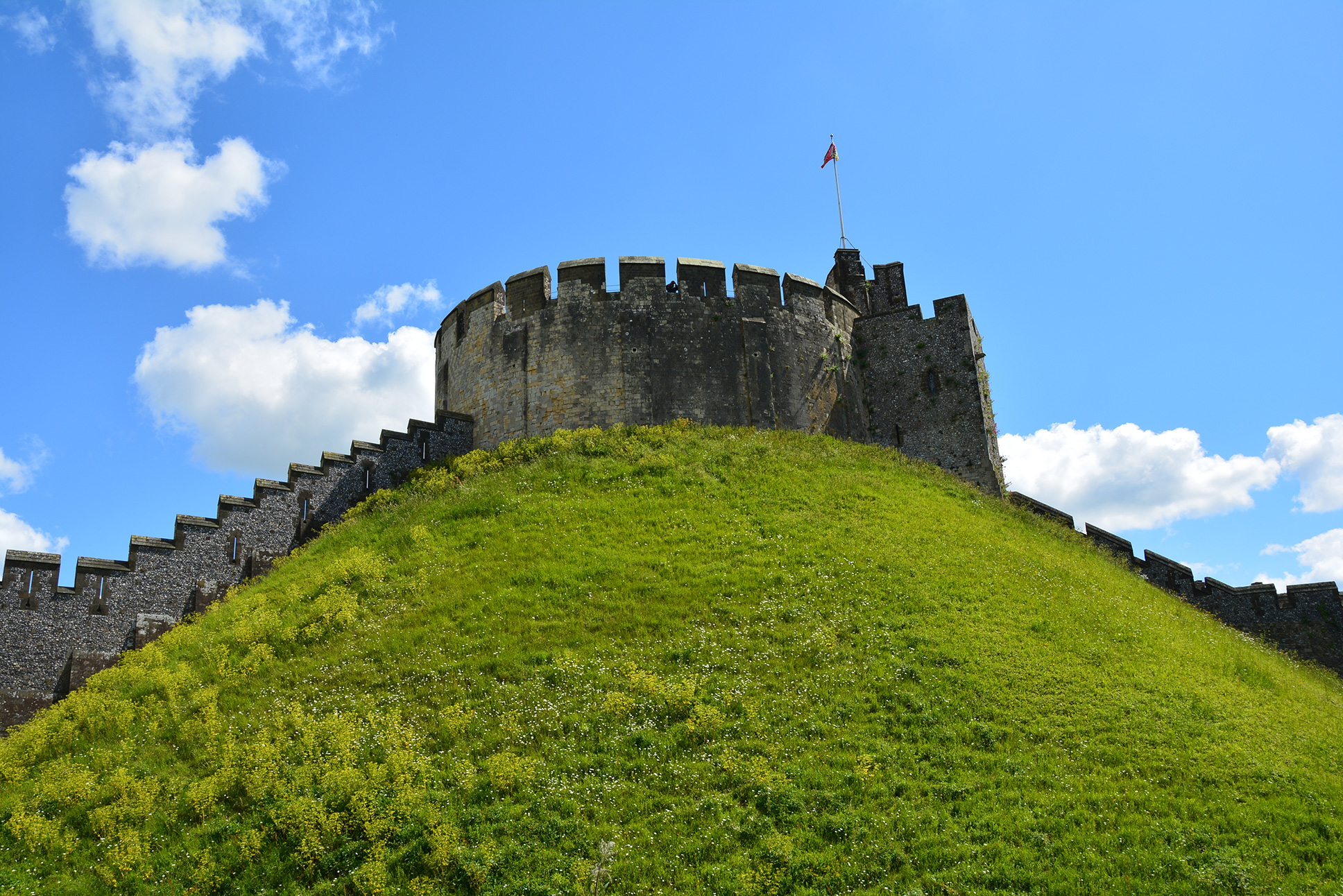
The motte at Arundel Castle, where Matilda landed in 1139.
Robert's greatest day came at the Battle of Lincoln on February 2nd, 1141. With Ranulf, Earl of Chester, he led the army that defeated Stephen's forces and captured the king, who was taken to Robert's castle at Bristol. Matilda was briefly acknowledged as "Lady of the English," but she alienated the Londoners and was driven out of the city. In September, Stephen's wife, Queen Matilda, and her supporters besieged Matilda's party at Winchester. In the Rout of Winchester, Robert covered the retreat and was captured near Stockbridge.
On November 1st, 1141, Robert was exchanged for Stephen, which gave the king his freedom and his crown back. Many historians think this was the turning point of the war, since Matilda had never been closer to winning. Robert crossed to Normandy in 1142 to seek help from Geoffrey, and he brought his nephew Henry, Matilda's son and the future Henry II, to England, where he taught the boy English ways. Meanwhile, the war ground on through the sieges of Oxford and Wallingford, and Robert surprised Stephen at the Battle of Wilton in 1143, though the king escaped.
Robert was also a patron of scholars. The chronicler William of Malmesbury dedicated his history of the period to him, and Robert is said to have commissioned and lent translations of Welsh historical sources. He died at Bristol Castle on October 31st, 1147, and was buried at St James' Priory. His son, William, became the 2nd Earl of Gloucester and inherited Cardiff. Matilda left England the following year without her ablest supporter, but Robert's work paved the way for her son, who became Henry II in 1154.